

When it comes to high - frequency applications, the choice of electrical connectors is crucial. As a dip pogo pin supplier, I am often asked whether dip pogo pins are suitable for high - frequency applications. In this blog, I will delve into the characteristics of dip pogo pins and analyze their feasibility in high - frequency scenarios.
Understanding Dip Pogo Pins
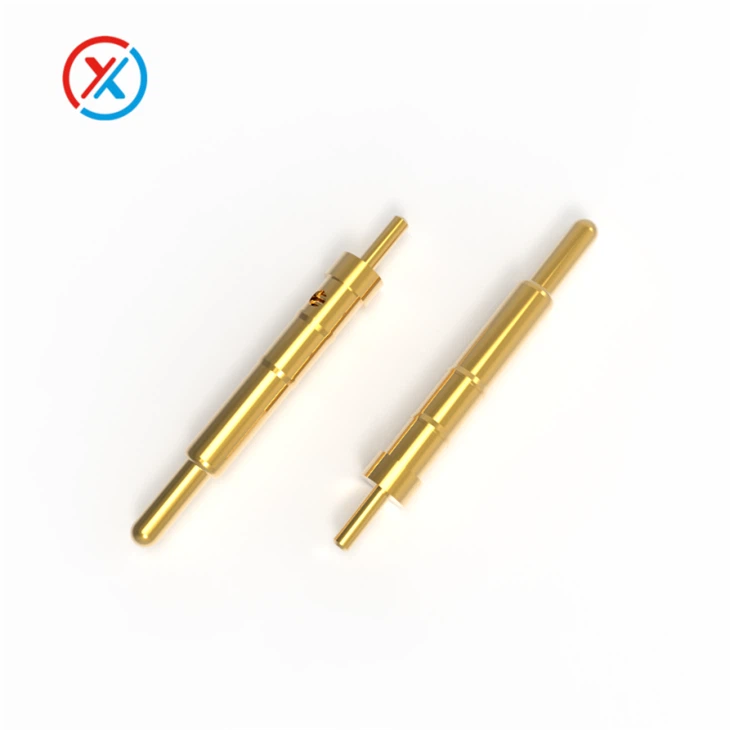
Dip pogo pins, also known as through - hole pogo pins, are spring - loaded connectors. They are designed to provide a reliable electrical connection between two components. The main structure of a dip pogo pin consists of a plunger, a spring, and a barrel. The plunger is the part that makes contact with the mating surface, the spring provides the necessary force to ensure a stable connection, and the barrel houses the spring and the plunger.
There are various types of dip pogo pins available in the market. For instance, Through Hole Pogo Pins 1A Current are designed to handle a current of up to 1A. These pins are commonly used in applications where a moderate amount of current needs to be transmitted. Spring Loaded Header Pins are another type, which are often used in header - related applications, providing a spring - loaded connection for easy mating and unmating. Large Pogo Pins are suitable for applications that require a larger contact area or higher current - carrying capacity.
Factors Affecting High - Frequency Performance
Impedance Matching
In high - frequency applications, impedance matching is of utmost importance. Any mismatch in impedance can lead to signal reflection, which in turn reduces the signal quality and can cause interference. Dip pogo pins need to have a well - controlled impedance to ensure efficient signal transmission. The design of the pogo pin, including the diameter of the plunger, the spring characteristics, and the barrel material, can all affect its impedance. For example, a larger diameter plunger may have a different impedance compared to a smaller one. Manufacturers need to carefully design and test the dip pogo pins to achieve the desired impedance matching for high - frequency applications.
Signal Loss
Signal loss is another critical factor in high - frequency applications. As the frequency of the signal increases, the skin effect becomes more pronounced. The skin effect causes the current to flow mainly on the surface of the conductor, increasing the effective resistance and thus leading to signal loss. Dip pogo pins need to be made of materials with low resistivity and good conductivity to minimize signal loss. Additionally, the contact resistance between the plunger and the mating surface also contributes to signal loss. A stable and low - resistance contact is essential for high - frequency performance.
Crosstalk
Crosstalk occurs when the electromagnetic fields of adjacent conductors interfere with each other. In high - density applications where multiple dip pogo pins are used in close proximity, crosstalk can be a significant problem. The design of the pogo pin layout and the shielding measures can help reduce crosstalk. For example, proper spacing between the pins and the use of shielding materials can minimize the electromagnetic interference between adjacent pins.

Advantages of Dip Pogo Pins in High - Frequency Applications
Flexible Connection
One of the main advantages of dip pogo pins is their flexibility. They can provide a reliable connection even when there are slight misalignments between the mating components. This is particularly useful in high - frequency applications where the components may be subject to vibrations or mechanical stresses. The spring - loaded design of the pogo pins allows them to adjust to the uneven surfaces and maintain a stable electrical connection, which is crucial for high - frequency signal transmission.
Easy Installation
Dip pogo pins are relatively easy to install compared to some other types of connectors. They can be easily inserted into the through - holes on the printed circuit board (PCB), which simplifies the manufacturing process. This ease of installation can also reduce the production time and cost, making them an attractive option for high - frequency applications.
Good Contact Performance
The spring - loaded mechanism of dip pogo pins ensures a good contact force between the plunger and the mating surface. This results in a low - resistance and stable electrical connection, which is essential for high - frequency signal transmission. The consistent contact performance helps to minimize signal loss and maintain the signal integrity.
Challenges and Limitations
Frequency Range Limitations
Although dip pogo pins can be used in high - frequency applications, they do have some limitations in terms of the frequency range. As the frequency increases, the parasitic capacitance and inductance of the pogo pins become more significant, which can affect the impedance matching and signal transmission. In general, dip pogo pins are more suitable for applications with frequencies up to a few gigahertz. For extremely high - frequency applications (e.g., millimeter - wave frequencies), other types of connectors may be more appropriate.
Environmental Sensitivity
Dip pogo pins can be sensitive to environmental factors such as temperature, humidity, and dust. High temperatures can affect the spring characteristics, leading to a change in the contact force. Humidity can cause corrosion on the contact surfaces, increasing the contact resistance. Dust and debris can also accumulate on the pins, which may interfere with the electrical connection. Therefore, in high - frequency applications where the environment is harsh, additional protection measures may be required.
Case Studies
Let's take a look at some real - world case studies to better understand the performance of dip pogo pins in high - frequency applications.
In a wireless communication device, dip pogo pins were used to connect the antenna module to the PCB. The device operated at a frequency of around 2.4 GHz. The flexible connection provided by the pogo pins allowed for easy assembly and alignment of the antenna module. The good contact performance ensured a stable electrical connection, which was crucial for the high - frequency signal transmission. The device achieved satisfactory performance in terms of signal strength and quality, demonstrating the suitability of dip pogo pins in this high - frequency application.
However, in another case where the frequency of the signal was above 10 GHz, the dip pogo pins showed some limitations. The signal loss and impedance mismatch became more significant, affecting the overall performance of the system. In this case, the manufacturer had to consider alternative connectors to meet the high - frequency requirements.
Conclusion
In conclusion, dip pogo pins can be suitable for certain high - frequency applications, especially those with frequencies up to a few gigahertz. Their advantages such as flexible connection, easy installation, and good contact performance make them a viable option in many scenarios. However, they also face challenges such as frequency range limitations and environmental sensitivity.
If you are looking for dip pogo pins for your high - frequency applications, we are here to provide you with high - quality products and professional technical support. Our team of experts can help you select the most suitable dip pogo pins based on your specific requirements. Whether you need Through Hole Pogo Pins 1A Current, Spring Loaded Header Pins, or Large Pogo Pins, we have the right solutions for you. Contact us to start the procurement negotiation and let us work together to meet your high - frequency application needs.
References
- "High - Frequency Electronics: Theory and Design" by Randy Rhea
- "Connectors for High - Speed Digital Applications" by John Coonrod
- Industry reports on electrical connectors and high - frequency applications


