

The thermal performance of a Pogo Pin USB is a critical aspect that significantly impacts its functionality, reliability, and overall user experience. As a Pogo Pin USB supplier, understanding these thermal characteristics is essential for providing high - quality products to our customers.
Understanding Pogo Pin USB Basics
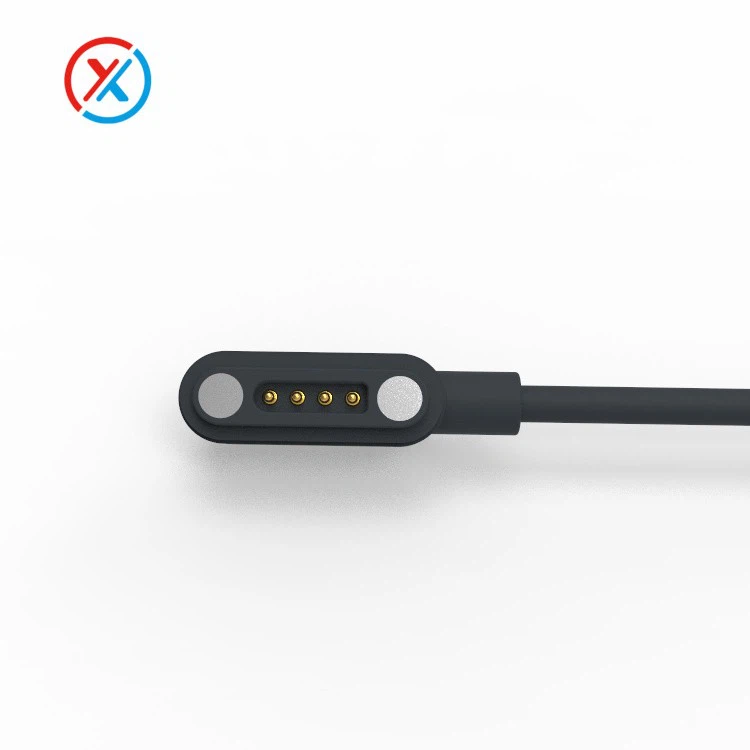
Pogo Pin USBs are a type of electrical connector that utilizes spring - loaded pins, known as pogo pins. These pins offer several advantages, such as reliable electrical contact, durability, and the ability to accommodate misalignment to some extent. They are commonly used in various electronic devices, including smartphones, tablets, wearables, and industrial equipment.
The basic structure of a Pogo Pin USB consists of a housing that holds the pogo pins in place and a mating interface that connects to the corresponding port on the device. When the two parts are joined, the pogo pins make contact with the conductive pads on the device, allowing for the transfer of power and data.
Factors Affecting Thermal Performance
Material Properties
The materials used in the construction of Pogo Pin USBs play a crucial role in their thermal performance. The pins are typically made of metals such as copper or brass, which have good electrical conductivity. However, these metals also have different thermal conductivities. Copper, for example, has a relatively high thermal conductivity, which means it can transfer heat more efficiently compared to some other metals.
The housing material also matters. Plastics are commonly used for the housing due to their low cost, ease of molding, and electrical insulation properties. But different plastics have different heat - dissipation capabilities. Some high - performance plastics are designed to have better thermal management, which can help in reducing the overall temperature of the Pogo Pin USB during operation.
Current Flow
The amount of current flowing through the Pogo Pin USB is directly related to the heat generated. According to Joule's law, the power dissipated as heat (P) in a conductor is given by the formula (P = I^{2}R), where (I) is the current and (R) is the resistance. As the current increases, the heat generated also increases exponentially.
In high - power applications, such as fast charging of smartphones or powering high - performance devices, the current can be quite large. This can lead to significant heat buildup in the Pogo Pin USB, potentially affecting its performance and lifespan. For instance, excessive heat can cause the pins to expand, which may lead to poor electrical contact or even mechanical failure over time.
Contact Resistance
Contact resistance is another important factor. When the pogo pins make contact with the conductive pads on the device, there is always some resistance at the contact interface. This contact resistance can vary depending on factors such as the surface finish of the pins and pads, the contact force, and the presence of contaminants.
A higher contact resistance means more power is dissipated as heat at the contact point. Poor contact due to wear, dirt, or misalignment can increase the contact resistance, leading to increased heat generation. Regular maintenance and proper design to ensure good contact are essential for minimizing contact resistance and improving thermal performance.
Measuring Thermal Performance
Temperature Sensors
One of the most common ways to measure the thermal performance of a Pogo Pin USB is by using temperature sensors. These sensors can be placed at various locations on the Pogo Pin USB, such as on the pins, the housing, or near the contact interface.
Thermocouples and thermistors are two types of temperature sensors that are often used. Thermocouples are based on the Seebeck effect and can measure a wide range of temperatures. They are relatively inexpensive and can be easily integrated into the Pogo Pin USB design. Thermistors, on the other hand, are more sensitive and can provide more accurate temperature measurements in a specific temperature range.
Infrared Thermography
Infrared thermography is a non - contact method for measuring the temperature distribution on the surface of the Pogo Pin USB. An infrared camera is used to capture the infrared radiation emitted by the object, which is then converted into a temperature map. This technique allows for a quick and comprehensive view of the thermal profile of the Pogo Pin USB, highlighting areas of high temperature.
It can be particularly useful for identifying hotspots, which may indicate areas of high resistance or poor heat dissipation. For example, if an infrared thermography image shows a hotspot at a specific pin, it could suggest that there is a problem with the contact at that pin or that the pin has a higher resistance compared to the others.
Impact of Thermal Performance on Product Quality
Electrical Performance
Excessive heat can have a negative impact on the electrical performance of the Pogo Pin USB. As the temperature rises, the resistance of the pins can increase, which can lead to a decrease in the efficiency of power and data transfer. This can result in slower charging times, data transfer errors, or even device malfunctions.
For example, in a data - transfer application, a high temperature can cause signal degradation, leading to corrupted data. In a power - delivery application, increased resistance due to heat can reduce the amount of power delivered to the device, causing it to charge more slowly or not function properly.
Mechanical Integrity
Heat can also affect the mechanical integrity of the Pogo Pin USB. The expansion and contraction of the materials due to temperature changes can cause stress on the pins and the housing. Over time, this can lead to mechanical fatigue, which may result in the pins breaking or the housing cracking.

In addition, high temperatures can also affect the spring properties of the pogo pins. The springs may lose their elasticity, leading to a decrease in the contact force. This can further increase the contact resistance and exacerbate the heat - generation problem.
Improving Thermal Performance
Heat Sinks
Heat sinks are passive cooling devices that can be used to improve the thermal performance of Pogo Pin USBs. They work by increasing the surface area available for heat dissipation. A heat sink is typically made of a material with high thermal conductivity, such as aluminum or copper, and is attached to the Pogo Pin USB.
The heat from the pins and the housing is transferred to the heat sink, which then radiates the heat into the surrounding environment. Heat sinks can be designed in various shapes and sizes, depending on the specific requirements of the application. For example, in a small - form - factor device, a compact heat sink may be used, while in a high - power application, a larger and more efficient heat sink may be required.
Ventilation
Proper ventilation is another effective way to improve thermal performance. By allowing air to flow around the Pogo Pin USB, heat can be carried away more efficiently. This can be achieved by designing the device with ventilation holes or channels near the Pogo Pin USB.
In some cases, fans can also be used to enhance the airflow. However, this is more commonly used in larger devices or in applications where the heat generation is very high. For example, in a server rack where multiple Pogo Pin USB - connected devices are used, fans can be installed to ensure adequate ventilation.
Conclusion
The thermal performance of a Pogo Pin USB is a complex but crucial aspect that needs to be carefully considered. As a [Your Company Position] at a Pogo Pin USB supplier, we are committed to providing products with excellent thermal performance. By understanding the factors that affect thermal performance, using appropriate measurement techniques, and implementing effective improvement strategies, we can ensure that our Pogo Pin USBs meet the high - quality standards required by our customers.
If you are interested in our Pogo Pin Usb products, or have any questions about their thermal performance or other aspects, we encourage you to contact us for procurement and further discussions. Our team of experts is ready to assist you in finding the best solutions for your specific needs. We also offer related products such as Magnetic Wire Connection and Pogo Pin Charging Cable, which can complement your Pogo Pin USB requirements.
References
- "Electrical Contacts: Principles and Applications" by E. M. Engel.
- "Thermal Management of Electronic Systems" by R. Mahajan.


