

Hey everyone, if you’ve ever messed around with electronics prototyping, you’ve probably wondered about those tiny, spring-loaded pins that make connections click—you know, pogo pins. As someone who’s been in the pogo pin game for years now (I run a small but busy supply team, so I see this question every single day), the most common thing customers hit me with is: “Are pogo pins actually compatible with different circuit boards?”
Short answer? It’s not a yes/no thing—it’s more like “it depends on how you match them up.” Let’s break this down, since I’ve seen way too many projects go sideways because someone grabbed the wrong pogo pin and couldn’t connect their boards.
First off, let’s remember what a pogo pin even does. They’re those little pins with a spring inside that compresses when you press two surfaces together, creating a reliable electrical connection without needing soldering every time. That’s why they’re used for everything from phone batteries to test equipment, because you can plug and unplug them hundreds of times without wearing out the connection.

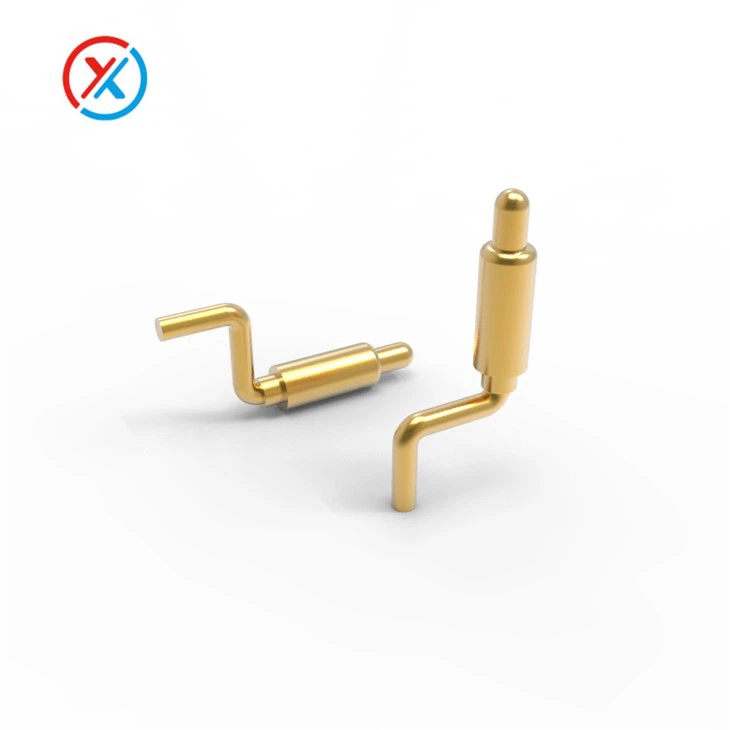
Now, circuit boards come in all shapes, sizes, and configurations, right? You’ve got tiny 0.5mm pitch boards for wearables, big rigid PCBAs for industrial gear, flexible ones for foldable phones, even specialty high-frequency boards for 5G stuff. So compatibility starts with matching the pogo pin to the board’s specs, not just grabbing any random pin.
Let’s start with the basics: what makes a pogo pin compatible with a specific board? The biggest factors are pitch, diameter, contact type, spring force, and board surface finish.
Pitch is the distance between each pin’s center—this is non-negotiable. If your circuit board has pads spaced 2mm apart, you can’t use a 1mm pitch pogo pin there; the pins won’t line up, and you’ll either short out adjacent connections or miss pads entirely. That’s where specific models like the 2mm pogo pin come in super handy. I’ve had customers come to us once panicking because their custom 2mm pitch IoT board didn’t line up with the cheap pogo pins they ordered elsewhere (wrong pitch, obviously). The right 2mm pin from our site fit perfectly, and they got their prototype running the next day.
Then there’s the board’s surface finish. Most circuit boards use something like HASL (hot air solder leveled), ENIG (electroless nickel immersion gold), or OSP (organic solderability preservative). Pogo pin tips need to handle these differently. For example, ENIG is smooth and durable, so a standard flat tip works great, but OSP is a soft organic coating—you need a pogo pin with a slightly rougher tip to pierce through that and make good contact. We have a range of spring loaded pin contacts designed for exactly this, so customers can pick based on their board’s finish instead of guessing.
Wait, also think about how the two boards are connecting. Are they stacked directly face-to-face, so the pogo pins are pressing between two PCBs? Or is one board perpendicular, like in a test fixture where the probe is at a right angle? If it’s the latter, a standard straight pogo pin won’t work—you need a right-angle pogo pin that bends to meet the board at 90 degrees. I’ve seen folks try to force straight pins into perpendicular setups, and that ends up with bent pins or broken springs—total waste of time and money.
Another big one is board thickness and how much compression your pogo pin can handle. Each pogo pin has a maximum travel (how far the spring compresses) and a recommended working range. If your two boards are 5mm apart, you need a pin with at least enough travel to compress 20-30% when you press them together—too little travel and you won’t get a solid connection, too much and you’ll overload the spring, making it wear out fast or even break. That’s where spring loaded pins come into play; we make them with different travel lengths, from 0.5mm all the way up to 10mm, so you can match the board’s gap exactly.
Now, let’s talk about common compatibility myths I hear all the time. First myth: “All pogo pins work for any circuit board.” Nope, like I said earlier, pitch alone can kill this. I had a customer last month who ordered cheap bulk pogo pins from a random site, thinking size was all that mattered, but their board had a 1.25mm pitch—those pins were 1.5mm, so they couldn’t line up. They ended up wasting $200 on useless pins and had to rush a custom order from us, which made their prototype timeline slip a week. That’s the kind of mistake you avoid by checking specs before buying.
Second myth: “Pogo pins only work with rigid PCBs.” Wrong! We’ve had a ton of customers use our spring pogo pins with flexible PCBs (FPCBs) for things like foldable displays and wearable sensors. Flexible boards need pogo pins that have a lower spring force, because too much force will bend or even tear the FPCB. Our low-force spring pogo pins are perfect here—they make a solid connection without putting stress on the flexible board, which is way better than soldering that would crack the flexible traces.
Third myth: “More expensive pogo pins are automatically more compatible.” Not exactly, but they’re usually made with better materials that work with more board types. Cheap pins might use cheap metal that corrodes when touching certain board finishes, or springs that weaken after 100 cycles. Our electrical pogo pins are made with gold-plated contacts, which resist corrosion and work with almost any board surface—HASL, ENIG, OSP, you name it. That doesn’t mean you have to buy the most expensive pin for every job, but matching the material to your board’s environment is key.
Wait, what about high-frequency boards? Those are the ones used for 5G, Wi-Fi 6, and radar systems. They need pogo pins that can handle signals without causing interference, right? Not all pogo pins do that—some have too much capacitance or inductance, which messes with high-frequency signals. We have a line of high-frequency pogo pins designed for exactly that, and a lot of our telecom clients swear by them because their connections don’t drop signal when using our pins. If you’re working on a high-speed board, don’t skip this step—regular pogo pins might seem cheaper, but they’ll ruin your product’s performance.
Let’s also talk about how to test compatibility without wasting parts. The easiest way is to get a sample of the pogo pin you’re thinking about and test it with your actual circuit board. Press the pin against the board’s pad, check for continuity, make sure the pin doesn’t slip or bend, and test it over multiple plug/unplug cycles. If you’re not sure what to pick, just reach out—our team will ask you for your board’s pitch, surface finish, thickness, and application, and recommend the right pin. We also have sample kits so you can test a few different types without ordering a whole batch.
Now, what about edge cases? Like boards with only a single pad instead of a full footprint? Or boards that need to pass high current (like charging pins for a big battery)? For high current, you need a pogo pin with a larger diameter and thicker contacts, so it can carry more power without overheating. Our 2mm pogo pins work great for 2A or 3A connections, and we have even bigger ones for 5A+ applications. For single-pad boards, you can use custom-sized pogo pins, or our right-angle pogo pins if you need to mount them in a tight space.
I should also mention that pogo pin compatibility isn’t just about the pin itself—it’s about how you mount it on the other board. If you’re soldering pogo pins to a PCB, you need to make sure the pads on that PCB are the right size for the pin’s base. If you’re using test fixtures, the fixture’s alignment needs to be precise enough to line up all the pins with the target board. A lot of people forget about the mounting side, and that’s where connections fail—alignment issues are the #1 cause of bad pogo pin connections, not the pins themselves.
So, wrapping this up, are pogo pins compatible with different circuit boards? The answer is yes—if you match the right pin specs to your board’s needs. The key is to pay attention to pitch, spring force, material, contact type, and mounting method. Don’t just grab any pogo pin because it looks right, and don’t hesitate to ask for help if you’re not sure. I’ve been doing this for years, and I’ve helped customers fix so many compatibility issues by just tweaking one of these factors.
If you’re working on a project and need pogo pins, whether it’s for a prototype, production, or testing, our team can help you pick the right ones. We have all the models I mentioned earlier—spring loaded pins, spring loaded pin contacts, 2mm pogo pins, spring pogo pins, and electrical pogo pins—and we offer samples so you can test before ordering bulk. Just reach out to our sales team to chat about your project, we’ll walk through all the specs and make sure you get the right pins for your circuit boards.
References:
- "Pogo Pin Compatibility Guide for Circuit Board Applications" – Electrical Components International, 2022.
- "Spring Loaded Pin Design and Application Best Practices" – Connector Industry Association, 2021.
- "High-Frequency Pogo Pin Performance for Telecommunications PCBs" – IEEE Transactions on Components, Packaging, and Manufacturing Technology, 2023.
- "Flexible Circuit Board Interfacing Solutions with Pogo Pins" – Journal of Electronic Materials, 2022.


