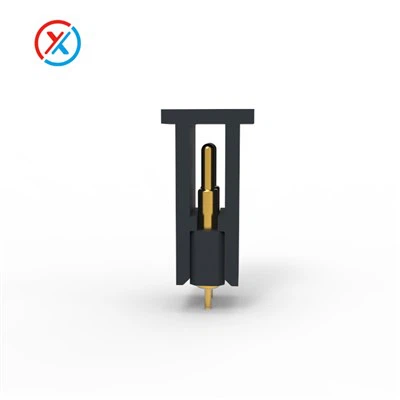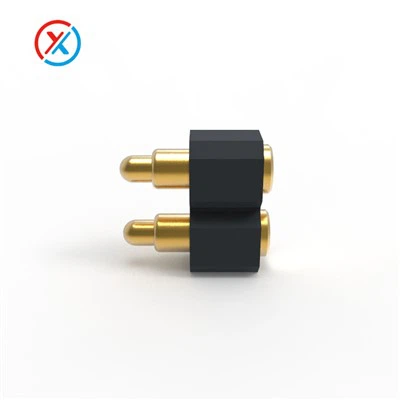
Hey there! As a supplier of Pogo Pin Right Angle, I often get asked if these nifty little components can be used in battery charging circuits. Well, let's dive right into it and find out!
First off, let's talk a bit about what Pogo Pin Right Angle actually are. They're a type of spring-loaded pin that's designed at a right angle. These pins are super handy because they can provide a reliable electrical connection in a compact space. You can check out more about Spring Loaded Pogo Pins on our website.
Now, onto the big question: Can they be used in battery charging circuits? The short answer is yes! There are several reasons why Pogo Pin Right Angle are a great fit for battery charging applications.
One of the main advantages is their ability to provide a stable and consistent electrical connection. In a battery charging circuit, a good connection is crucial. If the connection is poor, it can lead to inefficient charging, overheating, or even damage to the battery or the charging device. Pogo Pin Right Angle have a spring mechanism that ensures constant pressure against the contact surface. This pressure helps to maintain a low-resistance connection, which is essential for efficient power transfer. You can learn more about Pogo Pin Contacts and how they work to provide this stable connection.
Another benefit is their durability. Battery charging circuits can go through a lot of wear and tear over time. The pins are constantly being connected and disconnected as the battery is charged and removed. Pogo Pin Right Angle are built to withstand this kind of repeated use. They're made from high-quality materials that can resist corrosion and mechanical stress. This means they'll last a long time, reducing the need for frequent replacements and saving you money in the long run.
The compact design of Pogo Pin Right Angle is also a plus. In today's world, electronic devices are getting smaller and more portable. This means there's less space available for components like charging connectors. Pogo Pin Right Angle take up less space compared to traditional connectors, making them ideal for use in small, compact battery charging circuits. Whether it's a smartphone, a smartwatch, or a wireless earbud, these pins can fit into tight spaces without sacrificing performance.
But it's not all sunshine and rainbows. There are a few things to keep in mind when using Pogo Pin Right Angle in battery charging circuits. One is the current-carrying capacity. Different pins have different ratings for the amount of current they can safely carry. You need to make sure that the pins you choose can handle the current required by your battery charging circuit. If you try to push too much current through a pin with a low rating, it can cause overheating and potentially damage the pin or the circuit. You can find more information about Electrical Pogo Pins and their current-carrying capabilities on our website.
Another consideration is the alignment. Since Pogo Pin Right Angle rely on precise contact with the mating surface, proper alignment is crucial. If the pins aren't aligned correctly, it can result in a poor connection or even damage to the pins. When designing your battery charging circuit, you need to make sure that there's a mechanism in place to ensure accurate alignment. This could be something as simple as a guide or a housing that holds the pins in the correct position.
So, how do you go about using Pogo Pin Right Angle in your battery charging circuit? First, you need to choose the right pins for your application. Consider factors like the current-carrying capacity, the size of the pins, and the type of contact surface they'll be used with. Once you've selected the pins, you need to design your circuit to accommodate them. This may involve creating a printed circuit board (PCB) with the appropriate pads and traces for the pins. You also need to make sure that the pins are securely mounted on the PCB to prevent them from moving or coming loose.


When it comes to testing, it's important to test your battery charging circuit thoroughly before putting it into production. This will help you identify any potential issues with the pins or the circuit and make any necessary adjustments. You can use a multimeter to measure the resistance and voltage across the pins to ensure that the connection is good. You should also test the charging performance of the circuit to make sure that it's working as expected.
In conclusion, Pogo Pin Right Angle can definitely be used in battery charging circuits. They offer a number of advantages, including a stable electrical connection, durability, and a compact design. However, you need to be careful when choosing and using them to ensure that they're suitable for your application. If you have any questions or need help selecting the right pins for your battery charging circuit, don't hesitate to reach out. We're here to help you make the best choice for your project. Whether you're a small startup or a large corporation, we can provide you with high-quality Pogo Pin Right Angle that meet your needs. So, if you're in the market for these pins, get in touch with us to start a procurement negotiation. We're looking forward to working with you!
References
- Industry knowledge and experience in Pogo Pin manufacturing and application.
- Technical specifications and research on electrical connectors for battery charging circuits.