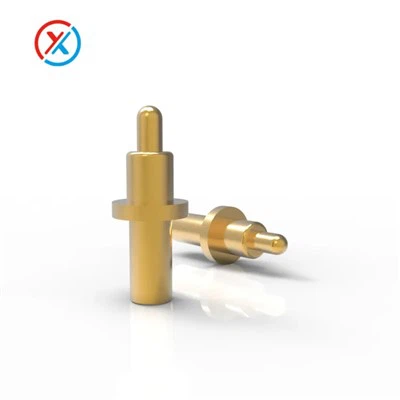
Hey there! I'm a supplier of large pogo pins, and today I'm gonna walk you through the manufacturing processes for these nifty little components. Large pogo pins are used in a wide range of applications, from consumer electronics to industrial equipment, and understanding how they're made can give you a better idea of their quality and performance.
Material Selection
The first step in manufacturing large pogo pins is selecting the right materials. The choice of materials depends on the specific requirements of the application, such as electrical conductivity, corrosion resistance, and mechanical strength.


For the pin body, brass is a popular choice due to its good electrical conductivity and relatively low cost. Brass can be easily machined into the desired shape, and it provides a solid foundation for the pin. However, in applications where higher corrosion resistance is required, stainless steel may be used instead.
The spring inside the pogo pin is typically made of high - strength steel. This steel needs to have good elasticity and fatigue resistance to ensure that the spring can withstand repeated compression and extension without losing its shape.
Machining the Pin Body
Once the materials are selected, the pin body is machined. This process involves cutting, drilling, and shaping the raw material into the appropriate form.
For large pogo pins, precision machining is crucial. Computer - Numerical Control (CNC) machines are often used to ensure accurate dimensions and smooth surfaces. The pin body is first cut to the appropriate length, and then holes are drilled for the spring and other components. After that, the outer surface of the pin is shaped to fit the specific design requirements. This might involve creating a tapered end or a flat surface for better contact.
Spring Manufacturing
The spring is a critical part of the pogo pin, as it provides the necessary force to maintain contact between the pin and the mating surface. To make the spring, high - strength steel wire is coiled into the desired shape.
The coiling process is carefully controlled to ensure that the spring has the right pitch, diameter, and number of coils. This determines the spring's stiffness and the amount of force it can exert. After coiling, the spring is heat - treated to improve its strength and durability. Heat treatment involves heating the spring to a specific temperature and then cooling it at a controlled rate.
Assembly
After the pin body and the spring are manufactured, it's time for assembly. The spring is inserted into the pin body, and then a plunger is added. The plunger is the part of the pogo pin that makes contact with the mating surface.
The assembly process requires precision to ensure that the spring is properly seated and that the plunger can move smoothly inside the pin body. Once the components are assembled, the pin is tested to make sure it functions correctly. This includes checking the spring force, the travel distance of the plunger, and the electrical conductivity.
Surface Treatment
Surface treatment is an important step in the manufacturing of large pogo pins. It can improve the pin's corrosion resistance, electrical conductivity, and wear resistance.
One common surface treatment is gold plating. Gold is an excellent conductor of electricity and is highly resistant to corrosion. Gold - Plated Pogo Pins 12V DC 1A are widely used in applications where reliable electrical contact is essential. Other surface treatments, such as nickel plating, can also be used to provide a protective layer and improve the pin's appearance.
Quality Control
Quality control is a continuous process throughout the manufacturing of large pogo pins. At each stage, from material selection to final assembly, the pins are inspected to ensure they meet the required specifications.
This includes dimensional checks, electrical tests, and mechanical tests. For example, the pins are measured to ensure that their dimensions are within the tolerance range. Electrical tests are conducted to check the conductivity and resistance of the pins. Mechanical tests, such as compression tests, are used to verify the spring force and the durability of the pins.
Packaging and Shipping
Once the large pogo pins pass all the quality control tests, they are packaged for shipping. The packaging is designed to protect the pins during transit and storage.
The pins are usually placed in trays or boxes, and appropriate cushioning materials are used to prevent damage. Shipping labels are added to provide information about the product, such as the quantity, part number, and destination.
Applications of Large Pogo Pins
Large pogo pins have a wide range of applications. In the consumer electronics industry, Pogo Pin Charging Pins are used in devices like smartphones, tablets, and smartwatches for charging and data transfer. In the automotive industry, they are used in testing equipment and in - vehicle electronics. In industrial applications, large pogo pins are used in test fixtures, connectors, and other electrical components.
Why Choose Our Large Pogo Pins
As a supplier of large pogo pins, we take pride in our high - quality products. We use the best materials and the latest manufacturing techniques to ensure that our pins meet the highest standards. Our Spring Loaded Pin are designed to provide reliable electrical contact and long - term durability.
We also offer customized solutions to meet the specific needs of our customers. Whether you need a specific size, shape, or electrical performance, we can work with you to develop the perfect pogo pin for your application.
Contact Us for Purchase
If you're in the market for large pogo pins, we'd love to hear from you. Whether you're a small - scale manufacturer or a large - scale enterprise, we can provide you with the high - quality pogo pins you need. Contact us to discuss your requirements and get a quote. We're committed to providing excellent customer service and ensuring that you're satisfied with your purchase.
References
- "Electrical Connector Handbook" by Ronald B. Johnson
- "Manufacturing Engineering and Technology" by Serope Kalpakjian and Steven R. Schmid