

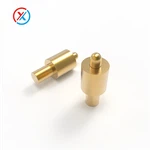




Gold-Plated Pogo Pins 12V DC 1A
Dongguan Xinteng Electronics Co., Ltd. is one of the most reliable manufacturers and suppliers of gold-plated pogo pins 12v dc 1a in China, featured by quality products and good service. Welcome to wholesale bulk durable gold-plated pogo pins 12v dc 1a in stock here from our factory. Also, customized service and OEM&ODM service are available.
Gold-Plated Pogo Pins 12V DC 1A
The DIP-type low-profile pogo pin has a maximum current of 1A, a rated voltage of DC12V, and a lifespan of 10,000 insertion/removal cycles. It has passed a 48-hour salt spray test.
The pogo pin's tip, tube, and spring are all gold-plated. The tip features a beveled profile for stable electrical performance, and its 0.9mm diameter makes it suitable for small and low-current applications.
Product Parameters
|
Product model |
RG-1339 |
|
Mechanical |
|
|
Contact force |
60g±20g at 0.65mm working storke Full storke 0.8mm |
|
Life test |
10,000 cycles |
|
Electrical |
|
|
Rated voltage |
DC 12V |
|
Rated current |
1A Max |
|
Contact resistance of spring pin |
50 milliohm Max |
|
Environmental performance |
|
|
Operation Temperature |
-25℃ to +60℃ |
|
Salt Spray |
48H |
|
Packing |
PE bag / reel packing |
|
Material and coating conform to ROHS and REACH standards |
|
Gold-Plated Pogo Pins 12V DC 1A Product Drawing

Precautions For Using Pogo Pin
In practical designs, the compression is typically controlled at approximately two-thirds of the total stroke. Insufficient pressure leads to inadequate thrust, resulting in unstable contact resistance; excessive pressure, however, can damage the tube opening, ultimately affecting PIN code reading by causing instability or failure to read the code.
During assembly, special care must be taken to avoid subjecting the tube opening to excessive external force. Impacts or pressure on the tube opening will also cause PIN code reading problems.
Furthermore, before the battery contacts come into contact with the POGO PIN or FPC gold fingers, ensure the surface is free of dust, stains, or oxide layers, as these will all affect contact quality.

DIP Pogo Pin Design
1. Relationship between Pin Length and Solder Depth
The pin length needs to be precisely matched to the PCB soldering depth. It must ensure that the pin is fully inserted into the PCB hole during soldering, without being too long or too short, which would cause soldering difficulties. Generally, we select the pin length based on the PCB thickness.
Standard Length: Typically, the pin length of a DIP Pogo Pin is chosen to be 1-2 mm longer than the PCB thickness. This ensures sufficient contact area during soldering, resulting in a stable solder joint.
Soldering Depth: A pin that is too short may not be fully inserted into the PCB, affecting electrical connections; a pin that is too long may result in excessive solder during soldering, forming solder balls or solder bridges, ultimately leading to short circuits or poor contact.
2. Matching Pin Length with Board Height
The pin length must consider not only the soldering depth but also the appearance and operating environment after installation. For example, some applications require the Pogo Pin to maintain a certain height relative to the PCB surface. In such cases, we adjust the pin length to protrude a certain length after soldering to accommodate subsequent insertion/removal or connection.
Pin length that is too short will affect the insertion/removal stability of subsequent devices, especially in applications with high insertion/removal life; while pin length that is too long may result in an unsightly appearance and may also affect the mechanical strength of the product.
3. Relationship between Pin Length and Contact Pressure
Pogo Pins achieve electrical connection through elastic contact between the pin and the contact pin using spring pressure. The pin length affects the compression ratio between the pin core and the spring; therefore, the choice of pin length directly relates to the magnitude of the contact force.
Longer pins provide more compression space, suitable for applications requiring greater contact force, especially when the current is high or the contact pressure requirement is high.
Shorter pins have relatively less compression space, suitable for applications requiring lower contact force and smaller size.
4. Design Flexibility and Customizability
Another advantage of DIP-type Pogo Pins is their customizability. Depending on specific needs, designers can adjust the pin length on the same Pogo Pin to optimize performance in different application scenarios.
For example, in applications with limited space, shorter pins might be chosen to ensure no interference with other components after installation. In applications requiring longer insertion/removal life or higher current carrying capacity, longer pins provide better spring compression travel and stronger contact force.
5. Overall Design and Functional Optimization
Through a well-designed pin length, DIP-type Pogo Pins achieve a compact size while maintaining stable electrical connections. This design advantage makes Pogo Pins widely used in various devices requiring high reliability and high-density connections, such as mobile phones, smart hardware, and medical instruments.
Applications of pogo pins in various industries
1. Smartphone and Tablet Charging/Data Transfer
Pogo pins are commonly used in charging and data transfer modules for smartphones, tablets, and other portable electronic devices.
Data Synchronization: Requires 4 or more pogo pins to support simultaneous data transfer, allowing devices to connect to computers or other devices for file synchronization and transfer.
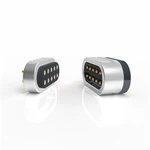
Magnetic Pogo Pin Design: The magnetic connection design makes plugging and unplugging easier, especially suitable for devices that require frequent plugging and unplugging.
Anti-misoperation: The magnetic connection avoids the possibility of accidental insertion when using traditional USB interfaces, reducing the risk of interface damage.
2. Wireless Charging Devices
Pogo pins are also widely used in wireless charging devices.
Wireless Charging Base: Pogo pin connectors can be used with wireless charging bases to ensure stable power delivery.
Convenience: For users who frequently use wireless charging, the magnetic pogo pin design facilitates device docking and undoing, improving ease of use.
3. In-vehicle Devices
The use of pogo pins in in-vehicle devices is becoming increasingly common, especially in the following areas:
Car Charging: Pogo pins are used in magnetic charging cables in cars to provide fast and stable power delivery for charging smartphones, navigation systems, tablets, and other in-vehicle devices.
In-vehicle Data Synchronization: Pogo pin cables allow for easy connection between in-vehicle infotainment systems and mobile phones or other devices for data transfer or synchronization.
4. Wearable Devices
With the increasing popularity of wearable devices such as smartwatches and fitness trackers, the application of pogo pin magnetic charging cables is also becoming more widespread:
Charging and Data Synchronization: Many wearable devices use pogo pins for charging and data synchronization. The magnetic design not only facilitates plugging and unplugging but also reduces the risk of interface wear.
Convenient Design: Wearable devices often have high requirements for connector design, and magnetic charging cables provide a simple and easy-to-use solution.
Water Resistance: Wearable devices are often exposed to environments such as sweat and rain; the gold-plated pogo pin magnetic charging cable's waterproof design ensures connection stability.
5. Smart Home Devices
Smart Lighting and Speakers: Smart home devices such as smart bulbs and smart speakers typically require charging or firmware updates via data cables. Magnetic data cables are convenient for users and maintain a stable connection over extended periods.
For example, in home control centers: The control center of a smart home system, often including a touchscreen or display, requires a pogo pin connector for fast charging and data transfer.
6. External Hard Drives and Storage Devices
Pogo pin magnetic data cables also have unique applications in data transfer and external storage device use:
Convenient Connection: For users who frequently connect external hard drives or storage devices, the miniaturized design of the pogo pin module provides easier plugging and unplugging, especially in confined spaces.
High-Speed Data Transfer: Some pogo pins support high-speed data transfer, particularly suitable for devices with large storage capacities and high data transfer requirements, such as external hard drives and flash drives.
7. Game Controllers and Devices
Pogo pins are also used for charging and data transfer in game controllers, particularly in the following areas:
Game Controller Charging: Some modern game controllers can be charged via pogo pin modules. Magnetic designs facilitate easier connection and reduce interface wear.
Data Transfer: Pogo pins with 4 or more pins support data transfer between the game controller and the host, enabling game settings synchronization or firmware updates.
8. Hardware Testing and Laboratory Applications
In laboratory and testing environments, pogo pins are commonly used for quick device connection and data transfer:
Automated Testing Systems: Test equipment, sensors, etc., typically require data cable connections. Pogo pin cables facilitate quick connection and disconnection, making them suitable for automated laboratory testing systems.
Signal Transmission: During electronic device testing, magnetic data cables provide stable signal transmission, reducing errors or malfunctions caused by plugging and unplugging.
9. Medical Devices
The application of magnetic pogo pin data cables in medical devices is increasing, especially in the following areas:
Medical Instrument Charging and Data Transfer: Some medical devices, such as portable ultrasound machines and blood glucose monitors, require charging or data transfer via pogo pin modules. Magnetic data cables provide a reliable and convenient connection method.
Antibacterial design: To adapt to the medical environment, the pogo pin material and surface coating design ensure its safety and stability in the medical environment.
Product category
Xinteng company produces pogo pins, pogo pin connectors, magnetic connectors, magnetic data lines and other products. It is used for charging, data transmission or connection between internal components in consumer electronics industry, smart wearable, smart home appliances, medical beauty, Internet of Things equipment, drone equipment and other industries

FAQ
Hot Tags: gold-plated pogo pins 12v dc 1a, China gold-plated pogo pins 12v dc 1a manufacturers, suppliers, factory, pogo pin high current, pogo pin tme, Spring Loaded Header Pins, Threaded Pogo Pins, Through Hole PogoPin, Waterproof Pogo Pin
Previous
3A Current Pogo PinsYou Might Also Like


Send Inquiry