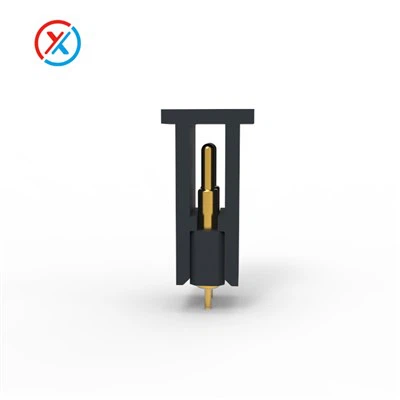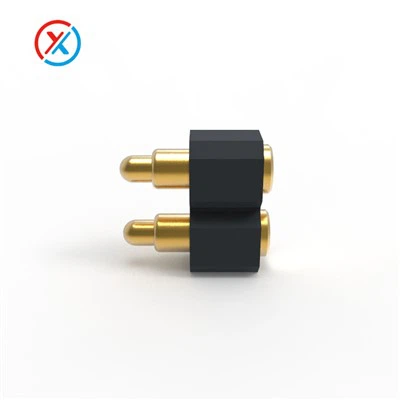
As a supplier of Pogo Pins PCB, I often encounter inquiries from customers regarding various technical aspects of our products. One question that frequently arises is about the dielectric strength of Pogo Pins on a PCB. In this blog post, I aim to provide a comprehensive understanding of this important characteristic.
Understanding Dielectric Strength
Dielectric strength is a crucial property when it comes to electrical components. It refers to the maximum electric field that a material can withstand without breaking down and allowing current to flow through. In the context of Pogo Pins on a PCB, the dielectric strength determines the ability of the insulating materials surrounding the pins to prevent electrical leakage and short - circuits.
The dielectric strength is typically measured in volts per unit thickness (e.g., V/mil or V/mm). For Pogo Pins on a PCB, the dielectric strength is influenced by several factors, including the materials used for insulation, the design of the pins and the PCB layout, and the environmental conditions in which the product operates.
Materials and Dielectric Strength
The choice of materials plays a significant role in determining the dielectric strength of Pogo Pins on a PCB. The insulating materials used can range from polymers to ceramics.
Polymers are commonly used due to their ease of processing and relatively low cost. For example, materials like polyimide have good dielectric properties and can provide a reasonable dielectric strength. Polyimide has a dielectric strength that can range from around 200 to 500 V/mil, depending on its thickness and purity.
Ceramics, on the other hand, offer higher dielectric strength compared to polymers. Materials such as alumina ceramics can have a dielectric strength of up to several thousand V/mm. However, ceramics are more brittle and difficult to process, which can increase the manufacturing cost.
As a supplier, we carefully select the insulating materials for our Pogo Pins Pcb based on the specific requirements of the application. For high - voltage applications, we may opt for ceramic - based insulation, while for more cost - sensitive and low - voltage applications, polymers can be a suitable choice.
Design Factors Affecting Dielectric Strength
The design of the Pogo Pins and the PCB layout also have a significant impact on the dielectric strength.
The spacing between the Pogo Pins is a critical design parameter. A larger spacing between the pins reduces the electric field between them, thereby increasing the dielectric strength. If the pins are too close together, the electric field can become concentrated, leading to a higher risk of electrical breakdown.
The shape of the Pogo Pins can also affect the dielectric strength. Pins with smooth surfaces and rounded edges tend to have a more uniform electric field distribution, which is beneficial for maintaining a high dielectric strength. Sharp edges or protrusions can cause the electric field to concentrate, increasing the likelihood of breakdown.
In addition, the PCB layout should be designed to minimize the presence of conductive traces in close proximity to the Pogo Pins. Conductive traces can create additional electric fields that can interfere with the dielectric properties of the insulation around the pins.
Environmental Conditions
The environmental conditions in which the Pogo Pins on a PCB operate can have a profound effect on the dielectric strength.
Temperature is an important factor. As the temperature increases, the dielectric strength of most insulating materials tends to decrease. This is because higher temperatures can cause the molecules in the insulating material to become more mobile, making it easier for current to flow through. For example, in high - temperature applications, the dielectric strength of a polymer - insulated Pogo Pin may be significantly lower than at room temperature.
Humidity is another environmental factor. Moisture can penetrate the insulating materials, reducing their dielectric strength. In humid environments, the presence of water molecules can create conductive paths within the insulation, leading to electrical leakage and breakdown.
To ensure the reliability of our Pogo Contact Pins 1A Current in different environmental conditions, we conduct extensive testing. We simulate various temperature and humidity conditions in our testing facilities to determine the performance of our products under real - world scenarios.
Measuring Dielectric Strength
Measuring the dielectric strength of Pogo Pins on a PCB is a complex process that requires specialized equipment.


One common method is the withstand voltage test. In this test, a gradually increasing voltage is applied to the Pogo Pins until electrical breakdown occurs. The voltage at which breakdown happens is recorded as the dielectric strength. This test is typically performed in a controlled environment to ensure accurate results.
Another method is the partial discharge test. Partial discharges occur when the electric field in a small region of the insulation exceeds the dielectric strength of that region. By detecting and analyzing partial discharges, we can assess the quality of the insulation and predict potential breakdowns.
Importance of Dielectric Strength in Applications
The dielectric strength of Pogo Pins on a PCB is crucial in various applications.
In the automotive industry, Pogo Pins are used in electronic control units (ECUs). These ECUs are exposed to a wide range of electrical and environmental conditions. A high dielectric strength is essential to prevent electrical malfunctions and ensure the reliable operation of the vehicle's electronic systems.
In the aerospace industry, where safety is of utmost importance, the dielectric strength of Pogo Pins on PCBs must be extremely high. The harsh environmental conditions, including high - altitude, extreme temperatures, and radiation, require components with excellent dielectric properties to prevent electrical failures.
Our Commitment as a Supplier
As a supplier of Lead - Free - Pogo - Pins High Quality, we are committed to providing products with high dielectric strength. We invest in research and development to continuously improve the dielectric properties of our Pogo Pins and PCBs.
We use advanced manufacturing techniques and quality control measures to ensure that our products meet the highest standards. Our production facilities are equipped with state - of - the - art testing equipment to accurately measure the dielectric strength of our products.
Contact Us for Your Pogo Pins PCB Needs
If you are in need of high - quality Pogo Pins PCB with excellent dielectric strength, we are here to assist you. Whether you have specific requirements for a particular application or need general advice on the selection of Pogo Pins, our team of experts is ready to help. We can work closely with you to understand your needs and provide customized solutions. Please feel free to reach out to us for further discussions and to start the procurement process.
References
- Grover, A. S. (2014). Dielectric Materials and Applications. Springer.
- Paul, C. R. (2007). Introduction to Electromagnetic Compatibility. Wiley - Interscience.
- Montrose, M. I. (2000). Printed Circuit Board Design Techniques for EMC Compliance: A Handbook for Designers. IEEE Press.