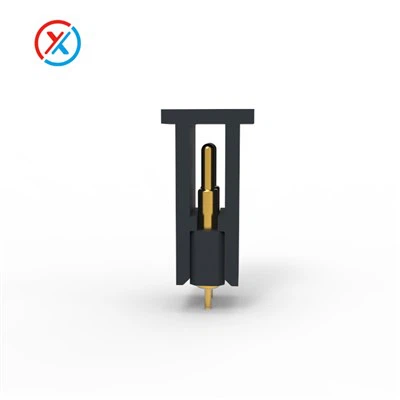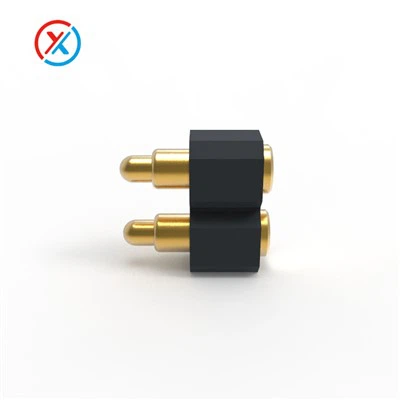
As a supplier of 1mm Pogo Pins, I often encounter inquiries from customers about the technical specifications of our products. One of the most frequently asked questions is about the elasticity modulus of a 1mm Pogo Pin. In this blog post, I will delve into the concept of elasticity modulus, explain its significance for Pogo Pins, and provide some insights into the factors that affect the elasticity modulus of our 1mm Pogo Pins.
Understanding Elasticity Modulus
The elasticity modulus, also known as Young's modulus, is a fundamental mechanical property that measures the stiffness of a material. It describes the relationship between stress (force per unit area) and strain (deformation) within the elastic range of a material. In simple terms, it tells us how much a material will stretch or compress under a given load.
Mathematically, the elasticity modulus (E) is defined as the ratio of stress (σ) to strain (ε):
[ E = \frac{\sigma}{\varepsilon} ]
where stress (σ) is the force applied to the material divided by its cross - sectional area, and strain (ε) is the change in length of the material divided by its original length.


The unit of elasticity modulus is typically in pascals (Pa) or gigapascals (GPa). A higher elasticity modulus indicates a stiffer material, meaning it will deform less under a given load compared to a material with a lower elasticity modulus.
Significance of Elasticity Modulus for Pogo Pins
Pogo Pins are spring - loaded connectors used in a wide range of electronic applications, such as smartphones, tablets, wearables, and test fixtures. The elasticity modulus of a Pogo Pin is crucial for several reasons:
1. Contact Force
The contact force between the Pogo Pin and the mating surface is essential for establishing a reliable electrical connection. A Pogo Pin with an appropriate elasticity modulus can provide a consistent and sufficient contact force over multiple mating cycles. If the elasticity modulus is too low, the Pogo Pin may not generate enough force, leading to intermittent connections. On the other hand, if it is too high, the Pogo Pin may be too stiff, causing damage to the mating surface or itself.
2. Durability
Pogo Pins are often subjected to repeated compression and relaxation cycles during their service life. A Pogo Pin with a suitable elasticity modulus can withstand these cycles without permanent deformation. This ensures that the Pogo Pin maintains its mechanical and electrical properties over time, improving the overall durability of the connector.
3. Signal Integrity
In high - speed electronic applications, the mechanical properties of the Pogo Pin can affect signal integrity. A Pogo Pin with a stable elasticity modulus helps to maintain a consistent contact impedance, reducing signal loss and interference.
Factors Affecting the Elasticity Modulus of 1mm Pogo Pins
The elasticity modulus of a 1mm Pogo Pin is influenced by several factors, including:
1. Material Composition
The material used to manufacture the Pogo Pin is one of the most significant factors affecting its elasticity modulus. Common materials for Pogo Pins include beryllium copper, phosphor bronze, and stainless steel. Each material has its own unique elasticity modulus:
- Beryllium copper has a relatively high elasticity modulus, typically around 120 - 140 GPa. It offers excellent electrical conductivity, corrosion resistance, and mechanical properties, making it a popular choice for high - performance Pogo Pins.
- Phosphor bronze has an elasticity modulus of approximately 110 GPa. It is known for its good formability and wear resistance, and is often used in applications where cost is a concern.
- Stainless steel has a higher elasticity modulus, usually around 190 - 210 GPa. It provides excellent corrosion resistance and strength, but may have lower electrical conductivity compared to beryllium copper and phosphor bronze.
2. Heat Treatment
Heat treatment processes can significantly alter the mechanical properties of the Pogo Pin material, including its elasticity modulus. For example, annealing can reduce the internal stress in the material and improve its ductility, while hardening can increase its strength and stiffness. By carefully controlling the heat treatment parameters, we can optimize the elasticity modulus of the 1mm Pogo Pin to meet the specific requirements of different applications.
3. Geometric Design
The geometric design of the Pogo Pin, such as its diameter, length, and spring pitch, can also affect its elasticity modulus. A shorter and thicker Pogo Pin generally has a higher elasticity modulus compared to a longer and thinner one. Additionally, the design of the spring inside the Pogo Pin plays a crucial role in determining its overall stiffness and elasticity.
Measuring the Elasticity Modulus of 1mm Pogo Pins
Measuring the elasticity modulus of a 1mm Pogo Pin can be challenging due to its small size. However, several techniques can be used:
1. Tensile Testing
Tensile testing involves applying a gradually increasing tensile force to a sample of the Pogo Pin material until it breaks. By measuring the force and the corresponding deformation, the stress - strain curve can be plotted, and the elasticity modulus can be calculated from the slope of the linear portion of the curve.
2. Compression Testing
Compression testing is more relevant for Pogo Pins, as they are mainly subjected to compressive forces in actual applications. In compression testing, a Pogo Pin is compressed between two flat surfaces, and the force - displacement relationship is measured. The elasticity modulus can then be determined from the initial linear part of the force - displacement curve.
Our 1mm Pogo Pins and Their Elasticity Modulus
At our company, we understand the importance of the elasticity modulus for the performance of 1mm Pogo Pins. We carefully select the materials and optimize the manufacturing processes to ensure that our Pogo Pins have the appropriate elasticity modulus for different applications.
Our Spring Loaded Pogo Pins Lead Free are made from high - quality beryllium copper or phosphor bronze, which provide a good balance between stiffness and electrical conductivity. Through advanced heat treatment and precision manufacturing techniques, we can control the elasticity modulus of these Pogo Pins within a narrow range, ensuring consistent performance and reliability.
Our Spring Loaded Header Pins are designed with a specific geometric structure to achieve the desired elasticity modulus. The unique spring design inside the Pogo Pin allows for a smooth compression and relaxation process, while maintaining a stable contact force.
For applications that require a female - type Pogo Pin, our Pogo Pin Female products are engineered to have an appropriate elasticity modulus to ensure a secure and reliable connection with the male counterpart.
Contact Us for Procurement and Consultation
If you are in need of high - quality 1mm Pogo Pins for your electronic applications, we are here to help. Our team of experts can provide you with detailed technical information about the elasticity modulus and other properties of our Pogo Pins. We can also work with you to customize the Pogo Pins according to your specific requirements.
Whether you are a manufacturer of consumer electronics, automotive electronics, or test equipment, we have the right Pogo Pin solutions for you. Contact us today to start a procurement discussion and take advantage of our reliable products and excellent customer service.
References
- Callister, W. D., & Rethwisch, D. G. (2011). Materials Science and Engineering: An Introduction. Wiley.
- Ashby, M. F., & Jones, D. R. H. (2005). Engineering Materials 1: An Introduction to Properties, Applications, and Design. Butterworth - Heinemann.