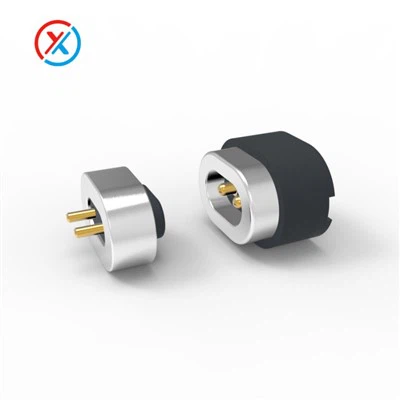
When I first started as a sales engineer specializing in magnetic connectors for AB Magnetic Connectors, I got dozens of messages every week from solar installers, small off-grid system owners, and even hobbyists asking the same basic question: “Can I use a 12v magnetic connector for a solar power system?” At first, I thought this was a simple yes/no answer—but after working with over 200 solar projects in the last three years, I’ve learned it’s a question that demands nuance, a deep understanding of both solar system requirements and how magnetic connectors actually work, and a careful balance of what’s convenient versus what’s safe and reliable.
Let’s start with the basics. A typical small solar power system for RVs, tiny homes, or campers runs on 12V DC, right? Think of a 100W portable solar panel, a charge controller, a 12V deep-cycle battery, and maybe a few small appliances like a fridge or lights. The standard way to connect these components is with hard-wired terminals, MC4 connectors, or alligator clips—but magnetic connectors offer a game-changing alternative: they plug and disconnect with one hand, no fumbling with small screws or loose wires, and they click into place with a satisfying magnetic hold that prevents accidental disconnections. The core question here is: do these connectors stand up to the specific demands of solar energy, and is a 12v magnetic connector the right fit for your setup?
First, let’s break down what makes a connector work for solar. Solar systems have three non-negotiable requirements: consistent voltage handling, sufficient current capacity, and resistance to environmental wear. A 12V solar system doesn’t just run at 12V all the time—when a panel is charging a dead battery, voltage can jump to 14.2V, and current can surge way above the panel’s rated wattage, especially in cold weather. If your connector can’t handle that peak voltage and current, you’ll get overheating, voltage drops, or even arcing that can damage your panels, battery, or other gear.
This is where many hobbyists make a mistake: they grab any off-the-shelf 12V magnetic connector they find online, assuming all 12V magnetic connectors are the same. But not all are built for heavy-duty use in energy systems. At AB Magnetic Connectors, our line of 12V magnetic connectors is engineered specifically for low-voltage DC power applications like solar. For example, our 12V Magnetic Power Connector is tested to handle up to 15A continuous current, which is more than enough for a 180W solar panel (that’s 15A at 12V) and even most small 12V appliances. We use tinned copper pins that resist corrosion, and the housing is made of UV-stabilized nylon that won’t crack or become brittle after years of being exposed to sun, wind, and rain—something standard consumer magnetic connectors often aren’t designed for.
Wait, you might be thinking: “But solar panels use MC4 connectors, not magnetic ones. Shouldn’t I just stick with those?” MC4 connectors are great for permanent wiring between panels, but they’re not convenient for portable systems. If you’re moving a solar panel around a campsite, or disconnecting it every night to bring inside, magnetic connectors let you plug and unplug without twisting small MC4 tabs or worrying about cross-threading. A 12v magnetic connector is ideal for those flexible, user-friendly use cases—you just need to make sure it’s rated for your system’s current and built for outdoor use.
Let’s talk about another type of magnetic connector that’s popular in solar setups: pogo pin connectors. Pogo pins are those spring-loaded electrical contacts that retract when you plug in a connector, creating a tight, reliable connection that compensates for vibration—super important for RVs or off-grid cabins that bounce down dirt roads. Our Spring Loaded Electrical Connectors use precision pogo pins that maintain consistent contact even when the system is moving, which is a big plus for portable solar. We also have a dedicated line for chargers, like our 2 Pogo Pin Charger and 2 Pin Pogo Pin Charger, which are perfect for connecting solar panels directly to battery banks without a lot of extra wiring.
Now, let’s address the risks of using the wrong 12v magnetic connector for solar. The biggest one is voltage drop. Voltage drop happens when electricity flows through a connector that has too much resistance, meaning less power gets to your battery or appliance. For a small 12V system, a 0.5V drop might not sound like a big deal, but that’s a 4% loss in power—enough to make your fridge run longer or cut into how much your battery charges each day. Our 12V magnetic connectors have extremely low contact resistance, so voltage drop is almost negligible at typical solar currents. If you buy a cheap unbranded connector, the pins might be made of thin or dirty metal, leading to higher resistance and wasted solar power.
Another risk is arcing. When you disconnect a live connector, if there’s a gap between the pins, electricity can jump across that gap, creating a spark that can ignite flammable materials like solar panel wiring insulation or battery fumes. High-quality magnetic connectors have small enough gaps when disconnected, or are designed to be safe for low-voltage DC switching. AB Magnetic’s connectors are tested for low-voltage arcing resistance, so you don’t have to worry about that risk even when plugging and unplugging your solar panel while it’s charging.
Temperature resistance is another key factor. If you’re using your solar system in very hot climates (like desert campsites) or very cold ones (like winter off-grid in mountain areas), the connector’s materials need to hold up. Cheap plastic housings can soften in 100°F heat or crack in 0°F weather, breaking the magnetic hold or damaging the pins. Our 12V magnetic connectors are tested in temperatures from -40°F to 185°F, so they work year-round in almost any environment where people use solar power.
So, can you actually use a 12v magnetic connector for a solar power system? The short answer is yes—if you choose the right connector for your specific setup. Let’s break down who this works for, and who it’s not ideal for.
This is a great fit for:
- Portable solar systems for RVs, campers, or overlanding: You need a connector that’s easy to use on the go, and our 12V magnetic connectors let you plug/unplug your panel in seconds, no tools needed. The magnetic hold is strong enough to stay connected while driving down the road (we test our connectors for vibration resistance up to 10G, which is standard for automotive applications).
- Small off-grid systems for tiny homes, sheds, or auxiliary battery banks: If your system is 100W to 500W, running 5A to 15A, our 12V Magnetic Power Connector handles that perfectly. It’s also easy to install—no complicated wiring, just crimp the terminals on your solar panel wire and plug in the connector half to your charge controller.
- Hobbyist projects: If you’re building a custom solar setup for a small project (like a birdhouse with a light, or a portable phone charger), our 2 Pin Pogo Pin Charger is compact and lightweight, perfect for low-power applications.
This is not a good fit for:
- Large grid-tied solar systems: If you have a whole-home system with 1000W or more, MC4 connectors and hard-wired terminals are still the safest and most efficient choice for permanent wiring. Magnetic connectors aren’t rated for the high currents of large grid-tied systems, and they add a small amount of resistance that would cut into power over long runs.
- Systems running high-current 12V appliances: If you’re powering a 12V space heater or a 20A inverter, you’ll need a connector rated for higher current than our standard 15A model—we do offer high-current custom solutions if you have those needs, but make sure to check the specs.
Let me share a real example to make this concrete. Last year, a customer named Jake reached out to me from Arizona. He had a 200W portable solar panel setup for his camping trailer, and he was getting frustrated with MC4 connectors that would come loose when he hit a bump on the dirt roads. He’d tried a generic 12V magnetic connector from a big-box store, but it would overheat after a week of use and wouldn’t hold a consistent charge. He ordered our 12V Magnetic Power Connector, and a month later he sent me a message saying he’d used it for two months, camping in temperatures over 100°F, and it worked perfectly—no overheating, no voltage drop, and it stayed connected even when he was driving 50 mph back home. He even told me he was recommending it to all his camping friends.
Another common question: how do you install a 12v magnetic connector for solar? It’s super simple, even if you’re not an electrician. Our connectors come with crimp terminals that match standard 12V solar wiring (14AWG to 16AWG, which is what most portable panels use). First, strip about ¼ inch of insulation from the end of your solar panel wire, crimp it into the female or male terminal of the magnetic connector, then plug the two halves together. For extra security, you can use a zip tie to fasten the connector to the frame of your trailer or panel, so even if the magnetic hold is bumped, it doesn’t come apart accidentally. For pogo pin setups, our Spring Loaded Electrical Connectors have a self-aligning design, so you don’t have to line up the pins perfectly—just bring the two halves together, and they click into place automatically.
If you’re still not sure which connector is right for your solar setup, our team can help. We work with solar installers, RV manufacturers, and hobbyists to match the right magnetic connector to their specific needs. Whether you need a compact 2 Pogo Pin Charger for a small portable panel or a high-current 12V Magnetic Power Connector for a larger system, we have options that are tested and built to last.
Wait, let’s touch on one more thing: safety standards. When you’re dealing with electricity near batteries (which emit flammable hydrogen gas) and solar panels (which can produce current even in partial shade), safety is non-negotiable. All our 12V magnetic connectors are UL-listed for low-voltage DC applications, so you don’t have to worry about them failing under load. They also have a locking mechanism in the magnetic hold—once you click them together, they won’t pull apart unless you intentionally pull them, which prevents accidental disconnections that could cause arcing.
I’ve had customers ask me if magnetic connectors are less reliable than traditional connectors. My answer is: when they’re built right, no. The key is quality. A cheap magnetic connector with thin pins and flimsy plastic will fail, just like a cheap MC4 connector will. But a high-quality 12v magnetic connector from a specialized manufacturer is actually more reliable for portable, outdoor use, because it’s designed to be plugged and unplugged repeatedly without wearing out. Our connectors are rated for over 10,000 mating cycles, which means you can plug and unplug your solar panel every day for 27 years and it will still work (the math checks out—10,000 cycles, 365 days a year, that’s about 27 years). That’s way more than most people will use their portable solar system for.
Another benefit: ease of maintenance. If you ever need to clean your solar panel or disconnect it for storage, you don’t have to use tools, or worry about losing screws from MC4 connectors. The magnetic hold is strong enough to resist dust and water, so even if you’re using your system in a dusty campsite or light rain, the connection stays clean and dry. Our 12V Magnetic Power Connector has an IP67 rating, which means it’s completely dust-tight and can be submerged in up to 1 meter of water for 30 minutes—perfect for accidental spills or camping in light rain.
So, to circle back to the original question: Can I use a 12v magnetic connector for a solar power system? The answer is a resounding yes, but with a critical caveat: you need to choose a connector that’s engineered for solar applications, not a generic magnetic connector for consumer electronics. AB Magnetic’s line of 12v magnetic connectors is designed specifically for low-voltage energy systems, with the right current capacity, environmental resistance, and safety standards to work reliably for your solar setup.
If you’re ready to upgrade your solar system with a convenient, reliable magnetic connector, or if you have questions about which model is right for your setup, our team is here to help. We’ve worked with hundreds of customers to customize solutions for portable solar, off-grid cabins, RVs, and more, and we’re happy to help you find the perfect fit. Reach out to our team to discuss your project needs, compare our products like the 12V Magnetic Power Connector, 2 Pogo Pin Charger, or Spring Loaded Electrical Connectors, and get a quote that works for you.


References:
- National Electrical Code (NEC) Article 690: Solar Photovoltaic Systems, for low-voltage connector safety and performance standards
- International Electrotechnical Commission (IEC) 60352-1: Connectors for low-voltage DC applications, testing and reliability requirements
- AB Magnetic Connectors Product Test Reports: 12V magnetic connector current capacity, temperature resistance, and vibration testing data
- Solar Power World 2023 Portable Solar System Survey: Consumer feedback on connector reliability and convenience for off-grid applications