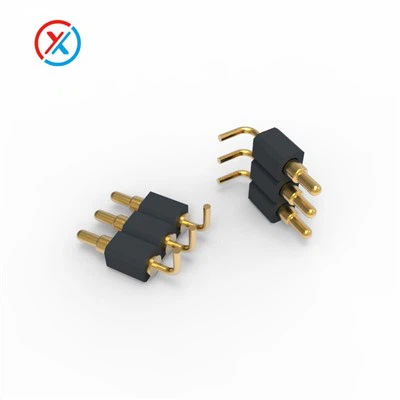
Hey there, thanks for stopping by! If you’ve ever worked with electronics—say, designing a prototype, tweaking a device for mass production, or troubleshooting a wonky connector—you’ve probably run into pogo pins. Those little spring-loaded guys are absolute workhorses for everything from smartphones to medical devices, and today I’m tackling a question I get all the time from designers and engineers: Can a right angle pogo pin be customized?
Spoiler alert: If you’ve been assuming right angle pogo pins are just a one-size-fits-all part off the shelf, you’re not alone. Back when I first started out as a pogo pin right angle supplier, I thought the same thing—until a client hit me up with a wild request for a right angle pogo pin that fit into a super tight 1.2mm space and had a gold plating that could handle 100k+ insertions (we’re talking industrial robotics, for the record). Turns out, off-the-shelf parts almost never check every box, and customization is way more common than most people think. Let’s break this down, no tech jargon overload, promise.
First, let’s do a quick refresh on what a right angle pogo pin even is, just in case you’re new here. Regular pogo pins are straight, right? They poke straight into a connection pad. But a right angle pogo pin—duh, the name gives it away—bends 90 degrees at some point, usually at the base where it mounts to your PCB or connector housing. That bend is a game-changer for designs where vertical space is non-existent. Like, if your PCB is stacked on top of another component, a straight pogo pin would stick up and cause a short, but a right angle one runs parallel to the surface, saving real estate. Makes sense, right?
Now, why would you need to customize this instead of grabbing a standard part? Let’s talk through the most common reasons I’ve seen over the years, and trust me, these aren’t niche edge cases. Take that 1.2mm space request I mentioned earlier—standard right angle pogo pins usually have a body diameter of 1.5mm or bigger, so they’d never fit that tight spot. Another big one is electrical performance: some applications, like automotive ECUs, need a specific current rating, or medical sensors need ultra-low resistance to avoid signal noise. Standard Electrical Pogo Pins rarely hit those exact specs without tweaks. And then there’s mechanical stuff: maybe you need the tip to be flat instead of the standard domed shape, or the spring to be stiffer for high-vibration environments like construction equipment. All of that is doable with a custom right angle pogo pin.
Wait, but hold on—what can’t you customize? Let’s get real here; not every request is possible, and being transparent with clients is non-negotiable for me. For example, you can’t turn a tiny right angle pogo pin (like 0.8mm diameter) into a 50A power connector—that’s just physics, right? The contact area is too small to carry that much current without overheating. And while plating options are super flexible, some exotic materials (like pure platinum) are way too expensive for mass production, so we’d work with a cost-effective alternative that still meets your needs. But for 90% of custom requests I get, the sky’s the limit, as long as we align on specs upfront.
Let’s walk through what goes into customizing a right angle pogo pin, because it’s not just “change the size and call it a day.” First, we start with the core components—those are the contact, the spring, and the housing. For the contact (the part that actually touches the other pad), you can customize the tip shape: domed (for general use), flat (for high-force connections), pointed (for piercing thin coatings, like on plastic PCBs), or even custom shaped for weird pad layouts. The body of the contact can be modified in length, diameter, and plating: gold plating is standard for corrosion resistance, but we can do gold flash for low-cost applications, gold over nickel for durability, or even silver for ultra-high conductivity (great for RF stuff). Oh, and don’t forget the housing—the part that keeps the spring aligned. For right angle pins, the housing is where the 90-degree bend happens, so we can adjust the bend angle (wait, not just 90? Some clients need 85 or 95 degrees for super tight fits, and that’s totally doable), the length of the horizontal or vertical leg, and even the material of the housing (plastic for lightweight, nylon for high-temperature, or metal for EMI shielding).

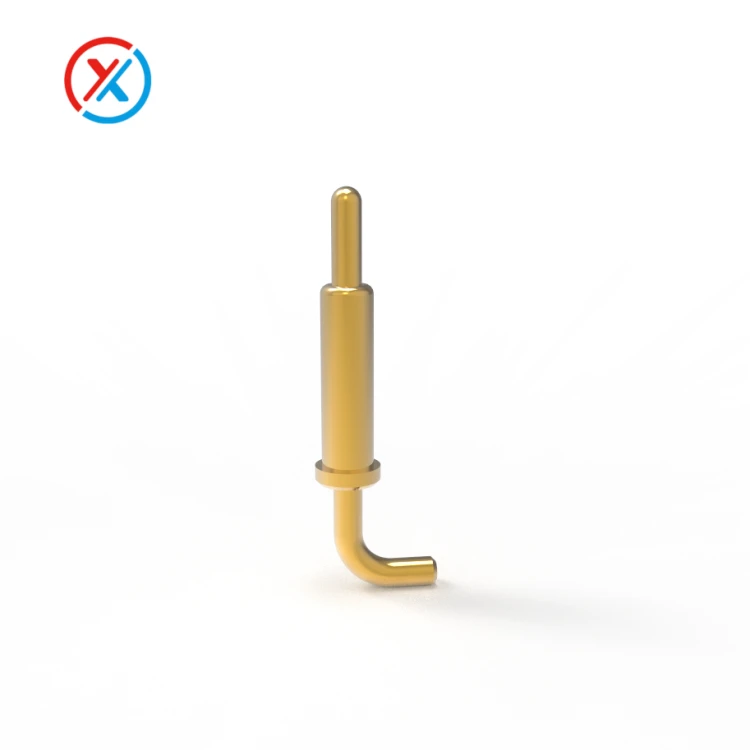
Another big part of customization is the spring. The spring’s stiffness (measured in grams of force) is super important—too soft and the pin won’t make a solid connection, too hard and it might damage the PCB or the mating part. Standard springs come in a few stiffnesses, but we can tweak the wire gauge, number of coils, and spring length to get exactly the force you need. We also use different materials for the spring: music wire for general use, stainless steel for corrosion resistance, or beryllium copper for high conductivity. All of these changes are part of making a custom Spring Loaded Pin Contacts that fits your exact needs.
Now, I know what you’re thinking: “Custom stuff must be expensive, right?” Yeah, at first glance, it might seem like you’re paying a premium compared to a standard part, but let’s do the math. If you use a standard pogo pin that almost works, but causes issues like signal noise or connection failures, that’s downtime, rework, and wasted materials—costs that add up way faster than a small upfront custom fee. And for high-volume orders, the custom tooling costs get spread out over thousands of parts, so the per-unit price ends up being really reasonable. Plus, when you work with a supplier who specializes in right angle pogo pins (like me, obviously), the customization process is streamlined—we’ve done this hundreds of times, so we don’t waste time back and forth on trivial details.
Wait, let’s talk about a real example to make this tangible. A couple months back, a client that makes wearable fitness trackers hit me up. They had a new model where the battery had to be mounted perpendicular to the PCB, so a standard right angle pogo pin would have stuck out too far and interfered with the charging coil. Their request: a right angle pogo pin with a horizontal leg length of only 2mm (standard is 3-5mm), gold plating for 5k insertions, and a flat tip to make sure the battery connection stayed solid even if the case shifted. We worked with their engineering team for a week to tweak the housing bend angle and the contact length, built a sample in 10 days, and they went into production with 100k units—no issues, no rework. That’s the value of customization, right?
Now, let’s clear up a common misconception: A lot of people think “custom” means we only make 10 or 100 parts for prototyping. Nope, we do prototyping samples, small runs for niche products, and mass production for companies shipping millions of units a year. So whether you’re a startup making your first prototype, an engineer at a Fortune 500 designing a new automotive part, or a hobbyist building a cool project, we can handle your order. And hey, if you’re not sure what specs you need? That’s totally fine—we have a team that’ll walk you through the options, from plating to force to size, to make sure you end up with the right part.
Speaking of parts, if you just need a high-quality right angle pogo pin off the shelf, not a custom one, we’ve got you too. Our Right Angle Pogo Pin High Quality line has standard sizes, force ratings, and plating options that work for most applications—we use premium materials and strict quality control, so you don’t have to worry about flimsy pins that break after a few uses. And if you ever need to order, our Buy Pogo Pins page makes it super easy to get started, no hoops to jump through.
Wait, let’s circle back to the original question: Can pogo pin right angle be customized? The short answer is a resounding YES—for almost every application, as long as your requirements are physically possible and aligned with what’s practical. The key is working with a supplier that has experience with right angle pins specifically, not just generic pogo pins, because the bend introduces unique challenges (like ensuring the housing doesn’t crack when assembled, or the electrical signal doesn’t get interrupted at the bend). I’ve seen clients come to me after trying to use a standard straight pogo pin and bending it themselves, which almost always leads to inconsistent performance and broken parts. Custom parts are engineered to work perfectly from the start, saving you time and money in the long run.
So, how do you get started with a custom right angle pogo pin? It’s simpler than you think. All you need is a few key details: the dimensions (diameter, length of vertical and horizontal legs), the current and voltage requirements, the number of insertions you need over the pin’s lifespan, any environmental conditions (like temperature or moisture), and the tip shape you need. From there, we’ll send you a free sample for testing, make tweaks if needed, and then move into production. No pressure, no hidden fees, just a partnership to get you the part that works for your project.
I get it, if you’re new to working with pogo pins, the whole customization process can feel overwhelming. That’s why I’m always happy to answer questions—whether it’s “can I get a right angle pin that works in -40°C weather?” or “what’s the difference between gold plating and silver plating for my design?” No question is too small, and I’m here to help you make the right choice for your project.
At the end of the day, pogo pins might seem like tiny, boring parts, but they’re the glue that holds a lot of modern electronics together. If a right angle pin doesn’t fit your design, it doesn’t just mean you have to change your layout—it could mean your product never makes it to market. That’s why customization isn’t just a nice-to-have, it’s often a necessity. And as a supplier, my job is to make that customization process easy, transparent, and affordable for every client, no matter how big or small their project is.
If you’re ready to talk about a custom right angle pogo pin, or even just want more info on our standard parts, don’t hesitate to reach out. We’re here to help you find the perfect solution for your needs. Thanks for reading, and I hope this cleared up whether right angle pogo pins can be customized—spoilers again, they totally can.
References
- Manufacturer specifications for spring-loaded pogo pin contacts, electronic component design guidelines (no external links)
- Industrial electronics connector performance standards for right angle pins, general engineering design principles for custom electrical components