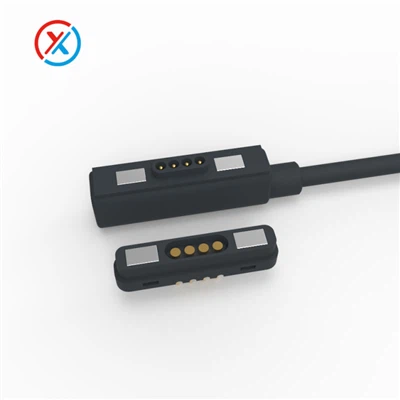
Hey there! As a supplier of Pogo Pin Chargers, I've been thinking a lot about how these nifty little devices could work in space. It's a wild concept, but let's dive into the theoretical aspects of it.
First off, let's talk about what Pogo Pin Chargers are. They're basically spring - loaded pins that can make electrical connections. You've probably seen them in all sorts of electronic devices here on Earth, like smartphones, tablets, and other gadgets. They're super handy because they can provide a reliable electrical connection even when there's a bit of movement or misalignment.
Now, when we think about using Pogo Pin Chargers in space, there are a whole bunch of challenges we need to consider. The space environment is a far cry from what we're used to here on Earth. There's no air, extreme temperatures, and high levels of radiation.
Let's start with the lack of air. In space, there's a vacuum. This means that there's no air to help with cooling. Pogo Pin Chargers generate heat when they're in use, and on Earth, the air around them helps to dissipate that heat. In space, we need to find other ways to keep the pins from overheating. One option could be to use materials with high thermal conductivity. For example, copper is a great conductor of heat. We could use copper in the construction of the Pogo Pins to help transfer the heat away from the charging area.


Another big challenge is the extreme temperatures. In space, temperatures can range from extremely cold to extremely hot. When it's facing the sun, a spacecraft can get really hot, and when it's in the shadow, it can get incredibly cold. These temperature fluctuations can cause materials to expand and contract. For Pogo Pin Chargers, this could mean that the pins might not make a proper connection if they expand or contract too much. To combat this, we could use materials with low coefficients of thermal expansion. For instance, some special alloys have properties that make them less likely to change shape due to temperature changes.
Radiation is also a major concern. Space is full of high - energy particles like protons and electrons. These particles can damage electronic components, including the Pogo Pin Chargers. To protect the chargers, we could use shielding materials. For example, lead is a good shield against radiation, but it's heavy. So, we might look into using lighter materials that can still provide some level of radiation protection.
Now, let's talk about how the Pogo Pin Chargers would actually work in space. When a spacecraft needs to be charged, the Pogo Pins would have to make a connection with the power source. This could be a solar panel or a battery on another spacecraft. The spring - loaded nature of the pins is really useful here. Even if there's a bit of misalignment between the charger and the device being charged, the springs in the pins can adjust and make a proper electrical connection.
Let's take a closer look at some of the specific types of Pogo Pins we offer. The 2mm Pogo Pin is a popular choice. It's small and can be used in a variety of applications. Its compact size makes it suitable for use in small spacecraft or satellites. The Spring Loaded Pogo Pins 5V 3A are great for providing a stable power supply. They can handle a relatively high current, which is important when charging larger devices in space. And the Spring Loaded Header Pins are useful for making multiple electrical connections at once.
To ensure that the Pogo Pin Chargers work properly in space, we would need to conduct a lot of testing. We'd have to simulate the space environment in a laboratory. This would involve creating a vacuum, exposing the chargers to extreme temperatures, and bombarding them with radiation. By doing these tests, we can identify any potential problems and make the necessary adjustments to the design of the chargers.
One of the potential applications of Pogo Pin Chargers in space is for charging small satellites. These satellites are becoming more and more popular for various purposes, like Earth observation and communication. Using Pogo Pin Chargers could make it easier to charge these satellites when they're in orbit. Instead of having to dock with a larger spacecraft to charge, they could simply connect to a charging station using the Pogo Pins.
Another application could be for charging rovers on other planets. For example, a Mars rover could use Pogo Pin Chargers to connect to a power source on the planet's surface. This would make it more convenient to keep the rover powered up and operational.
In conclusion, while there are many challenges to using Pogo Pin Chargers in space, it's definitely a feasible concept. With the right materials, design, and testing, we can make these chargers work in the harsh space environment. If you're in the market for high - quality Pogo Pin Chargers for space applications or any other use, we're here to help. We've got a wide range of products to meet your needs. If you're interested in learning more or discussing a potential purchase, feel free to reach out and start a conversation. We're eager to work with you to find the best Pogo Pin Charger solutions for your projects.
References:
- General knowledge of space environment and electronics engineering principles.
- Industry research on Pogo Pin technology and its applications.