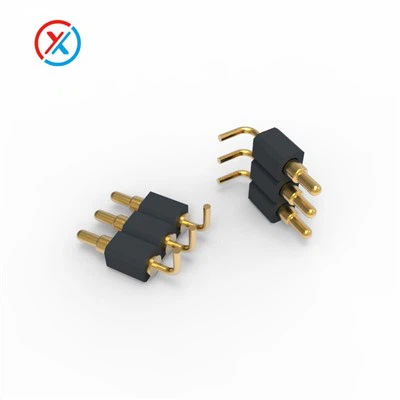
Hey there! As a Pin Pogo supplier, I know how crucial it is to have top - notch signal quality for Pin Pogo. In this blog, I'll share some practical tips on how to improve the signal quality of Pin Pogo.
First off, let's understand what affects the signal quality of Pin Pogo. The main factors include contact resistance, insulation performance, and the stability of the connection. When these aspects are optimized, the signal quality can be significantly improved.
1. Minimize Contact Resistance
Contact resistance is one of the biggest enemies of good signal quality. High contact resistance can lead to signal attenuation and distortion. To reduce contact resistance, we need to pay attention to the material and surface treatment of the Pin Pogo.
- Material Selection: Using high - conductivity materials like copper alloys can greatly reduce resistance. Copper alloys have excellent electrical conductivity and are relatively cost - effective. For example, beryllium copper is a popular choice due to its high strength and good conductivity.
- Surface Treatment: A proper surface treatment can further enhance conductivity. Gold plating is a common method. Gold has high corrosion resistance and low contact resistance. It forms a stable and reliable electrical connection. For instance, when we use 1A Pogo Pins, the gold - plated surface helps to ensure a consistent signal transmission.
2. Improve Insulation Performance
Good insulation is essential to prevent signal interference. If the insulation between pins is poor, signals can leak or cross - talk, which will degrade the overall signal quality.
- Insulation Material: Selecting high - quality insulation materials is key. Materials like PTFE (Polytetrafluoroethylene) have excellent insulation properties. They can effectively isolate the electrical signals between different pins.
- Design Considerations: The design of the Pin Pogo also plays a role in insulation. For example, increasing the distance between pins or using insulation barriers can reduce the risk of signal interference. When dealing with Pogo Contact Pins 1A Current, proper insulation design ensures that each pin can transmit signals independently without being affected by neighboring pins.
3. Ensure Connection Stability
A stable connection is the foundation of good signal quality. Loose or unstable connections can cause intermittent signals or complete signal loss.
- Mechanical Design: The mechanical structure of the Pin Pogo should be designed to provide a firm and stable connection. For example, using a spring - loaded design can ensure that the pin maintains constant contact with the mating surface. The spring provides the necessary force to keep the connection tight.
- Vibration and Shock Resistance: In real - world applications, Pin Pogo may be subjected to vibrations and shocks. To improve the connection stability under these conditions, we can use shock - absorbing materials or reinforce the mechanical structure. For Pogo Contacts 1mm, a well - designed mechanical structure can withstand vibrations and shocks, ensuring continuous signal transmission.
4. Environmental Considerations
The environment in which the Pin Pogo operates can also affect signal quality. Factors such as temperature, humidity, and dust can all have an impact.
- Temperature: Extreme temperatures can cause the materials in the Pin Pogo to expand or contract, which may affect the connection and signal transmission. We need to choose materials that can withstand a wide range of temperatures. For example, some high - temperature - resistant alloys can be used in applications where the temperature is relatively high.
- Humidity: High humidity can lead to corrosion and short - circuits. To prevent this, we can use moisture - resistant coatings or enclosures. These protective measures can help maintain the integrity of the Pin Pogo in a humid environment.
- Dust and Debris: Dust and debris can accumulate on the pins, increasing contact resistance. Regular cleaning and using dust - proof enclosures can help keep the pins clean and ensure good signal quality.
5. Testing and Quality Control
Testing is an important step in ensuring the signal quality of Pin Pogo. By conducting various tests, we can identify potential problems and make necessary improvements.


- Electrical Testing: Electrical tests such as resistance measurement, capacitance measurement, and signal transmission testing can help us evaluate the performance of the Pin Pogo. These tests can detect any issues with contact resistance, insulation, or signal integrity.
- Mechanical Testing: Mechanical tests, including force testing and durability testing, can ensure that the Pin Pogo can withstand the mechanical stress during use. For example, testing the spring force of the pins can ensure that they provide a stable connection.
6. Customization and Optimization
Every application has its own unique requirements. By customizing the Pin Pogo according to the specific needs of the application, we can further improve the signal quality.
- Pin Configuration: We can adjust the number, arrangement, and size of the pins based on the signal requirements. For example, in a high - speed data transmission application, we may need to use a specific pin configuration to minimize signal interference.
- Material and Design Optimization: Based on the application environment and performance requirements, we can optimize the material selection and design of the Pin Pogo. This can lead to better signal quality and overall performance.
In conclusion, improving the signal quality of Pin Pogo requires a comprehensive approach. By paying attention to contact resistance, insulation performance, connection stability, environmental factors, testing, and customization, we can ensure that the Pin Pogo provides reliable and high - quality signal transmission.
If you're interested in purchasing high - quality Pin Pogo products or have any questions about signal quality improvement, feel free to contact us for a procurement discussion. We're here to help you find the best solutions for your needs.
References
- "Electrical Contact Handbook" by R. Holm
- "Materials Science for Electrical Engineers" by D. A. Bell