

As a reliable Pin Pogo supplier, I've delved deep into the world of these essential components. Pin Pogo, also known as Po Go Pin, is a type of spring - loaded contact pin widely used in electronic testing and connectivity applications. In this blog, I'll explore the contact force of Pin Pogo, an aspect that is crucial for its proper functioning.
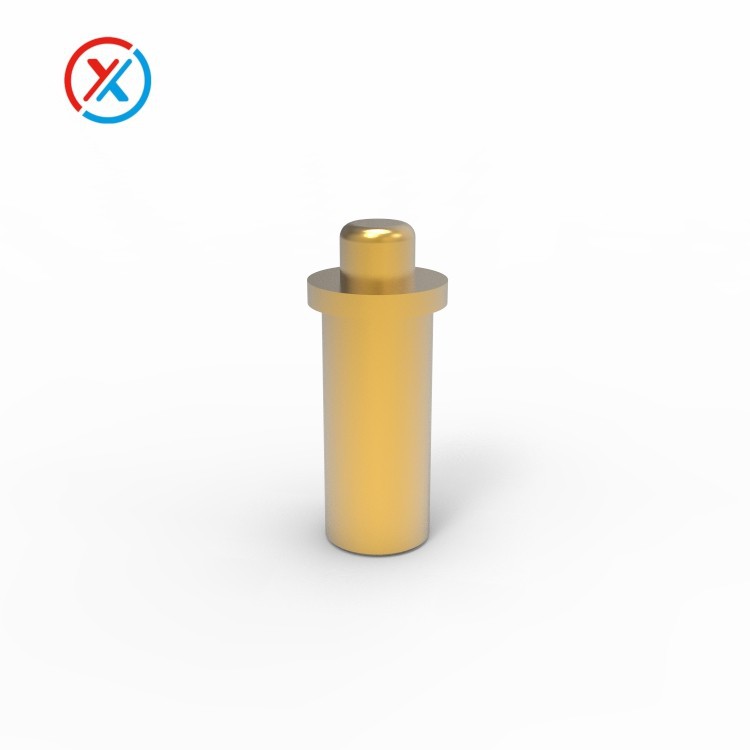

Understanding Contact Force
Contact force is the force exerted by the Pin Pogo when it makes contact with another surface, such as a Pogo Pins Pcb. This force is vital as it determines the quality of the electrical connection. A proper contact force ensures low resistance, which is essential for accurate signal transmission and power transfer.
The contact force is mainly generated by the spring inside the Pin Pogo. When the pin is compressed against a surface, the spring is deformed, and it exerts a restoring force. This force is what we refer to as the contact force. The magnitude of this force depends on several factors, including the design of the spring, the material of the spring, and the amount of compression.
Factors Affecting Contact Force
Spring Design
The design of the spring plays a significant role in determining the contact force. Springs can be designed with different geometries, such as helical, conical, or barrel - shaped. Helical springs are the most common type used in Pin Pogo. The pitch, diameter, and number of coils of the helical spring all affect the contact force. A spring with a smaller pitch or a larger number of coils will generally have a higher contact force for the same amount of compression.
Conical springs, on the other hand, can provide a more consistent contact force over a wider range of compression. This is because the conical shape allows the spring to compress more evenly. Barrel - shaped springs are also used in some applications where a specific force - displacement characteristic is required.
Spring Material
The material of the spring is another important factor. Different materials have different elastic properties, which directly affect the contact force. Common materials used for springs in Pin Pogo include stainless steel, beryllium copper, and phosphor bronze.
Stainless steel is known for its high strength and corrosion resistance. Springs made of stainless steel can provide a relatively high contact force. Beryllium copper, on the other hand, has excellent electrical conductivity and good spring properties. It can maintain a stable contact force even after repeated use. Phosphor bronze is a cost - effective option with moderate spring properties, suitable for applications where the contact force requirements are not extremely high.
Compression Amount
The amount of compression of the Pin Pogo also has a direct impact on the contact force. According to Hooke's law, within the elastic limit of the spring, the contact force is proportional to the amount of compression. As the Pin Pogo is compressed further, the contact force increases linearly. However, if the compression exceeds the elastic limit of the spring, the spring may be permanently deformed, and the contact force will no longer follow Hooke's law.
Measuring Contact Force
Accurately measuring the contact force of Pin Pogo is essential for quality control and ensuring proper performance. There are several methods for measuring contact force.
One common method is to use a force gauge. A force gauge is a device that can measure the force applied to it. To measure the contact force of a Pin Pogo, the Pin Pogo is compressed against the force gauge, and the gauge displays the force value. This method is relatively simple and can provide accurate results for single - pin measurements.
Another method is to use a load cell. A load cell is a transducer that converts force into an electrical signal. It can be integrated into a test fixture to measure the contact force of multiple Pin Pogo simultaneously. This is useful for testing large arrays of Pogo Pins in a PCB testing application.
Importance of Proper Contact Force
Electrical Connection
A proper contact force is crucial for establishing a good electrical connection. When the contact force is too low, the resistance between the Pin Pogo and the contact surface may be high. This can lead to signal attenuation, power loss, and inaccurate test results in electronic testing applications. On the other hand, if the contact force is too high, it may damage the contact surface or cause excessive wear on the Pin Pogo itself.
Mechanical Stability
In addition to electrical performance, the contact force also affects the mechanical stability of the connection. A sufficient contact force ensures that the Pin Pogo remains in place during operation, especially in applications where there may be vibrations or mechanical shocks. This is important for maintaining the reliability of the electrical connection over time.
Applications and Contact Force Requirements
Pin Pogo is used in a wide range of applications, each with its own specific contact force requirements.
Mobile Device Testing
In mobile device testing, Pin Pogo is used to test the electrical performance of various components, such as the battery, display, and connectors. The contact force requirements in this application are relatively moderate. A contact force of around 50 - 200 grams is typically sufficient to ensure a good electrical connection without damaging the delicate components of the mobile device.
Automotive Electronics Testing
Automotive electronics testing requires a higher contact force due to the harsh operating environment. The Pin Pogo used in automotive testing needs to withstand vibrations, temperature variations, and mechanical shocks. Contact forces in the range of 200 - 500 grams are often required to ensure reliable electrical connections in automotive applications.
High - Speed Data Transmission
For high - speed data transmission applications, such as in data centers or telecommunications equipment, a stable and low - resistance electrical connection is essential. Pin Pogo used in these applications may require a contact force of 100 - 300 grams to ensure accurate signal transmission at high speeds.
Contact Us for Your Pin Pogo Needs
If you are in need of high - quality Pin Pogo with the right contact force for your specific application, we are here to help. Our team of experts has extensive experience in designing and manufacturing Pin Pogo to meet various contact force requirements. Whether you are involved in mobile device testing, automotive electronics testing, or high - speed data transmission applications, we can provide you with the perfect solution. Reach out to us to start a conversation about your Pin Pogo procurement needs.
References
- "Mechanical Design Handbook", by Robert C. Juvinall and Kurt M. Marshek
- "Electrical Contacts: Principles and Applications", by E. A. Chernecki
- Industry whitepapers on Pin Pogo technology and applications.


