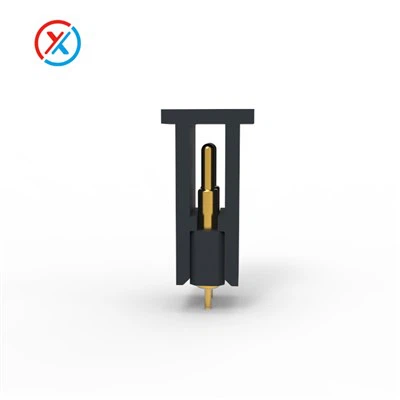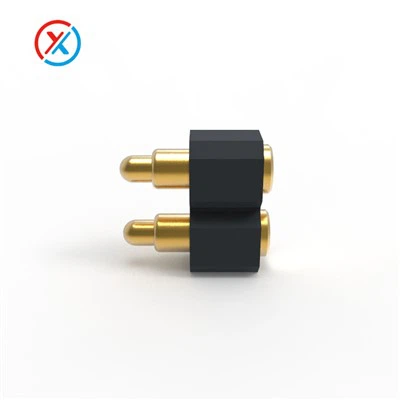
As a dedicated supplier of pin pogo products, I've delved deep into the technical aspects of these small yet crucial components. One of the most critical parameters in the performance of pin pogo is contact resistance. In this blog post, I aim to shed light on what contact resistance is, its significance, and how we, as a pin pogo supplier, ensure high - quality products with optimal contact resistance.
Understanding Contact Resistance of Pin Pogo
Contact resistance is defined as the resistance that occurs at the interface between two conducting surfaces in contact. In the case of pin pogo, which consists of a spring - loaded pin and a mating surface, the contact resistance plays a vital role in determining the electrical performance of the connection.
When current flows through the pin pogo, it moves from one end of the pin to the mating surface. At the contact point, there are several factors that can affect the resistance. Surface roughness is a significant factor. Tiny asperities on the contact surfaces may initially form only a few small contact points. These limited contact areas can increase the current density at these points, leading to higher resistance.
The material of the pin and the mating surface also greatly influences the contact resistance. Different metals have different conductivities. For example, materials with high conductivity like copper and gold are commonly used in pin pogo. Copper is a good conductor with relatively low cost, while gold is highly conductive, corrosion - resistant, and has excellent surface properties, making it ideal for the tip of the pin pogo to reduce contact resistance and ensure a stable electrical connection.
Moreover, oxidation and contamination can also impact the contact resistance. Oxidation layers can form on the metal surfaces over time, especially for metals like copper. These oxide layers are generally poor conductors and can increase the resistance at the contact interface. Contaminants such as dust, dirt, or chemical residues can also create an insulating barrier between the contact surfaces, further increasing the contact resistance.
Significance of Contact Resistance in Pin Pogo Applications
In various electronic devices and test fixtures, the performance of pin pogo is directly related to the contact resistance.
1. Power Delivery
In high - current applications, such as fast - charging systems or power - hungry electronic components, a low contact resistance is essential. High contact resistance can lead to significant power losses in the form of heat generation. According to Joule's law, (P = I^{2}R), where (P) is the power loss, (I) is the current flowing through the contact, and (R) is the contact resistance. Even a small increase in contact resistance can result in substantial power losses, which not only reduces the efficiency of the power delivery system but also generates excessive heat that may damage the components.
2. Signal Transmission
For signal transmission in electronic devices, a stable and low contact resistance is crucial for accurate signal transfer. In high - frequency applications, such as 5G communication modules or high - speed data interfaces, the contact resistance can affect the signal integrity. High contact resistance can cause signal attenuation, distortion, and reflection, leading to errors in data transmission and reduced performance of the device.
3. Reliability and Durability
A consistent and low contact resistance ensures the long - term reliability of the pin pogo connection. Unstable or high contact resistance can lead to intermittent electrical connections, which may cause malfunctions in the device. Additionally, the heat generated due to high contact resistance can accelerate the wear and tear of the contact surfaces, reducing the lifespan of the pin pogo.


Our Approach as a Pin Pogo Supplier
As a professional pin pogo supplier, we take several measures to control and minimize the contact resistance of our products.
1. Material Selection
We carefully select high - quality materials for our pin pogo. The base material of the pin is often copper alloy, which has good conductivity and mechanical properties. The tip of the pin is plated with gold or other precious metals. Gold plating provides a smooth and highly conductive surface, which can significantly reduce the contact resistance and protect the underlying metal from oxidation and corrosion.
We offer a wide range of products with different material combinations to meet the diverse needs of our customers. For example, our Spring Loaded Contacts High Current are designed with materials that can withstand high - current applications while maintaining low contact resistance.
2. Surface Treatment
In addition to plating, we also perform other surface treatments on our pin pogo to improve the surface quality. Polishing the contact surfaces can reduce the roughness, increasing the real contact area between the pin and the mating surface and thus reducing the contact resistance. We also use special cleaning processes to ensure that the contact surfaces are free from contaminants before the final assembly.
3. Precision Manufacturing
Our manufacturing process is highly precise. We use advanced machining and assembly techniques to ensure that the dimensions and shape of the pin pogo are accurate. This precision ensures a proper fit between the pin and the mating surface, maximizing the contact area and minimizing the contact resistance. Our SMD Pogo Pins are manufactured with high precision to meet the requirements of surface - mount technology applications, where a stable and low - resistance connection is essential.
4. Quality Control
We have a strict quality control system in place to test the contact resistance of our pin pogo. Each batch of products is tested using specialized equipment to ensure that the contact resistance meets the specified standards. Our Pogo Pin Lead - Free High Quality products are thoroughly inspected to guarantee their performance and compliance with environmental regulations.
Conclusion and Call to Action
Contact resistance is a fundamental parameter that affects the performance, reliability, and durability of pin pogo. As a professional pin pogo supplier, we are committed to providing high - quality products with low and stable contact resistance. Our expertise in material selection, surface treatment, precision manufacturing, and quality control allows us to meet the diverse needs of our customers in various industries.
If you are looking for reliable and high - performance pin pogo products, we invite you to contact us for procurement and further discussions. We are ready to offer customized solutions based on your specific requirements.
References
- Grover, F. W. (1946). Inductance Calculations: Working Formulas and Tables. Dover Publications.
- Ramo, S., Whinnery, J. R., & Van Duzer, T. (1994). Fields and Waves in Communication Electronics. Wiley.
- Sze, S. M. (1981). Physics of Semiconductor Devices. Wiley - Interscience.