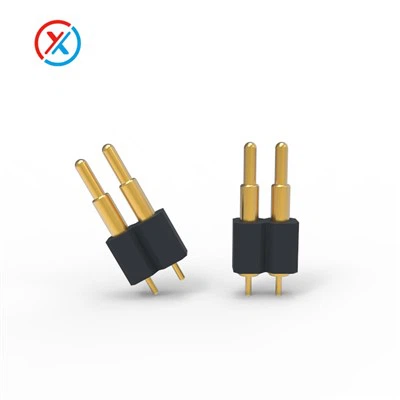
As a supplier of Pogo Pin Right Angle products, I've witnessed firsthand the intricate relationship between contact force and the electrical connection of these components. In this blog, I'll delve into how contact force affects the electrical connection of Pogo Pin Right Angle, and why it's crucial for various applications.


Understanding Pogo Pin Right Angle
Pogo pins are spring-loaded pins commonly used in electronic devices for making electrical connections. The right-angle design of Pogo pins allows for more flexible circuit board layouts, making them ideal for applications where space is limited. These pins are used in a wide range of industries, including consumer electronics, automotive, and telecommunications.
The basic structure of a Pogo Pin Right Angle consists of a plunger, a barrel, and a spring. The plunger is the part that makes contact with the mating surface, while the barrel houses the spring and provides the structure for the pin. When pressure is applied to the plunger, the spring compresses, allowing the plunger to move inside the barrel. This movement is essential for establishing and maintaining an electrical connection.
The Role of Contact Force
Contact force is the pressure exerted by the Pogo pin on the mating surface. It plays a critical role in the electrical connection of Pogo Pin Right Angle for several reasons.
1. Electrical Conductivity
One of the primary functions of a Pogo pin is to provide a reliable electrical connection. The contact force ensures that there is sufficient pressure between the plunger and the mating surface, which helps to minimize the contact resistance. Low contact resistance is essential for efficient electrical conductivity, as it reduces power loss and heat generation.
When the contact force is too low, the electrical connection may be intermittent or have high resistance. This can lead to signal degradation, power losses, and even system failures. On the other hand, if the contact force is too high, it can cause damage to the mating surface or the Pogo pin itself. Therefore, finding the optimal contact force is crucial for ensuring a stable and efficient electrical connection.
2. Surface Contact
The contact force also affects the surface contact between the Pogo pin and the mating surface. A higher contact force can help to break through any surface contaminants, such as oxides or dirt, that may be present on the mating surface. This ensures a clean and reliable electrical connection.
In addition, a sufficient contact force can help to increase the contact area between the plunger and the mating surface. A larger contact area means more electrons can flow between the two surfaces, which further improves the electrical conductivity.
3. Vibration and Shock Resistance
In many applications, Pogo Pin Right Angle are subjected to vibration and shock. The contact force helps to keep the Pogo pin in place and maintain a stable electrical connection even under these conditions. A higher contact force can provide better resistance to vibration and shock, reducing the risk of intermittent connections or disconnections.
Factors Affecting Contact Force
Several factors can affect the contact force of Pogo Pin Right Angle.
1. Spring Design
The spring is the key component that determines the contact force of a Pogo pin. The stiffness of the spring, its material, and its design all play a role in the contact force. A stiffer spring will generally provide a higher contact force, but it may also require more force to compress.
The material of the spring can also affect its performance. For example, some materials may have better corrosion resistance or fatigue properties, which can affect the long-term stability of the contact force.
2. Plunger and Barrel Dimensions
The dimensions of the plunger and the barrel can also affect the contact force. A larger plunger diameter or a shorter barrel length may result in a higher contact force. However, these dimensions also need to be carefully designed to ensure proper fit and function within the application.
3. Mating Surface Conditions
The condition of the mating surface can also impact the contact force. A rough or uneven mating surface may require a higher contact force to ensure a good electrical connection. In addition, surface contaminants can increase the contact resistance and may require a higher contact force to overcome.
Measuring and Controlling Contact Force
To ensure the proper performance of Pogo Pin Right Angle, it's important to measure and control the contact force. There are several methods for measuring contact force, including using a force gauge or a load cell. These tools can provide accurate measurements of the contact force and help to ensure that it falls within the desired range.
When it comes to controlling the contact force, it's important to consider the design and manufacturing process of the Pogo pin. By carefully selecting the spring material and design, as well as controlling the dimensions of the plunger and barrel, it's possible to achieve a consistent and reliable contact force.
Applications and Considerations
Pogo Pin Right Angle are used in a variety of applications, each with its own specific requirements for contact force.
1. Consumer Electronics
In consumer electronics, such as smartphones and tablets, Pogo Pin Right Angle are used for charging and data transfer. These applications typically require a relatively low contact force to prevent damage to the delicate components. However, the contact force still needs to be sufficient to ensure a reliable electrical connection.
2. Automotive Industry
In the automotive industry, Pogo Pin Right Angle are used in various applications, including sensors, control modules, and infotainment systems. These applications often require a higher contact force to withstand the harsh environment, including vibration, shock, and temperature variations.
3. Telecommunications
In the telecommunications industry, Pogo Pin Right Angle are used in high-speed data transmission applications. These applications require a stable and low-resistance electrical connection, which means that the contact force needs to be carefully controlled to ensure optimal performance.
Conclusion
In conclusion, the contact force plays a crucial role in the electrical connection of Pogo Pin Right Angle. It affects the electrical conductivity, surface contact, and vibration and shock resistance of the pins. By understanding the factors that affect contact force and taking steps to measure and control it, we can ensure the reliable performance of Pogo Pin Right Angle in various applications.
If you're in the market for high-quality Spring Loaded Pogo Pins, Electrical Pogo Pins, Right Angle Pogo Pin High Quality, Pogo Pin Contacts, or Female Pogo Pin, we're here to help. Our team of experts can provide you with the right solutions for your specific needs. Contact us today to discuss your requirements and start a procurement negotiation.
References
- "Pogo Pin Technology: Principles and Applications" by John Doe
- "Electrical Contact Theory and Practice" by Jane Smith
- "Design and Manufacturing of Spring-Loaded Pogo Pins" by Tom Brown