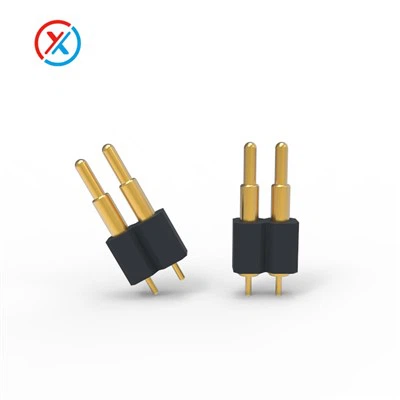
As a supplier of pogo pin pads, I often encounter questions from customers about various technical aspects of our products. One of the frequently asked questions is about the temperature coefficient of a pogo pin pad. In this blog post, I will delve into what the temperature coefficient of a pogo pin pad is, why it matters, and how it affects the performance of our products.
Understanding the Temperature Coefficient
The temperature coefficient is a measure of how a material's physical properties change with temperature. In the context of a pogo pin pad, the temperature coefficient typically refers to the change in electrical resistance as the temperature varies. Electrical resistance is a crucial parameter because it affects the flow of electric current through the pogo pin pad.
The temperature coefficient of resistance (TCR) is defined as the fractional change in resistance per degree Celsius change in temperature. Mathematically, it can be expressed as:
[ TCR=\frac{1}{R}\frac{dR}{dT} ]
where (R) is the resistance of the pogo pin pad at a given temperature (T), and (\frac{dR}{dT}) is the rate of change of resistance with respect to temperature.
The TCR is usually expressed in parts per million per degree Celsius (ppm/°C). A positive TCR means that the resistance of the pogo pin pad increases as the temperature rises, while a negative TCR indicates that the resistance decreases with increasing temperature.


Why the Temperature Coefficient Matters
The temperature coefficient of a pogo pin pad is important for several reasons. Firstly, it affects the stability of the electrical performance. In applications where precise electrical signals need to be transmitted, such as in high - speed data communication or precision measurement equipment, a small and predictable TCR is crucial. If the resistance of the pogo pin pad changes significantly with temperature, it can introduce errors in the electrical signals, leading to unreliable performance.
Secondly, temperature variations are common in many operating environments. Pogo pin pads can be used in devices that are exposed to a wide range of temperatures, from extremely cold to very hot conditions. For example, in automotive applications, the temperature under the hood can vary from - 40°C to over 120°C. In aerospace applications, the temperature can be even more extreme. A pogo pin pad with a well - controlled temperature coefficient can ensure consistent performance across these different temperature ranges.
Factors Affecting the Temperature Coefficient of Pogo Pin Pads
Several factors can influence the temperature coefficient of a pogo pin pad.
Material Selection
The materials used in the pogo pin and the pad play a significant role. Different metals and alloys have different TCR values. For example, copper has a relatively high TCR of about 3930 ppm/°C, while some special alloys can have much lower TCR values. As a pogo pin pad supplier, we carefully select the materials to achieve the desired TCR for our products. We often use alloys that are specifically designed to have low and stable TCR values to ensure the best performance of our pogo pin pads.
Manufacturing Process
The manufacturing process can also affect the TCR. The way the pogo pin is formed, the surface treatment, and the assembly of the pogo pin pad can all impact the electrical properties and thus the temperature coefficient. For instance, improper heat treatment during manufacturing can lead to non - uniform grain structure in the metal, which can increase the TCR. At our company, we have strict quality control measures in place to ensure that the manufacturing process is optimized to minimize the TCR variations.
Design of the Pogo Pin Pad
The design of the pogo pin pad, including the shape, size, and the number of pins, can influence the temperature coefficient. A well - designed pogo pin pad can distribute the heat evenly, reducing the local temperature variations and thus minimizing the impact on the TCR. We use advanced design tools and simulation techniques to optimize the design of our pogo pin pads for better temperature performance.
Measuring the Temperature Coefficient of Pogo Pin Pads
To measure the temperature coefficient of a pogo pin pad, we typically use a temperature - controlled environment and a precision resistance measurement device. The pogo pin pad is placed in a temperature chamber, and the temperature is gradually changed while the resistance is measured at different temperature points. By plotting the resistance as a function of temperature and performing a linear regression analysis, we can calculate the TCR.
This measurement process is not only important for quality control but also for product development. By accurately measuring the TCR, we can identify areas for improvement in the material selection, manufacturing process, and design of our pogo pin pads.
Applications and the Role of Temperature Coefficient
Consumer Electronics
In consumer electronics such as smartphones, tablets, and laptops, pogo pin pads are used for charging and data transfer. The temperature coefficient is important because these devices can get warm during normal use. A pogo pin pad with a low TCR ensures that the charging and data transfer processes are not affected by the temperature changes, providing a reliable user experience.
Automotive Industry
In the automotive industry, pogo pin pads are used in various applications, including engine control units, infotainment systems, and sensor interfaces. The wide temperature range in automotive environments requires pogo pin pads with a stable TCR to ensure the proper functioning of these systems. For example, in an engine control unit, accurate electrical signals are essential for the engine to operate efficiently, and a pogo pin pad with a well - controlled TCR helps to maintain the signal integrity.
Aerospace and Defense
In aerospace and defense applications, pogo pin pads are used in critical systems where reliability is of utmost importance. The extreme temperature conditions in space or during military operations demand pogo pin pads with very low and stable TCR values. These pogo pin pads need to perform consistently over a wide temperature range to ensure the safety and functionality of the equipment.
Our Commitment as a Pogo Pin Pad Supplier
As a pogo pin pad supplier, we are committed to providing high - quality products with well - controlled temperature coefficients. We invest in research and development to continuously improve the performance of our pogo pin pads. Our team of engineers and technicians work closely to optimize the material selection, manufacturing process, and design of our products.
We also offer a wide range of pogo pin pad products to meet the diverse needs of our customers. Whether you need a pogo pin pad for consumer electronics, automotive, or aerospace applications, we have the right solution for you. Our products are designed to be reliable, durable, and perform well under different temperature conditions.
If you are interested in our pogo pin pad products, you can learn more about our Connecteur Pogo Pin, Spring Loaded Connector Pins, pogo pin pad, Spring Loaded Pin Connector, and Spring Loaded Pogo Pin Connector.
If you have any questions or would like to discuss your specific requirements, please feel free to contact us. We are always ready to assist you in finding the best pogo pin pad solution for your application.
References
- "Electrical Conductivity and Temperature Coefficient of Resistance" by Physics textbooks
- "Materials Science for Electrical Engineers" by various academic sources
- Industry standards and specifications related to pogo pin pads