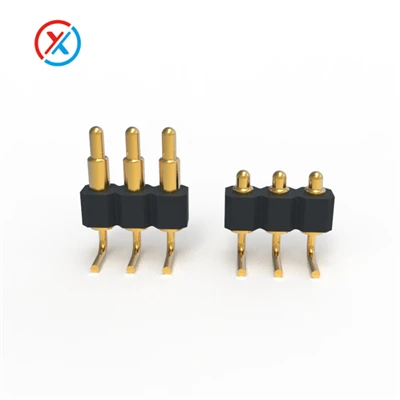
If you’re working with right-angle pogo pins in your design, you know that one of the most critical yet often overlooked factors in their performance is insertion and extraction force. Too high, and you risk damaging the connector housing, wearing out the pogo pin contacts prematurely, or making assembly lines slow and inefficient. Too low, and you’ll get unreliable electrical connections—flickering signals, dropped connections, or parts that fail just because the pogo pin can’t maintain consistent contact pressure. As a supplier of these right angle pogo pins, we’ve worked with hundreds of engineers and manufacturing teams to nail this balance, and today I’m breaking down the science and practical steps to adjust these forces effectively.
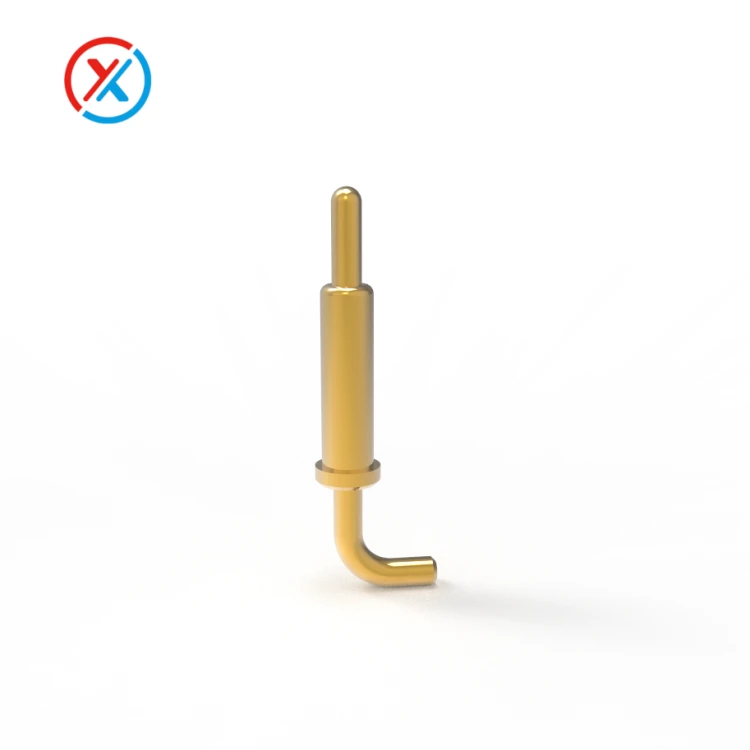
First, let’s get clear on what insertion and extraction force actually means for right-angle pogo pins. Unlike straight pogo pins that plug directly into a PCB, right-angle pogo pins have a 90-degree bend that makes them ideal for space-constrained designs—like compact consumer electronics, automotive sensors, or medical devices where vertical PCB space is at a premium. That bend, though, changes how force is applied during insertion (when you push the pin into its mating socket) and extraction (when you pull it back out). Insertion force is the force required to fully seat the pin, while extraction force is what’s needed to remove it later, both directly tied to the spring inside the pogo pin and the tightness of the fit between the pin’s outer barrel and its mating component.
Before you start adjusting anything, you need to know what your force requirements actually are. The right specs depend on your application: a wearable device might need a low extraction force (around 5N) to avoid breaking delicate parts during assembly or servicing, while an industrial power module might need a higher insertion force (15N+) to ensure the pin stays seated under vibration. If you’re working on a project, start by checking your device’s design guidelines or industry standards—for example, automotive components often follow AEC-Q200 specifications for connector force limits, while consumer electronics use IPC standards. If you’re not sure, our team can help you match the right force range to your needs when you browse our right angle pogo pin high quality options.
Now, let’s get into the core adjustments. The number one factor that controls insertion and extraction force is the spring inside the pogo pin. Pogo pins use a precision coil spring that sits inside the hollow outer barrel; when the pin is inserted, it compresses this spring, creating two forces: the resistance to compression (which affects insertion force) and the force needed to decompress (which affects extraction force). To adjust this, you can modify three spring-related variables: spring tension, spring length, and spring wire diameter.
Spring tension is the easiest variable to tweak, as it’s directly tied to how tightly the spring is wound. A spring with higher tension has more coils compressed, so it requires more force to push the pin into the socket. For right-angle pogo pins, where the bend adds a small amount of friction, we usually adjust spring tension first. Let’s say a customer comes to us with a prototype where their right-angle pogo pin is taking 20N of insertion force, which is too high for their automated assembly line. We can swap in a spring with lower tension—fewer compression points, wound a little looser—bringing the insertion force down to the 12N they need without sacrificing connection reliability. It’s important to note that changing spring tension too much can cause issues: a spring that’s too loose might not provide enough contact pressure, leading to intermittent connections. That’s why all our pogo pin contacts are tested at our facility to ensure spring tension stays consistent across every batch.
Next up, spring length. The length of the spring inside the pogo pin affects how much it compresses during insertion, which in turn impacts force. A longer spring will compress more, distributing force across a larger area, while a shorter spring compresses less, resulting in higher peak force. For right-angle pogo pins, the 90-degree bend means there’s slightly less space inside the barrel than a straight pogo pin, so spring length is a critical adjustment here. If your pin’s insertion force is too low and you need to boost it, you can use a slightly longer spring—just make sure there’s enough clearance at the top of the barrel so the spring doesn’t get stuck. We’ve seen a lot of teams make the mistake of cramming a too-long spring into a right-angle pogo pin, leading to binding, which causes inconsistent force and early spring failure. Our engineering team always checks spring length against the barrel’s internal dimensions for right-angle designs to avoid that.
Third, spring wire diameter. This is a more advanced adjustment, but it’s great for fine-tuning force when tension and length aren’t enough. Thicker spring wire is stiffer, so it requires more force to compress, while thinner wire is more flexible, reducing force. For example, if you have a right-angle pogo pin that needs an extraction force of 8N, but your current spring (with 0.2mm wire diameter) is giving you 10N, swapping to a 0.18mm wire spring will drop the extraction force to 8N smoothly. The tradeoff here is durability: thicker wire springs last longer under repeated cycles, while thinner wire is better for low-force applications with fewer insertions. When you’re selecting buy pogo pins for high-cycle applications (like a device that’s assembled and serviced dozens of times), we recommend opting for slightly thicker wire to maintain consistent force over time.
But wait—springs aren’t the only thing affecting force. The mating interface between your right-angle pogo pin and its socket is another big factor, especially with right-angle designs. The 90-degree bend means the pin makes contact with the socket at a slightly different angle than a straight pin, so friction between the pin’s outer barrel and the socket’s inner walls adds to insertion and extraction force. To reduce this friction, you can look at socket plating and pin surface finish. For example, gold-plated sockets and gold-plated pogo pin barrels have lower friction than tin-plated ones, so insertion force will be lower even if the spring specs stay the same. We often suggest customers upgrade to gold plating for high-cycle or high-precision applications, as it also prevents corrosion, which can make force increase over time.
Another interface adjustment is the clearance between the pogo pin and the socket. If the socket is too tight, the pin has to scrape against the socket walls during insertion, boosting friction and force. If it’s too loose, the pin might wobble, leading to bad connections. For right-angle pogo pins, where alignment can be trickier due to the bend, we recommend a clearance of 0.02mm to 0.05mm between the pin’s outer diameter and the socket’s inner diameter. That’s just enough to let the pin slide in smoothly without play, keeping force consistent. If you’re designing a custom right-angle pogo pin, our team can help you calculate the ideal clearance for your specific socket design.
Testing is non-negotiable here. You can adjust springs and interfaces all day, but if you don’t measure the actual force, you’re guessing. The right tool for this is a force gauge, designed specifically for connector insertion and extraction. When testing right-angle pogo pins, make sure to mount the pin exactly as it will be in your final device—don’t test it lying flat, because the 90-degree bend will create different force when it’s mounted at an angle. We test every batch of our right-angle pogo pins with a precision force gauge, checking that insertion and extraction force fall within 10% of our specs, so our customers don’t have to do all that testing themselves.
Let’s talk about common mistakes to avoid, too. One big one is ignoring wear over time. Even if you set perfect force at the start, repeated insertions and extractions will wear down the spring or the mating surfaces, making force change. For example, a spring that’s compressed 10,000 times might lose tension, leading to lower insertion force and worse connection reliability. To prevent this, we recommend using high-quality, corrosion-resistant materials and doing lifetime testing on your prototype. Another mistake is using a one-size-fits-all approach: right-angle pogo pins for a smart watch have totally different force needs than ones for a 5G base station, so don’t adjust a pin for one application to fit another.
If you’re working on a new project and need help adjusting the insertion and extraction force of your right-angle pogo pins, our team is here to help. We’ve customized pins for everything from portable medical devices that need ultra-low force to heavy-duty industrial sensors that need consistent, high force. Browse our selection of right angle pogo pins, female pogo pin adapters, and high-quality components, and reach out to our experts to find the perfect force balance for your design.

References
- IPC Association Connecting Electronics Industries. (2021). IPC-A-610: Acceptability of Electronic Assemblies.
- AEC-Q200: Stress Test Qualification for Passive Components. (2016). Automotive Electronics Council.
- Pogo Pin Design and Application Guide. (2022). Precision Connector Industry Association.