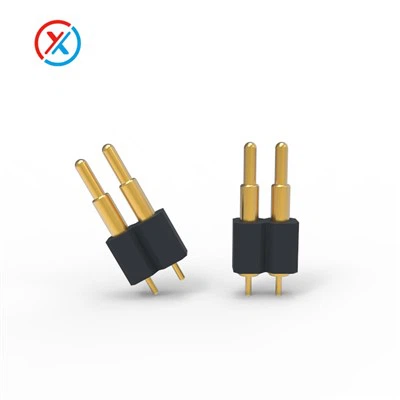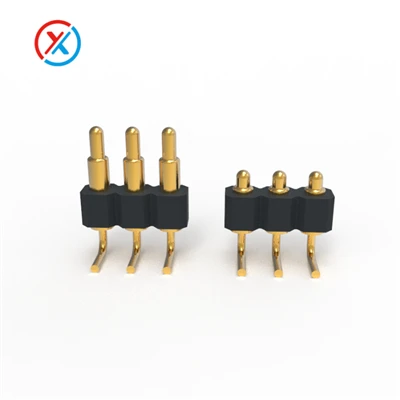
In the realm of electrical connectors, Pogo Pin Right Angle connectors have emerged as a crucial component, offering a reliable and efficient solution for various applications. As a supplier of Pogo Pin Right Angle connectors, I am often asked about the contact resistance of these pins. In this blog post, I will delve into the concept of contact resistance, its significance in Pogo Pin Right Angle connectors, and how it impacts the performance of electrical systems.
Understanding Contact Resistance
Contact resistance is the resistance encountered at the interface between two conductive materials when they are in contact with each other. In the context of Pogo Pin Right Angle connectors, it refers to the resistance between the pin and the mating surface. This resistance is a result of several factors, including the material properties of the pin and the mating surface, the contact force applied, the surface finish, and the presence of any contaminants.


The contact resistance can have a significant impact on the performance of an electrical system. A high contact resistance can lead to increased power loss, heat generation, and voltage drops, which can ultimately affect the functionality and reliability of the system. On the other hand, a low contact resistance ensures efficient power transfer, minimal signal loss, and stable electrical performance.
Factors Affecting Contact Resistance in Pogo Pin Right Angle Connectors
Material Properties
The choice of materials for the Pogo Pin Right Angle connectors plays a crucial role in determining the contact resistance. Metals with high electrical conductivity, such as copper and gold, are commonly used for the pins due to their low resistance. The mating surface also needs to be made of a conductive material to ensure good electrical contact. Additionally, the hardness and elasticity of the materials can affect the contact force and the durability of the connection.
Contact Force
The contact force applied between the pin and the mating surface is another important factor influencing contact resistance. A sufficient contact force is required to ensure a reliable electrical connection by overcoming the surface roughness and any oxide layers on the mating surfaces. However, excessive contact force can lead to deformation of the pin or the mating surface, which can increase the contact resistance. Therefore, it is essential to optimize the contact force to achieve a balance between a low contact resistance and a reliable connection.
Surface Finish
The surface finish of the Pogo Pin Right Angle connectors can have a significant impact on the contact resistance. A smooth and clean surface reduces the contact resistance by minimizing the surface roughness and the presence of contaminants. Surface treatments such as plating can also improve the electrical conductivity and the corrosion resistance of the pins. For example, gold plating is commonly used to provide a low-resistance and corrosion-resistant surface.
Contaminants
The presence of contaminants, such as dust, dirt, and oxidation, can increase the contact resistance in Pogo Pin Right Angle connectors. These contaminants can act as insulators, preventing the direct contact between the pin and the mating surface. Regular cleaning and proper storage of the connectors can help minimize the impact of contaminants on the contact resistance.
Measuring Contact Resistance in Pogo Pin Right Angle Connectors
Measuring the contact resistance of Pogo Pin Right Angle connectors is an important step in ensuring their quality and performance. There are several methods available for measuring contact resistance, including the four-wire method and the two-wire method.
The four-wire method, also known as the Kelvin method, is the most accurate method for measuring contact resistance. It involves using two separate pairs of wires to apply a current through the connection and measure the voltage drop across it. This method eliminates the effects of the lead resistance, providing a more accurate measurement of the contact resistance.
The two-wire method is a simpler and more commonly used method for measuring contact resistance. It involves applying a current through the connection and measuring the voltage drop using a single pair of wires. However, this method includes the lead resistance in the measurement, which can introduce some errors.
Importance of Low Contact Resistance in Pogo Pin Right Angle Connectors
Efficient Power Transfer
A low contact resistance in Pogo Pin Right Angle connectors ensures efficient power transfer between the electrical components. This is particularly important in high-power applications, where even a small increase in contact resistance can result in significant power losses. By minimizing the contact resistance, the connectors can reduce power consumption and improve the overall efficiency of the electrical system.
Signal Integrity
In addition to power transfer, low contact resistance is also crucial for maintaining signal integrity in electrical systems. In high-speed data transmission applications, a high contact resistance can cause signal attenuation, distortion, and interference, leading to errors in data transmission. By providing a low-resistance path for the signals, Pogo Pin Right Angle connectors with low contact resistance can ensure reliable and high-quality signal transmission.
Reliability and Durability
Low contact resistance also contributes to the reliability and durability of Pogo Pin Right Angle connectors. A stable and low-resistance connection reduces the risk of overheating, arcing, and corrosion, which can damage the connectors and affect their performance over time. By ensuring a reliable electrical connection, the connectors can withstand repeated mating and unmating cycles, providing long-term reliability in various applications.
Our Pogo Pin Right Angle Connectors
As a supplier of Pogo Pin Right Angle connectors, we are committed to providing high-quality products with low contact resistance. Our connectors are made of high-conductivity materials and are subjected to strict quality control measures to ensure consistent and reliable performance. We offer a wide range of Electrical Pogo Pins and Spring Loaded Pogo Pins that are designed to meet the diverse needs of our customers.
Our Spring Loaded Pin Contact technology ensures a reliable and stable electrical connection by providing a consistent contact force. The pins are designed to have a smooth surface finish and are plated with gold to minimize the contact resistance and improve the corrosion resistance. We also offer custom solutions to meet the specific requirements of our customers, including different pin sizes, shapes, and contact forces.
Conclusion
Contact resistance is a critical parameter in Pogo Pin Right Angle connectors that can significantly impact the performance of electrical systems. By understanding the factors affecting contact resistance and taking appropriate measures to minimize it, we can ensure efficient power transfer, signal integrity, and reliability in our connectors. As a supplier of Pogo Pin Right Angle connectors, we are dedicated to providing high-quality products with low contact resistance to meet the needs of our customers.
If you are interested in our Pogo Pin Right Angle connectors or have any questions about contact resistance, please feel free to contact us. We are happy to discuss your requirements and provide you with the best solutions for your applications.
References
- Grover, F. W. (1946). Inductance Calculations: Working Formulas and Tables. Dover Publications.
- Johnson, J. B. (1928). Thermal agitation of electricity in conductors. Physical Review, 32(1), 97-109.
- Nyquist, H. (1928). Thermal agitation of electric charge in conductors. Physical Review, 32(1), 110-113.