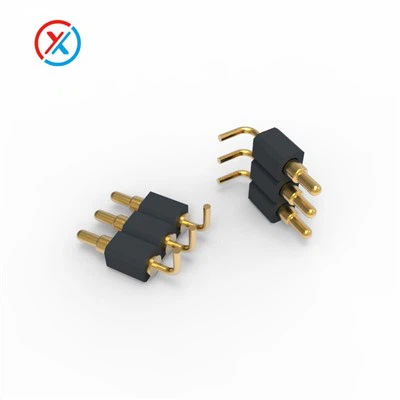
Hey there! As a supplier of dip pogo pins, I've had my fair share of customers asking about how to boost the extraction force of these little guys. So, I thought I'd put together this blog to share some tips and tricks that I've picked up over the years.
First off, let's talk about what extraction force is. In simple terms, it's the amount of force needed to pull a pogo pin out of its socket. A higher extraction force can be super important in a lot of applications. For example, in a Pogo Pin Charger, you want the pins to stay firmly in place to ensure a good electrical connection and prevent any loose contacts that could lead to charging issues.
1. Material Selection
One of the most fundamental ways to increase the extraction force is by carefully choosing the materials for your dip pogo pins. The choice of material can significantly impact the pin's mechanical properties and its ability to grip the socket.
-
Spring Material: The spring inside the pogo pin is a key component. High - quality spring materials like stainless steel or beryllium copper are great choices. Stainless steel is known for its durability and corrosion resistance. It can maintain its shape and springiness over a long period, which means it can keep applying a consistent force against the socket walls, thus increasing the extraction force. Beryllium copper, on the other hand, has excellent electrical conductivity along with good mechanical properties. It can be heat - treated to achieve the right balance of strength and flexibility, making it ideal for pogo pins where both electrical performance and extraction force are crucial.
-
Plating: The plating on the pogo pin also plays a role. A hard and smooth plating can reduce friction during insertion but still provide enough grip for extraction. Nickel plating is a popular choice as it offers good wear resistance. Gold plating, while more expensive, not only provides excellent electrical conductivity but also has a low coefficient of friction, which can help in achieving a good balance between easy insertion and high extraction force.
2. Design Optimization
The design of the dip pogo pin itself can have a huge impact on its extraction force. Here are some design aspects to consider:
-
Pin Tip Design: The shape of the pin tip can affect how it interacts with the socket. A tapered tip can make insertion easier, but a flat or slightly rounded tip can increase the contact area with the socket walls. This larger contact area means more friction, which in turn increases the extraction force. For example, a flat - tipped 1mm Pogo Pin will have more surface area in contact with the socket compared to a sharply pointed one, resulting in a higher extraction force.
-
Spring Coil Design: The number of coils, the pitch between the coils, and the wire diameter of the spring all matter. A spring with more coils generally provides a more uniform force distribution. A smaller pitch between the coils can increase the spring's stiffness, which means it can apply more force against the socket walls. However, you need to find the right balance because if the spring is too stiff, it can make insertion difficult.
-
Overall Pin Dimensions: The diameter and length of the pogo pin also influence the extraction force. A larger - diameter pin will have more surface area in contact with the socket, which can increase friction. But again, you have to consider the application requirements. For example, in a high - density circuit board, you might be limited by the available space, so you need to optimize the dimensions within those constraints.


3. Socket Design and Fit
The socket that the dip pogo pin goes into is just as important as the pin itself when it comes to extraction force.
-
Socket Material: Similar to the pin, the socket material should be chosen carefully. A hard and durable material like brass or aluminum can provide a good surface for the pin to grip. These materials can also withstand repeated insertions and extractions without deforming easily.
-
Socket Tolerance: The tolerance of the socket is crucial. If the socket is too loose, the pin won't have enough contact with the walls, resulting in a low extraction force. On the other hand, if it's too tight, insertion can be very difficult and may even damage the pin or the socket. You need to ensure that the socket is manufactured to the right tolerance so that there's a snug fit between the pin and the socket.
4. Lubrication (with Caution)
In some cases, using a lubricant can help increase the extraction force. However, this has to be done carefully.
-
Benefits of Lubrication: A small amount of lubricant can reduce the friction during insertion, allowing the pin to be inserted more easily. Once inserted, the lubricant can also help the pin maintain a better contact with the socket walls, which can increase the extraction force. For example, a silicone - based lubricant can provide a smooth surface for the pin to slide in and out while still maintaining a good grip.
-
Risks of Lubrication: Too much lubricant can cause problems. It can attract dust and debris, which can build up over time and reduce the extraction force. Also, some lubricants may not be compatible with the pin or socket materials, which can lead to corrosion or other issues. So, if you decide to use a lubricant, make sure it's tested thoroughly in your specific application.
5. Quality Control
Finally, strict quality control during the manufacturing process is essential to ensure consistent extraction force.
-
Testing: Each batch of dip pogo pins should be tested for extraction force. This can be done using specialized testing equipment that measures the force required to pull the pin out of the socket. By testing a sample from each batch, you can ensure that the pins meet the required specifications.
-
Process Monitoring: Monitoring the manufacturing process is also important. Any changes in the manufacturing process, such as variations in the plating thickness or the spring manufacturing parameters, can affect the extraction force. By closely monitoring these processes, you can catch any issues early and make adjustments as needed.
In conclusion, increasing the extraction force of dip pogo pins is a multi - faceted process that involves material selection, design optimization, socket design, and quality control. By paying attention to these aspects, you can ensure that your pogo pins have the right extraction force for your specific application.
If you're in the market for high - quality dip pogo pins and want to discuss how we can optimize the extraction force for your needs, don't hesitate to reach out. We're always here to help you find the best solutions for your projects. Whether you need 1mm Pogo Pins, Pogo Pin Chargers, or High Current Pogo Pins DC 25A, we've got you covered.
References
- "Mechanical Design Handbook for Electronic Packaging" by D. C. Lee
- "Materials Science and Engineering: An Introduction" by William D. Callister Jr. and David G. Rethwisch
- Industry research papers on pogo pin design and performance.