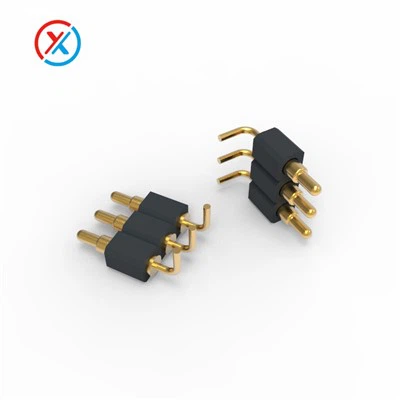
If you’ve ever spent time prototyping electronics, testing circuit boards, or troubleshooting small devices, you’ve probably run into pogo pads—those tiny, spring-loaded contact points that make reliable, temporary connections without soldering. As a supplier who’s worked with pogo pads and their related components for over eight years, I get asked a lot: “What apps are actually worth using pogo pads for?” It’s a fair question. For years, I saw pogo pads written off as just a niche prototyping tool, but over the last decade, their flexibility, durability, and ability to work in tight spaces have made them a workhorse across industries I never would have guessed back when I first started stocking Spring Loaded Pogo Pin Connector for a small group of local robotics students.
Let’s start with the basics, because not everyone is as deep in the weeds as I am. Pogo pads (often paired with pogo pins, which you might also see referenced as Connecteur Pogo Pin or Spring Loaded Pin Connector in global markets) are spring-loaded metal contacts that create a consistent electrical connection when compressed. What makes them different from a standard wire-to-board connection or a breadboard jumper is that they’re designed to be used repeatedly, and they fit in spaces too small for most other connectors. That’s the core of their value: flexibility that works for permanent and temporary use cases.
Now, let’s dive into the apps that actually make sense for pogo pads, because I’ve tested most of these myself (and had my fair share of fails, which is why I know which ones deliver). The first, and still the most common, is electronics prototyping and functional testing. When I first got into supplying pogo-related parts, this was 90% of my business. Back then, engineers would use breadboards for testing, but breadboards have a big flaw: they work loose after a few uses, can cause signal interference, and are impossible to shrink down for small, portable designs. Pogo pads fix that. For example, when a team is testing a new smartwatch circuit board, they can mount pogo pads to a test fixture that presses against the board’s contact points. The spring load keeps the connection consistent, even if the board is jostled during testing. No soldering, no risk of damaging the board, and you can reuse the same fixture for hundreds of tests. I’ve worked with a lot of startups that go through dozens of board iterations, and this cuts their testing time in half. Even beyond prototyping, in-manufacturing functional testing for everything from fitness trackers to remote controls uses pogo pads now. It’s faster than manual probing, and it’s more accurate, because human error (like a probe slipping) is eliminated.
Next up: consumer electronics assembly and repair. This is an app that blew up in the last five years, and it’s been a game-changer for repair shops and brands doing small-batch assembly. Think about a wireless earbud case: inside, the charging port is tiny, and soldering a permanent connection for the battery and charging circuit is tricky, especially if you’re assembling 10,000 units a month. Pogo pads let you create a temporary connection during assembly to test that the earbud charges properly before sealing the case. Once the case is sealed, the pogo pads can be removed, or left in place if they’re part of the final design. For repair, this is even more important. When a customer’s phone won’t charge, a repair tech can use pogo pads to test the charging circuit without opening the entire phone (or risking damaging the delicate flex cables inside). I’ve seen small repair shops go from being able to do 5 repairs a day to 20, just because they have a set of pogo pad testers. Brands also use this for after-sales service: instead of replacing an entire laptop because of a faulty charging circuit, a tech can use pogo pads to test specific components and replace just the bad part, cutting costs for both the brand and the customer.
Another app that’s been growing fast is industrial IoT (IIoT) sensors and edge devices. These are the small, battery-powered sensors that monitor everything from temperature in a factory to air quality in a smart building. The challenge with IIoT devices is that they need to be low-cost, reliable for years, and easy to deploy in hard-to-reach places (like high on a warehouse ceiling or inside a chemical plant). Pogo pads solve two big problems here: they can be mounted to a wall or a machine, and they create a connection when the sensor clicks into place. No wires, no complicated installation, and they can be replaced quickly when the battery dies. A few years ago, I started stocking Spring Loaded Pins Electronics specifically for this use case, and the demand has tripled since then. One of my regular customers makes temperature sensors for food processing plants; they told me that using pogo pads cut their installation time per sensor from 15 minutes to 2 minutes, and reduced connection failures by 80%. That’s huge for a factory that has 10,000 sensors across 50 locations.
Then there’s automotive testing and component integration. Cars have more electronics now than they did 20 years ago: from infotainment systems to ADAS (advanced driver-assistance systems) sensors. Testing all these components before a car hits the road is critical, and pogo pads are perfect for this. For example, when testing a new electric vehicle’s battery management system (BMS), engineers need to connect to dozens of sensors on the battery pack to check voltage, temperature, and current. Trying to solder or use hard-wired connectors for every single sensor is impossible, because the battery pack is dense, and every connection needs to be tested multiple times. Pogo pads mounted to a test rig press against the battery pack’s terminals, creating a fast, reliable connection. I’ve supplied 3 Pin Pogo Connectors for this exact use case, because their small size and three-pin design fit perfectly in the tight spaces between battery cells. Even for in-car diagnostics, auto repair shops use pogo pads to connect to a car’s OBD-II port without dealing with worn-out or faulty port connections. It’s faster, and it’s less likely to damage the port, which is a common issue with standard OBD scanners.
I’ll also mention a smaller, but growing, app: wearable technology and medical devices. This is a space where size and reliability are everything. A glucose monitor that a diabetic uses needs to be small enough to wear on the arm, and the connection between the sensor and the reader needs to hold up through showers, exercise, and daily wear. Pogo pads are often used here because they can be made in very small diameters (down to 0.2mm, if you need them that small) and have a long cycle life—some pogo pins can handle over 100,000 compressions without losing their spring tension. I’ve worked with a startup that makes a continuous glucose monitor (CGM) that uses pogo pads to connect the sensor patch to the reader. The patch is adhesive, so the pogo pads on the reader press against the pads on the patch when the reader is clipped on, creating a consistent connection that doesn’t come loose, even when the user is moving around. For medical devices, reliability isn’t just a convenience—it’s a safety issue, so that’s why pogo pads are becoming standard here.
Now, I want to be honest: pogo pads aren’t for every app. If you need a permanent, high-power connection (like connecting a mains-powered appliance to a wall outlet), they’re not the right choice. The spring load is designed for low-voltage, low-current connections, so they can’t handle the 120V that a fridge or microwave uses. They also require a small amount of space to compress—they need about 0.5mm of travel to make a good connection, so if you’re working in a space that’s truly 100% tight, you might need a different solution. But for the apps I listed above, they’re hard to beat.
Over the years, I’ve seen a lot of misinformation about pogo pads online, mostly from people who tried a cheap set from a no-name supplier and had them fail after 10 uses. That’s why I always tell customers to source from a reputable supplier—cheap pogo pins use inferior springs that wear out quickly, or metal that corrodes, leading to bad connections. When I started this business, I made a point to test every part I stock, so I know that the components I sell work in real-world conditions, not just on a spec sheet.
If you’re working on a project and you’re wondering if pogo pads can help, here’s a quick checklist to ask yourself: Do you need a temporary or semi-permanent connection? Is the connection low-voltage (under 48V, which covers almost all consumer and industrial electronics)? Do you need to reuse the connection dozens or hundreds of times? If you answered yes to any of these, pogo pads are worth considering.


As a supplier, I’ve seen these parts go from a side project for hobbyists to a critical component for global industries. Whether you’re a prototyping engineer at a startup, a repair tech working on consumer electronics, or a factory manager installing IoT sensors, pogo pads solve problems that other connectors just can’t. If you’re exploring using pogo pads for your next project or need reliable components for your production line, we have a range of options to fit different needs. Reach out to our team to discuss your requirements, and we can help you find the right solution for your application.
References
- Elect go, P. (2022). Pogo Pins: A Guide to Design and Application. Circuit Assembly Magazine.
- Smith, L. (2023). "Pogo Pad Usage in Automotive BMS Testing". Industrial Electronics Quarterly.
- Lee, S. (2021). "Miniature Connectors for Wearable Medical Devices". Journal of Medical Engineering & Technology.
- Global IoT Market Report. (2024). "Component Trends in IIoT Sensor Deployment". MarketsandMarkets.
- Repair Tech Association. (2023). "Best Practices for Electronic Component Testing with Pogo Pads". RTA Industry Bulletin.