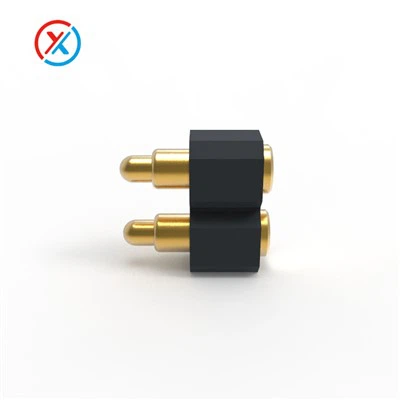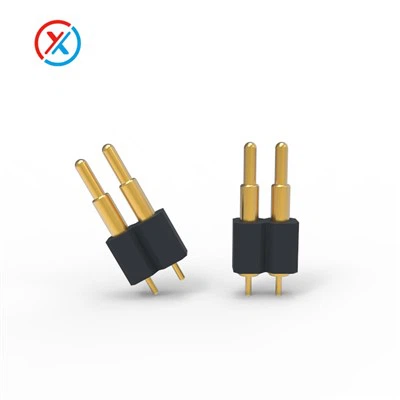
Hey there! As a supplier of large pogo pins, I often get asked about the electrical properties of these nifty little components. In this blog, I'm gonna break down the key electrical aspects of large pogo pins, so you can better understand how they work and why they're a great choice for your projects.
1. Conductivity
One of the most important electrical properties of large pogo pins is their conductivity. Good conductivity means that the pins can efficiently transfer electrical signals or power from one point to another with minimal loss. The materials used in the construction of pogo pins play a huge role in determining their conductivity.
Most high - quality pogo pins, including our Gold - Plated Pogo Pins High Quality, are made with a base metal like copper or brass, which already have decent electrical conductivity. Then, they're coated with a thin layer of gold. Gold is an excellent conductor and also highly resistant to corrosion. This gold plating not only enhances the conductivity but also ensures the long - term reliability of the pogo pins.
When it comes to large pogo pins, the larger cross - sectional area of the pin itself can also contribute to better conductivity. A bigger pin can carry more current without overheating or causing significant voltage drops. For example, in applications where high - power transmission is required, such as in some charging docks for large electronic devices, large pogo pins can handle the current flow more effectively compared to smaller pins.
2. Resistance
Electrical resistance is the opposition to the flow of electric current. In the context of large pogo pins, a low resistance is generally desirable. There are several factors that can affect the resistance of a pogo pin.
The material, as mentioned earlier, is a major factor. The high - conductivity materials used in well - made pogo pins help keep the resistance low. The length of the pin also matters; longer pins tend to have higher resistance. However, in large pogo pins, the design often takes this into account, and the overall resistance is still kept at an acceptable level.
Another aspect is the contact resistance. When the pogo pin makes contact with another surface (like a circuit board or another connector), there's a certain amount of resistance at the contact point. This contact resistance can vary depending on the surface finish of the pin and the mating surface, as well as the force applied. Our Spring Loaded Pin design ensures a consistent and firm contact, which helps minimize the contact resistance. If the contact resistance is too high, it can lead to power loss, heat generation, and potentially affect the performance of the electrical system.
3. Capacitance
Capacitance is the ability of a component to store electrical energy in an electric field. In large pogo pins, capacitance can have an impact on the performance, especially in high - frequency applications.
The capacitance of a pogo pin is influenced by its geometry, the materials used, and the proximity to other conductive elements. For example, if a large pogo pin is placed close to another conductive object, the capacitance between them can increase. In high - frequency circuits, excessive capacitance can cause signal distortion, attenuation, or interference.
To mitigate these issues, the design of large pogo pins often involves carefully controlling the dimensions and spacing. Our engineers work hard to optimize the design of Pogo Pines to minimize unwanted capacitance while still maintaining the other important electrical properties.
4. Inductance
Inductance is related to the magnetic field generated by an electric current flowing through a conductor. When current changes in a pogo pin, an induced electromotive force is created due to the inductance.
Similar to capacitance, inductance can cause problems in high - frequency applications. In large pogo pins, the length and shape can affect the inductance. Longer pins generally have higher inductance. In high - speed data transmission applications, high inductance can lead to signal reflections and delays, which can degrade the signal quality.
Our large pogo pins are designed to have low inductance values. By using appropriate materials and optimizing the shape and size of the pins, we can reduce the inductance and ensure that the pins perform well in high - frequency and high - speed applications.


5. Voltage Rating
The voltage rating of a large pogo pin indicates the maximum voltage that the pin can safely handle without breaking down or causing electrical arcing. This is an important consideration, especially in applications where high voltages are involved.
The voltage rating depends on several factors, including the insulation materials used (if any), the distance between conductive parts, and the overall design of the pogo pin. For example, in some high - voltage test fixtures, the large pogo pins need to be able to withstand relatively high voltages without any issues.
We make sure that our large pogo pins are designed and tested to meet specific voltage ratings. This gives our customers the confidence that the pins will work safely and reliably in their applications.
6. Current - Carrying Capacity
The current - carrying capacity of a large pogo pin is the maximum amount of current that the pin can carry continuously without overheating or causing damage. This property is crucial in applications where power needs to be transferred.
As mentioned earlier, the cross - sectional area of the pin plays a significant role in determining the current - carrying capacity. A larger pin can generally carry more current. However, other factors like the material's conductivity, the contact resistance, and the heat dissipation capabilities also affect it.
In our manufacturing process, we carefully select the materials and design the pins to ensure a high current - carrying capacity. This makes our large pogo pins suitable for a wide range of applications, from small - scale electronic devices to large - scale industrial equipment.
Why Choose Our Large Pogo Pins
We've put a lot of effort into ensuring that our large pogo pins have excellent electrical properties. Our team of experts is constantly researching and developing new technologies to improve the performance of our products. Whether you need high - conductivity, low - resistance, or specific voltage and current ratings, we've got you covered.
If you're in the market for large pogo pins for your next project, we'd love to have a chat with you. We can provide you with detailed information about our products, help you choose the right pins for your application, and even offer custom solutions if needed. So, don't hesitate to reach out and start a conversation about your procurement needs. We're here to make sure you get the best large pogo pins for your money.
References
- Electrical Engineering Handbook, Third Edition, edited by Richard C. Dorf
- Fundamentals of Electric Circuits, Charles K. Alexander and Matthew N. O. Sadiku