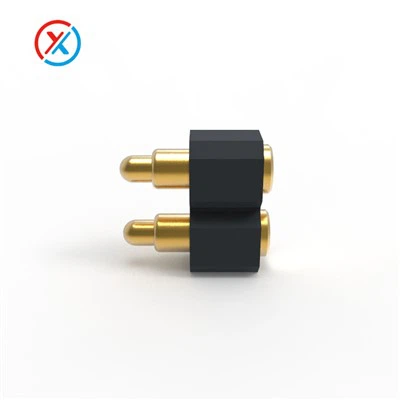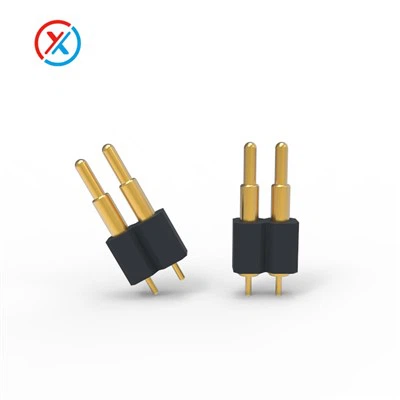
In the realm of PCB (Printed Circuit Board) testing, pogo pins play a pivotal and often under - appreciated role. As a pogo pin supplier, I've witnessed firsthand how these tiny yet powerful components are essential for accurate and efficient PCB testing.
Understanding Pogo Pins
Pogo pins, also known as spring - loaded pins, are precision electrical connectors. They consist of a plunger, a barrel, and a spring. The plunger is the part that makes contact with the PCB, while the spring provides the necessary force to ensure a reliable electrical connection. The barrel houses the spring and the plunger, providing structural support.
One of the key features of pogo pins is their ability to compensate for uneven surfaces. When testing a PCB, the surface may not be perfectly flat due to manufacturing tolerances or the presence of components. Pogo pins can adjust to these irregularities, ensuring that the electrical connection is maintained. This is crucial for accurate testing, as a poor connection can lead to false readings and inaccurate test results.
The Role of Pogo Pins in PCB Testing
Electrical Connection
The primary role of pogo pins in PCB testing is to establish an electrical connection between the test equipment and the PCB. During testing, various electrical signals need to be sent to and received from the PCB. Pogo pins act as the bridge, allowing these signals to flow smoothly. For example, in functional testing, where the PCB's performance is evaluated under different operating conditions, pogo pins ensure that the power, ground, and signal lines are properly connected. This enables the test equipment to accurately measure the PCB's electrical characteristics, such as voltage, current, and resistance.
Contact Reliability
Contact reliability is of utmost importance in PCB testing. A single unreliable connection can cause the entire test to fail, leading to wasted time and resources. Pogo pins are designed to provide consistent and reliable contact. The spring within the pogo pin exerts a constant force on the plunger, ensuring that it remains in contact with the PCB surface. This force is carefully calibrated to provide a good electrical connection without damaging the PCB. Additionally, the materials used in pogo pins are chosen for their excellent conductivity and corrosion resistance, further enhancing the reliability of the contact.
High - Density Testing
As PCBs become more complex and the demand for smaller form factors increases, the need for high - density testing has grown. Pogo pins are well - suited for high - density testing applications. They can be arranged in a compact pattern, allowing for multiple connections to be made on a small area of the PCB. This is particularly useful in testing multi - layer PCBs, where there may be many different signal and power lines that need to be accessed simultaneously. For instance, in a smartphone PCB, which contains a large number of components and traces, pogo pins can be used to test all the necessary connections in a single test setup.
Compatibility with Different PCB Designs
Pogo pins are highly versatile and can be used with a wide variety of PCB designs. Whether it's a standard single - layer PCB or a complex multi - layer PCB with fine - pitched components, pogo pins can be customized to meet the specific requirements of the test. They can be designed to have different lengths, diameters, and contact forces, depending on the application. For example, Spring Loaded Pin Contacts are available in different configurations, including right - angle designs, which are useful for testing PCBs in tight spaces or with specific layout requirements.
Types of Pogo Pins for PCB Testing
Large Diameter Pogo Pins
Large Diameter Pogo Pins are often used in applications where high current or high power needs to be transferred. These pins have a larger cross - sectional area, which allows them to carry more current without overheating. In PCB testing, they are commonly used for power testing, where a significant amount of current may need to be supplied to the PCB. For example, in testing a power supply PCB, large diameter pogo pins can be used to ensure that the power connections are reliable and can handle the required current.
Lead - Free Pogo Pins
With the increasing focus on environmental protection and compliance with regulations such as RoHS (Restriction of Hazardous Substances), Spring Loaded Pogo Pins Lead Free have become more popular. These pins are made without the use of lead, which is a hazardous material. In PCB testing, lead - free pogo pins are used to ensure that the testing process is environmentally friendly and compliant with industry standards. They offer the same performance and reliability as traditional pogo pins, but without the environmental concerns.
Advantages of Using Pogo Pins in PCB Testing
Cost - Effectiveness
Pogo pins offer a cost - effective solution for PCB testing. They are relatively inexpensive compared to other types of connectors, and their long lifespan reduces the need for frequent replacement. Additionally, the ability to reuse pogo pins in multiple test setups further lowers the overall cost of testing. For example, in a production environment where a large number of PCBs need to be tested, using pogo pins can significantly reduce the testing cost per unit.
Ease of Use
Pogo pins are easy to install and use. They can be quickly and easily mounted on a test fixture, and the test setup can be adjusted as needed. This makes them ideal for both manual and automated testing processes. In an automated testing system, pogo pins can be integrated into the testing equipment, allowing for fast and efficient testing of PCBs.
Flexibility
Pogo pins provide a high degree of flexibility in PCB testing. They can be used to test different types of PCBs, and the test setup can be easily modified to accommodate changes in the PCB design. This is particularly useful in the development phase of a PCB, where multiple design iterations may be required. Pogo pins allow for quick and easy testing of each iteration, enabling engineers to identify and correct any issues early in the development process.
Challenges and Solutions in Using Pogo Pins for PCB Testing
Wear and Tear
One of the main challenges in using pogo pins for PCB testing is wear and tear. Over time, the plunger and the barrel of the pogo pin can wear out, leading to a decrease in contact reliability. To address this issue, high - quality materials are used in the manufacturing of pogo pins, and they are designed to withstand a large number of cycles. Additionally, regular maintenance and inspection of the pogo pins can help to identify and replace any worn - out pins before they cause problems.
Contamination
Contamination can also affect the performance of pogo pins. Dust, debris, and oxidation can accumulate on the contact surface of the pogo pin, leading to poor electrical connection. To prevent contamination, pogo pins can be cleaned regularly using appropriate cleaning agents. In some cases, protective coatings can be applied to the contact surface to reduce the risk of oxidation.


Conclusion
In conclusion, pogo pins play a crucial role in PCB testing. They provide a reliable, cost - effective, and flexible solution for establishing electrical connections between the test equipment and the PCB. As a pogo pin supplier, I am committed to providing high - quality pogo pins that meet the diverse needs of the PCB testing industry. Whether you are testing a simple single - layer PCB or a complex multi - layer PCB, our pogo pins can help you achieve accurate and efficient testing results.
If you are in the market for pogo pins for your PCB testing needs, I encourage you to reach out to us for a detailed discussion. We can provide you with customized solutions based on your specific requirements and help you optimize your PCB testing process.
References
- "Electrical Connectors Handbook", McGraw - Hill
- "PCB Design and Manufacturing", Wiley