If you’ve ever struggled with fumbling to plug in cables in dim lighting, or worried about damaging fragile ports on your small electronics, you’ve probably wondered: Can I customize a 4 pin magnetic connector to fit my exact needs? As a supplier who’s spent the last 12 years working closely with engineers, product designers, and small business owners to solve those exact headaches, the short answer is a resounding yes—but it’s not just a yes/no question. Customizing these connectors requires digging into what makes magnetic 4 pin connectors work, what modifications are possible, and how to avoid common missteps that can turn a great idea into a dud. Let’s break this down, starting with the basics to make sure we’re all on the same page.
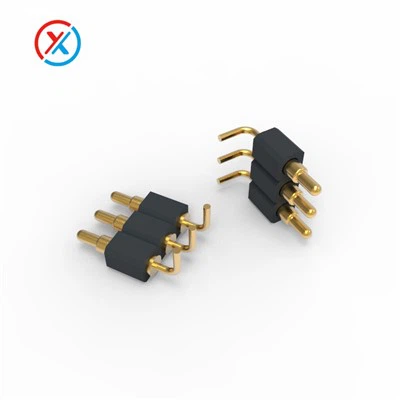
First, let’s clarify what a standard 4 pin magnetic connector is, because that’s the foundation of any customization. Most off-the-shelf 4 pin magnetic connectors are built for universal use: four electrical pins arranged in a symmetrical circle or rectangular pattern, a pair of neodymium magnets to hold the two halves together, and a plastic or metal housing to protect the internal components. Their big selling point is the “unmate-on-tug” design—if someone yanks the cable, the connector pulls apart before damage is done to your device’s port. That’s why they’re so popular for everything from wireless earbuds and portable chargers to small medical devices and IoT sensors. You can check out our standard off-the-shelf option here: Magnetic 4 Pin Connector, which gives you a baseline of what most 4 pin magnetic connectors look like out of the box.
Now, why would someone want to customize one? The reasons are as varied as the products that use these connectors. Let’s walk through the most common scenarios I’ve seen, to show how customization works in practice.
The first and most frequent request is pin configuration. A lot of people assume all 4 pin connectors use the same pinout—but that’s far from true. A standard 4 pin magnetic connector might split power, ground, and two data lines, but if you’re building a smart sensor that needs temperature data, or a wearable that pairs with a phone, you might need to reassign which pin does what. For example, a client last year was building a portable insulin pump and needed their connector to carry 5V power, a ground, and two separate data lines for monitoring glucose levels. We took our standard 4 pin magnetic connector and redesigned the internal pin layout to match their specific circuit board, cutting down on wiring clutter inside the pump. That’s the beauty of customization: you don’t have to force your product to fit a one-size-fits-all connector.
Next up is connector type and form factor. Maybe your project uses a DC power connection exclusively—no data needed, just power. In that case, you might want a DC Magnetic Connector optimized for that, which is a common variation we offer, but you can also customize the housing size. A tiny Bluetooth beacon, for example, only has 8mm of space for a connector, so a standard 12mm circular connector won’t work. We can shrink the housing down to 6mm, adjust the magnet strength to compensate for the smaller size (so it still pulls together securely without needing a stronger magnet that might damage small circuit boards), and adjust the pin length to fit that tight space. On the flip side, if you’re building a large medical device that sits on a counter, you might want a rectangular housing instead of a circular one for a more integrated look—that’s another customization we handle regularly.
Pin style is another big customization area. Some applications require a very flat pin to fit inside a slim device, while others need a more robust pin that can be plugged and unplugged hundreds of times without wearing out. For projects that need reliable, high-cycle performance, many of our clients opt for Pogo Pin Connector Magnetic instead of standard solder pins. Pogo pins are spring-loaded, which means they create a consistent connection every time, even if the two halves of the connector are slightly misaligned—perfect for devices that get jostled around, like portable speakers or fitness trackers. We can customize the length of the pogo pins, their spring tension, and even their plating (gold for low-resistance, nickel for cost-effectiveness) to match your needs. For a project that needs high-power, say a portable power bank that charges a laptop, we also offer Magnetic Power Connector customizations that increase the current capacity from the standard 2A up to 10A, just by adjusting the pin size and material.
Wait, but what about changing the number of pins? I get this question all the time: If I need 6 connections, can I customize a 4 pin connector to have extra pins? The answer is usually no, and here’s why. The magnetic core of a 4 pin connector is sized to fit exactly four pins without overcrowding. If you try to cram more pins into the same space, you run into two problems: first, the pins become too small to carry their required current or data signal, leading to weak connections or signal interference. Second, there’s not enough space for the magnets, so the connector won’t hold together securely. That’s why for applications that need more than 4 connections, our clients turn to Magnetic Connector 8 Pin, which is built for exactly that—eight pins spaced to avoid interference, with a housing sized for extra magnets to keep it secure. It’s better to match the number of pins to your needs, not force a 4 pin connector to do more than it’s designed for.
Now, before you get too excited about all these customizations, there are a few key factors to keep in mind to make your project a success. The first is lead time. Custom connectors aren’t something we build in a day. Even for small, low-volume custom runs, the process takes about 2 to 4 weeks, because we have to prototype the design, test it for conductivity and magnet strength, and adjust for any issues that pop up. For large production runs (10,000+ units), lead time goes up to 6 to 8 weeks. That’s important to factor into your product timeline—don’t wait until the last minute to start designing your connector.
The second factor is minimum order quantities (MOQs). Off-the-shelf 4 pin magnetic connectors have low MOQs, often just 100 units, because they’re mass-produced. Custom connectors work differently: tooling and design costs add up, so MOQs are usually higher. For small prototyping runs (less than 500 units), MOQs are typically around 500 to 1,000 units, and for production runs, they go down as volume increases. If you’re just testing a new product, it’s often more cost-effective to start with a small custom run to work out kinks, then scale up later.
Third, testing is non-negotiable. When you customize a connector, you have to make sure it works for your specific environment. A connector for an outdoor IoT sensor, for example, needs to be waterproof and resistant to dust, so we test custom connectors for ingress protection (IP) ratings like IP67, which means it can be submerged in 1 meter of water for 30 minutes. A connector for a medical device needs to be biocompatible, so we test the materials to make sure they don’t cause skin irritation. And any connector that’s going to be plugged and unplugged hundreds or thousands of times needs to be tested for cycle life—we’ve had clients come back to us with a prototype that only works 50 times, and we redesign the pins to last 5,000 cycles before finalizing.
I’ve seen too many product designers skip the testing step and end up with a custom connector that doesn’t work when their product hits production. A few years ago, a startup came to us with a custom 4 pin connector for a portable electric shaver—they shrank the housing down too much, skimped on the magnet size, and the connector would slip apart if the user tilted the shaver at an angle. We redesigned the magnet layout, adjusted the housing shape to keep the magnets aligned, and tested 10,000 units to make sure they held together through drop tests and repeated use. That’s why working with a supplier that has in-house testing capabilities is so important—we don’t just send you a design and charge you; we make sure it works for your use case.
Another common misconception is that custom connectors are way more expensive than off-the-shelf. While custom connectors do cost more per unit than a standard 4 pin magnetic connector, they often save you money in the long run. If you use an off-the-shelf connector that doesn’t fit your product, you might end up with extra wiring, a bulkier device, or even returns because the connector fails. A custom connector is built to integrate perfectly with your product, so you get a sleeker design, fewer assembly steps (no extra wiring to work around the connector), and higher reliability. For a product that’s going to sell thousands of units, that extra cost is usually worth it.
Let’s circle back to the original question: Can I customize a 4 pin magnetic connector? Yes, absolutely, as long as you work with a supplier that understands the constraints—pin count limits, form factor tradeoffs, testing requirements—and can guide you through the process. Whether you need a custom pinout for a medical device, a slimmer housing for a wearable, or spring-loaded pogo pins for a jostled sensor, customization is possible. The key is to start early, be clear about your needs, and partner with a supplier that will collaborate with you, not just take your order.
If you’re ready to talk about customizing a 4 pin magnetic connector for your next project, I’d love to connect. We work with startups, established brands, and engineers across all industries, from consumer electronics to medical devices to industrial IoT. We’ll walk you through the design process, answer your questions about lead times, MOQs, and testing, and make sure your connector is exactly what your product needs. Don’t settle for a one-size-fits-all connector that forces your design to compromise—your product deserves a connector that works as hard as you do.
For more information on our standard and custom connector options, feel free to reach out.


References
- Magnetic Connector Design Guidelines, Industrial Electronics Society, 2022
- "Performance Testing of Magnetic Connectors for Consumer Electronics", Journal of Microelectronics and Electronic Packaging, Vol. 18, No. 2, 2021
- IP Rating Standards for Electronic Enclosures, International Electrotechnical Commission (IEC) Standard 60529, 2019
- "Custom Magnetic Connector Tradeoffs for Small Form Factor Devices", Proceedings of the International Conference on Microelectronic Systems, 2023