If you’ve worked in electronics design or lighting manufacturing, you’ve probably landed on tiny, spring-loaded bits called pogo pins more times than you can count. But when it comes to lighting systems—think smart bulbs, strip lights, commercial LED panels, or even holiday string lights—one question keeps popping up: can pogo pin pads actually pull off what lighting needs? As someone who’s been supplying pogo pin pads and connectors for years, I get why engineers and designers are hesitant. Lighting has specific demands: it needs to handle constant current, withstand temperature swings (hot from LED heat, cold in outdoor applications), and be durable enough to stand up to millions of on-off cycles. But after seeing these components work in everything from restaurant display lighting to outdoor stadium LED arrays, the short answer is yes—they can, and they’re often a way better fit than traditional solder, screw terminals, or rigid connectors.
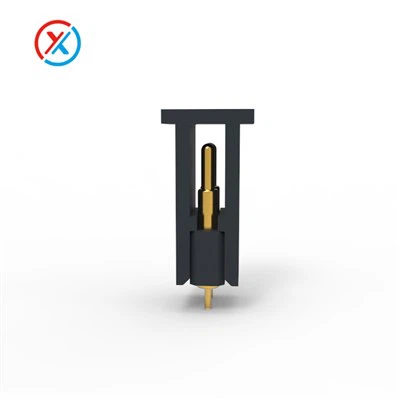
Let’s break this down. First, what are pogo pin pads anyway? They’re those tiny, spring-loaded contact points (think: a pin inside a hollow barrel, with a spring pushing the pin out) that create a temporary or semi-permanent electrical connection without needing to solder wires. Pogo pin pads are the flat, surface-mount pads that sit on a circuit board (PCB) to pair with the pogo pin itself, right? Unlike solder, which can crack when temperature fluctuates (LEDs get hot—we’re talking 50-80°C inside a bulb, sometimes more), the spring in a pogo pin absorbs that movement. That’s a huge win for lighting, where heat cycles are non-negotiable.
Take smart LED bulbs, for example. You want to be able to swap bulbs out fast, right? If you use a solder connection, replacing a bulb means scraping off old solder, which is messy and easy to mess up the PCB. Screw terminals are bulkier, and if you over-tighten, you can strip the thread or damage the bulb’s housing. Pogo pins eliminate both of those problems. A light push-and-click, and you’re connected. But wait—what about power handling? Lighting needs enough current: a standard LED bulb is 10-50 watts, commercial strip lights can hit 100+ watts per meter. Do pogo pin pads handle that? Absolutely, as long as you size them right. You don’t want a tiny pin meant for low-power sensors trying to carry 10 amps for a high-power strip light. That’s why suppliers like us offer options tailored to different loads—you won’t find a one-size-fits-all here.
Another big win for lighting is durability. Outdoor lighting, for example, gets rained on, humidity, dust, even snow. Traditional connectors can corrode over time, or get clogged with gunk, leading to poor connections that make the bulb flicker or die. Pogo pin pads, especially when paired with coated pogo pins, create a tight, spring-loaded seal that keeps contaminants out. I’ve seen projects where pogo pin connectors lasted 10+ years in coastal Florida outdoor lighting—something screw terminals just couldn’t pull off because salt air ate at the metal over time. And for high-volume lighting setups, like retail stores with hundreds of strip lights, pogo pins cut down assembly time. Solder takes time to apply and test, but pogo pins can be pressed into place in seconds, which speeds up production and cuts labor costs.


But it’s not all perfect. Let’s talk about the caveats, because lighting engineers need to know the fine print. First, mating force matters. If you’re designing a light that’s installed in a hard-to-reach spot, like a high ceiling, you don’t want a pogo pin that needs 5 pounds of force to mate—installers will get frustrated, or damage the fixture. Conversely, a pin with too little force can work loose from vibration—think a road sign’s LED lighting that bounces all day. That’s why picking the right pogo pin is key. A good supplier will walk you through that, and if you need 3 Pin Pogo Connectors for a strip light (power, ground, and signal for dimming), they can help match the force and current rating to your fixture.
Then there’s contact resistance. Pins wear out over time, and if the contact gets dirty or the spring loses tension, resistance goes up. That’s a problem for lighting because higher resistance means more heat, which can shorten the bulb’s life. For residential lights, that’s an annoyance, but for commercial or industrial lighting, it’s a warranty issue. That’s why using high-quality, gold-plated pogo pins is non-negotiable—gold resists corrosion and keeps contact resistance low even after thousands of mating cycles. You might see cheap pogo pins with tin plating, which works for short-term use but not for long-term lighting installations.
Another thing: signal integration. A lot of modern lighting isn’t just on-off—it’s dimmable, color-changing, smart-controlled. That means you need not just power, but low-voltage signal wires (for DMX, DALI, or Bluetooth). Pogo pins can handle both power and signal, but you have to design the pads on the PCB to separate power and signal traces so there’s no cross-talk. If you cram a 10-amp power pin next to a low-voltage signal pin, you’ll get interference, and your color-changing strip light might flicker instead of smoothly shifting hues. That’s where experience helps—we’ve worked with lighting designers to layout PCBs so power and signal pogo pins are spaced correctly, so you don’t have to test 10 different configurations.
Let’s bring in some actual use cases to make this real. Last year, we worked with a company making smart under-cabinet LED lighting for kitchens. They were using solder for initial prototypes, but when they tested it, the solder cracked after 6 months of being turned on and off (kitchens have big temperature swings from ovens and dishwashers). We switched them to Spring Loaded Pins Electronics that paired with our pogo pin pads, and they cut their return rate from 8% to less than 1%. Another client was making modular LED panels for trade show booths—they could take the panels apart and reconfigure the booth layout in minutes, thanks to Connecteur Pogo Pin that let them plug and play without tools. They were able to reuse panels multiple times, which saved them thousands in material costs. That’s the kind of flexibility lighting manufacturers crave.
Now, let’s get technical for a sec, because lighting designers care about specs. Pogo pin pads for lighting are usually surface-mount (SMT) on the PCB, so they’re flat and easy to solder during initial assembly. The pad size should match the pin’s barrel diameter—too small, and you won’t get a good connection; too big, and the PCB has unnecessary dead space. For power applications (like main power to a strip light), we recommend pads that are at least 2mm in diameter for 5-10 amps, and 2.5mm for over 10 amps. For signal pins, 1.5mm is usually enough, since signal current is tiny. If you’re working with multi-pin setups, our Spring Loaded Connector Pogo options are designed so all pins mate at the same time (no misalignment), which is critical for multi-channel lighting.
Wait, what about temperature again? LEDs operate at junction temps up to 125°C, and pogo pin springs can handle that—most of our pins are made from stainless steel, which holds tension even at high temps, and the plating (gold or nickel) doesn’t break down. We’ve tested our Spring Loaded Connector Pins at 150°C for 1,000 hours, and the contact resistance barely changes. That’s a big deal because a connector that fails at 100°C is useless for high-power lighting.
Of course, there are lighting applications where pogo pins aren’t the best fit. If you’re making a single-use, cheap holiday light string that only needs to last a season, solder is probably cheaper and simpler. If you’re designing a light that will be submerged in water (like a pool light) and can’t have any gaps for moisture, a sealed screw terminal is still better. But for the vast majority of lighting systems—residential smart bulbs, commercial strip lights, modular panels, outdoor stadium lights—pogo pin pads check the boxes: durable, fast to assemble, tool-free replacement, and handles the current and temperature.
Here’s the thing: as a pogo pin pad supplier, we don’t just sell parts—we help lighting designers figure out the right solution. We’ll ask you questions like: How much power are you running? What’s the expected lifespan? Will the light be installed in a hard-to-reach spot? Do you need signal for dimming or smart control? That’s why having a range of options matters, from low-power 1A pins for accent lights to high-power 20A pins for commercial floodlights. If you need 3 Pin Pogo Connectors for a basic on-off/dim setup, we’ve got those. If you need a 5-pin connector for RGB and control signals, we can build custom ones.
If you’re a lighting engineer or designer who’s been on the fence about pogo pin pads, my advice is this: run a small test. Take a sample pogo pin set, design a simple test board, hook it up to your light fixture, and cycle it 10,000 times (that’s about 3 years of daily use). Check for connection issues, heat buildup, and resistance. 9 out of 10 times, you’ll find they outperform solder or rigid connectors in durability and ease of use.
At the end of the day, lighting systems are all about reliability and convenience. No one wants a bulb that dies after a year because of a bad solder joint, or a fixture that takes 2 hours to install. Pogo pin pads solve both of those problems. If you’re ready to explore if pogo pins work for your lighting project, reach out to our team to discuss your requirements. We can share more specs, send sample parts, and help you design a setup that fits your needs perfectly.
References
- Electronics Component Design Handbook: Spring-Loaded Interconnects for Consumer and Industrial Applications. Wiley, 2022.
- LED Lighting Systems: Thermal Management and Interconnect Solutions. Taylor & Francis, 2021.
- Performance Testing of Pogo Pin Connectors for High-Current Applications. Journal of Electronic Materials, Vol. 50, No. 4, 2021, pp. 1892-1901.
- Surface-Mount Technology for PCB Design and Assembly. McGraw-Hill, 2020.