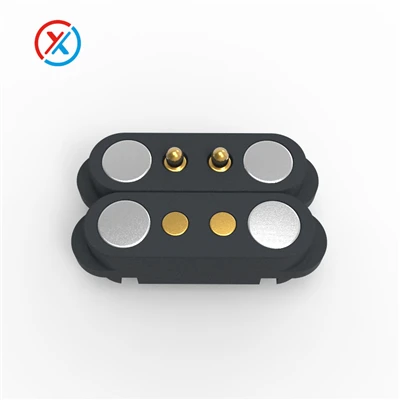
If you’re reading this, there’s a good chance you’re either a design engineer sourcing reliable electrical connectors for your next prototype, a manufacturing manager looking to upgrade your supply chain, or a fellow pogo pin manufacturer trying to stay ahead of a fast-moving industry. For nearly a decade, my team and I have specialized in custom pogo pin solutions—small, spring-loaded connectors that power everything from portable medical devices to high-speed industrial automation gear. When we started, pogo pins were seen as a “component afterthought,” a small part that just needed to fit and conduct. Today, that couldn’t be further from the truth. The future of our industry isn’t just about making smaller, cheaper pins—it’s about building connectors that solve real, complex problems in a world where electronics are everywhere.
Let’s start with the biggest shift we’ve witnessed over the last two years: the demand for high-current pogo pins, driven by the rise of electric mobility (EVs) and next-gen consumer tech. Back in 2018, 3A-rated pogo pins were the norm for most consumer electronics; now, our order books for high-current variants like the Pogo Pin High Current 15A have grown 120% year-over-year. Why? EV battery management systems (BMS) need to transfer hundreds of amps between modules, and traditional connectors are too bulky for the tight space under a car’s hood. Even portable power tools and wireless charging docks—once limited to low-power parts—now require pins that can handle sustained, high current without overheating or failing after thousands of mating cycles. This isn’t a temporary trend, either. As EV production ramps up and aerospace firms test electric vertical takeoff and landing (eVTOL) vehicles, high-current pogo pins will move from a niche solution to a staple. For manufacturers like us, this means investing in new plating materials and contact spring designs—iridium plating, for example, to resist corrosion in harsh automotive environments, and precision-machined spring coils to maintain consistent pressure even after 10,000+ insertions.
But high current isn’t the only demand driving change. Miniaturization has been a constant in electronics, and pogo pins haven’t kept pace with the shrinking size of circuit boards in wearables, hearing aids, and medical implants. A decade ago, a typical pogo pin had a diameter of 1.5mm; today, we’re producing pins as small as 0.3mm for hearing aid controllers. The challenge here isn’t just making a pin smaller—it’s ensuring it still delivers reliable conductivity, can withstand the vibrations of a wrist-worn fitness tracker, and can be soldered without breaking a connection. That’s where precision manufacturing and materials science come into play. We’ve switched from standard brass alloys to hardened beryllium copper for these tiny pins, which offers better elasticity and wear resistance without adding bulk. We’ve also invested in automated micro-soldering stations to cut human error when attaching pins to tiny circuit boards, a process that would be impossible with manual soldering for pins under 0.5mm.
Another growing trend is the integration of smart features into pogo pins themselves. For years, a pogo pin was a passive conductor; today, engineers are asking for pins that can send data, monitor temperature, or even act as a small sensor in devices like industrial IoT sensors. For example, a wind turbine’s remote monitoring system might use pogo pins not just to power the sensor, but to transmit vibration and temperature data back to a control center. This requires adding tiny electronic components—like a microchip or thermistor—directly into the pogo pin’s housing, a level of integration that was unheard of five years ago. This shift is pushing pogo pin manufacturers to expand our expertise beyond mechanical engineering to include microelectronics and software design. We’ve had to hire electrical engineers to work alongside our machining teams, which is a big departure from our early days where all work revolved around spring tension and contact resistance.


Quality control is also evolving fast, driven by stricter industry standards and the cost of failure. In the medical device industry, a faulty pogo pin can mean a life-support device stops working, so zero-defect standards are non-negotiable. Five years ago, we did random sampling of 5% of our production; today, we use 100% optical inspection and automated testing for all pins. For automotive applications, ISO 16949 compliance isn’t just a checkbox—it’s required to secure contracts with major automakers. The future here will likely involve more AI-powered quality testing, where machine learning algorithms can spot tiny defects (like a misaligned spring or a thin plating layer) that human inspectors would miss. This not only reduces waste but also cuts lead times, a huge win for clients who need fast-turnaround prototypes.
Supply chain resilience is another trend that’s reshaping how pogo pin manufacturers operate. During the 2020 chip shortage and 2022 raw material price spikes, many of our competitors struggled to source the specialized brass and plating materials we use, leading to delayed orders and higher costs. That’s why we’ve started localizing our supply chain: we work with two domestic metal suppliers instead of one, and we’ve built a 30-day buffer for high-demand materials like iridium plating. We’ve also invested in in-house plating capabilities instead of outsourcing, which gives us more control over quality and delivery timelines. Clients are now prioritizing manufacturers with local, flexible supply chains over those with the lowest per-unit cost, a shift that’s here to stay as global trade remains uncertain.
Of course, none of these advances matter if a pogo pin can’t be reliably attached to a circuit board. That’s why soldering technology for pogo pins is a key area of innovation. If you’ve ever tried to solder a tiny pin onto a circuit board, you know how easy it is to damage the pin or the board. That’s why demand for specialized soldering services—like those for Soldering Pogo Pins DC 3A or our high-current 15A pins—has grown. We’ve developed a proprietary solder paste and a robotic soldering process that creates a stronger, more consistent bond between the pogo pin and the circuit pad, reducing joint failure by 40% in our testing. Many clients used to solder pins themselves, but now they’re outsourcing that work to us to avoid errors. That’s why we recently expanded our in-house soldering facility to meet this demand.
Looking ahead, the biggest opportunity for pogo pin manufacturers will be in custom, application-specific solutions. Off-the-shelf pins work for basic consumer electronics, but complex industries like space exploration, surgical robotics, and underwater IoT require pins tailored to extreme conditions. For example, a space-based sensor has to withstand radiation, temperature swings from -100°C to +120°C, and vacuum—conditions that would destroy a standard pogo pin. We’re currently working on a custom pogo pin for a NASA satellite prototype, with a titanium housing and a gold-plated contact that can handle all those extremes. This kind of work isn’t just about making a pin; it’s about partnering with clients to solve their unique challenges, which means investing in R&D and building long-term relationships instead of chasing low-margin, high-volume orders.
For anyone in the connector industry, the future is clear: pogo pins are moving from a commodity part to a critical, high-tech component. Whether it’s powering EVs, life-saving medical devices, or space exploration gear, the demand for reliable, high-performance pogo pins will only grow. If you’re a design engineer looking for a partner to develop custom pogo pin solutions, a manufacturing manager needing to upgrade your connector supply, or you’re just curious about how small parts drive big innovations, we’re here to help. Connect with our team to discuss your project needs.
References
- International Organization for Standardization. (2023). ISO 16949:2023 Quality Management Systems – Automotive Sector Requirements. Geneva, Switzerland.
- Grand View Research. (2024). Global Pogo Pin Market Size, Share & Trends Analysis Report by Application (Consumer Electronics, Automotive, Medical) and Segment Forecasts, 2024-2030. San Francisco, CA.
- NASA Johnson Space Center. (2023). Advances in Connector Technology for Deep Space Exploration. Houston, TX.
- IPC Association Connecting Electronics Industries. (2022). Soldering Best Practices for Microelectronics Components. Bannockburn, IL.