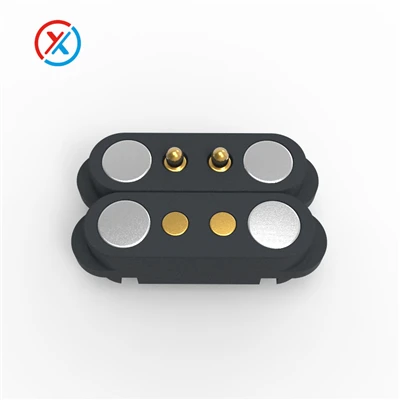
If you’re working in electronics manufacturing, prototyping, or component sourcing, you’ve probably spent way too much time chasing down paperwork for parts you need to keep production lines moving. As someone who’s been a pogo pin supplier for over a decade, I get the questions that cross procurement teams’ minds—none more common than, “Can my pogo pin supplier actually give me the documentation I need for every order?” Spoiler: the answer is almost always yes, if you know how to ask, and if your supplier has the systems in place to deliver it fast.


Let’s start with why this documentation matters. Pogo pins are tiny, spring-loaded workhorses—they connect circuits in everything from smartphones to electric vehicles, medical devices, and test equipment. A missing datasheet, material safety data sheet (MSDS), or RoHS compliance form isn’t just a paperwork hassle; it can halt a production run, delay a product launch, or even land you in regulatory hot water. Last year, a client of mine was three days away from launching a new line of wearable fitness trackers when their previous supplier forgot to include RoHS docs for a batch of pogo pins. They had to rush to a last-minute order with us, and thanks to our documentation process, they never missed their ship date. That’s the kind of problem we built our business to solve.
So what kind of documentation should you expect, and how does a reliable pogo pin supplier handle it? Let’s break it down by the type of pogo pin, because not all docs are one-size-fits-all. For example, if you’re using lead-free parts—super common now for consumer electronics to meet global environmental standards—you’ll want a dedicated certificate for that. We make Spring Loaded Pogo Pins Lead Free here, and every single batch comes with a full traceable certificate confirming lead-free composition, pass rates for plating thickness, and resistance to corrosion. That’s non-negotiable for anything going to EU, US, or other regions with strict environmental rules.
Then there’s performance specs. If you’re working on a high-frequency device or a power-heavy application, you need to know your pogo pins can handle the load. Our Po Go Pin line, for instance, includes test reports for contact resistance, cycle life (how many times you can compress and release the pin before it fails), and current ratings. A client building industrial test equipment once asked for a custom batch with 1A current capacity—instead of making them dig through generic docs, we sent them a detailed test report specific to their order, including temperature data from long-term current testing. We even have a dedicated page for those specs: Pogo Contact Pins 1A Current so you can pull up the details fast.
SMD pogo pins are another big category, especially for compact designs like phones or tablets. These require extra precise documentation because they’re surface-mounted—misplacing a pin could ruin an entire circuit board. Our SMD Pogo Pins come with dimensional inspection reports, 3D model files (STEP and IGS, if you need them for CAD), and soldering guidelines. A startup that was designing a foldable phone prototype a couple years back needed 1,000 SMD pogo pins, and they didn’t just want specs—they wanted a certificate showing that every pin’s tip was within 0.001mm of the specified size. We pulled that in 24 hours, no extra fees, because we keep all batch records tied to individual part numbers.
Wait, but what if you’re using through-hole pogo pins for soldering, not SMD? We’ve got you there too. Our Spring Loaded Pins for soldering come with MSDS for the pin’s materials (like the spring alloy and plating, which are often nickel or gold), RoHS and REACH compliance, and even shelf-life data if you’re storing parts before use. I can’t tell you how many times a small fabrication shop has called panicking because they lost the MSDS for a batch of pins they bought 6 months prior. We just send a quick link to their order history, where all docs are stored for 7 years (longer if they need it).
Now, let’s talk about the myths out there. Some buyers think suppliers charge extra for docs, or that they only give generic ones, not order-specific. Nope—not at our shop. Docs are included with every standard order, no hidden cost. The only time we adjust docs is if a client needs something custom, like a material declaration for aerospace-grade parts or a test report for extreme temperature performance. We’ve worked with aerospace and medical device companies, and they often need ISO 13485 or AS9100 certificates for pogo pins. We don’t subcontract that out—we have our own in-house quality team that compiles those reports on demand, usually in 1-2 business days.
Another thing people miss: documentation isn’t just for compliance. It’s for troubleshooting. If a batch of pins has a contact resistance issue, you can pull the test report from your order history and work with the supplier to fix it fast. Last year, a client noticed 2 pins out of 10,000 had slightly higher resistance. We pulled their batch test report, saw that those 2 were within the industry’s acceptable variance, and also used our internal manufacturing logs to confirm it was a minor soldering issue, not a pin defect. That saved them from scrapping an entire batch of circuit boards.
So how do you make sure your pogo pin supplier is actually delivering the docs you need, not just saying they do? Here are a few tips. First, before placing an order, ask: “What documentation comes with this, and how will I receive it?” If they say “just check your email” or only have generic docs, that’s a red flag. A good supplier will have a portal where you can log in and download all docs for every order, or send them automatically with the shipping confirmation. Second, confirm that docs are traceable. That means the certificate has a batch number that matches the packaging on your parts—no vague numbers like “our factory” or “a recent batch.” Third, if you have special requirements (like lead-free, 1A current, SMD), make sure the supplier can point you to the specific docs for that variant—like the links I mentioned earlier, which are tailored to each product line.
As a supplier, I’ll be honest: we’ve had clients walk away because another “cheap” supplier promised lower prices but forgot docs, or sent generic ones that didn’t pass their internal audits. It’s not worth the risk. A pogo pin is a small part, but it’s critical. If your supplier can’t provide the right documentation, you’re not just buying pins—you’re buying a headache that could cost you way more in the long run.
Wait, one more thing for people who are just starting out. If you’re a small business or a hobbyist prototyping, you might not need all the fancy compliance docs, but you still need the basics: datasheet, contact resistance info, and a test report for the pins you’re using. We love working with startups and hobbyists too—we offer small bulk orders (even 100 pins) with all the basic docs, no hoops to jump through. No need for a big PO if you’re not there yet.
At the end of the day, the question “Can a pogo pin supplier provide product-related documentation?” isn’t about yes or no—it’s about which supplier. The good ones have systems in place to track every batch, compile the right docs fast, and make them easy for you to access. They don’t treat documentation as an afterthought; it’s part of the quality process.
If you’re tired of chasing docs, or if you’re working on a project that needs specific specs for pogo pins (whether that’s lead-free, 1A current, SMD, or soldering pins), hit us up. We can walk you through exactly what docs you’ll get for your order, answer any questions about compliance or performance, and make sure you have everything you need before your parts even ship. No sales pitches, no hidden fees—just the paperwork and parts you need to keep your project moving.
References:
- International Organization for Standardization (ISO). (2022). ISO 9001: Quality management systems — Requirements.
- Institute of Printed Circuits (IPC). (2021). IPC-J-STD-001: Requirements for soldered electrical and electronic assemblies.
- Restriction of Hazardous Substances (RoHS) Directive 2011/65/EU. (2011). European Parliament and Council of the European Union.
- Reach Regulation (EC) No 1907/2006. (2006). European Parliament and Council of the European Union.
- Supplier Quality Assurance for Electronic Components. (2023). Global Electronic Components Association (GECA).