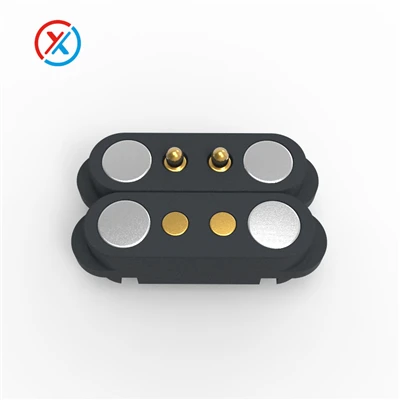
How long does it take to customize an 8 pin magnetic connector? If you're working with electronics design, product development, or manufacturing, this question likely pops up at some point-especially when your project has unique requirements that off-the-shelf connectors can't meet. As a magnetic connector supplier who's spent years refining our customization process, I've fielded this query hundreds of times, and the answer isn't as straightforward as "X number of weeks." It depends on a mix of technical complexity, material choices, testing needs, and even how clear your specification is. Let's break down what goes into customizing an 8 pin magnetic connector, what factors speed things up, what causes delays, and how we streamline the process at our facility.
First, let's ground this in what an 8 pin magnetic connector actually is. Unlike standard pin connectors, magnetic types use embedded magnets to create a secure, self-aligning connection-no fumbling with pins or forcing parts together, which makes them ideal for devices like portable power banks, wearables, automotive sensors, and IoT hardware. An 8 pin variant adds more data or power pathways than smaller options, like the common 6 Pin Magnetic Connector many clients start with before scaling up. It's a sweet spot: enough pins for moderate power and data transfer, but not so many that alignment or size becomes tricky. For context, if you need even more capacity down the line, we also support higher pin counts, and if you're working on a different connector type entirely, our Ring Magnetic Connector or Pogo Pin Magnetic lines offer alternative designs that might suit your needs too.
So, back to timelines. When a new potential client reaches out to us asking for an 8 pin magnetic connector custom job, we first walk through their specific needs because that's where the biggest timeline variables live. Let's start with the core factors that impact how long customization takes, then map out a typical process from inquiry to delivery.
The biggest factor is technical complexity. Let's say you have a simple 8 pin design that matches most standard magnetic connector parameters: operating voltage under 50V, current per pin under 2A, operating temperature between -10°C and 60°C, and a basic rectangular form factor that fits existing port housing. That's a low-complexity job. But if you need a connector for a harsh environment-like a medical device that's steam-sterilizable, an industrial sensor exposed to -40°C to 85°C and high vibration, or a high-power application where each pin carries 5A or more-the process gets more involved. More complex requirements mean more material testing, magnet strength validation, and quality checks, which add time.
Next, material choices and component availability. Our standard 8 pin magnetic connectors use durable, injection-molded plastic housings (often PBT or nylon for balance of strength and cost), neodymium magnets for reliable hold, and copper alloy pins for conductivity. But if you need a premium material-like a flame-retardant plastic for aerospace, gold-plated pins for ultra-low data transfer resistance in medical devices, or corrosion-resistant coating for marine applications-we might need to source those materials from specialized suppliers, which can add 1 to 2 weeks to the timeline. That said, we keep inventory of common materials for our popular lines, so if your 8 pin design is close to existing offerings, we can pull from that stock to speed things up.
Then there's prototyping and testing. No custom connector job skips prototyping, even for simple designs. For an 8 pin magnetic connector, a prototype involves 3 key steps: designing the custom mold (or adjusting an existing one), assembling the first sample batch, and validating that it works as intended. For low-complexity jobs, we can create a prototype in 1 to 2 weeks, then test it in our in-house lab for 1 additional week to check magnet strength, insertion/removal force, pin connectivity, and durability (like how many insertion cycles it can handle before failing). For high-complexity jobs, prototyping might take 3 weeks, and testing could stretch to 2 weeks-we might need to run environmental tests, vibration tests, or data transfer speed tests, which all add time. A great example of how smaller pin counts work as a reference is our 6 Pin Magnetic Connector line, where we've refined prototyping processes that we can adapt for 8 pin designs with minimal rework.
What about regulatory and compliance requirements? This is a big one for clients in regulated industries: medical, automotive, aerospace, or telecom. If your custom 8 pin magnetic connector needs to meet ISO 10993 (for biocompatibility in medical devices), UL 94 (flame resistance), or IEC 60529 (ingress protection, like IP67 for water resistance), that adds significant testing time. Compliance testing can take anywhere from 2 to 6 weeks, depending on the standard-there's no shortcut here, as third-party labs need time to run official tests and issue certificates. Clients often come to us knowing they need compliance, so we build that into the timeline upfront, but it's still a key variable.
Now, let's talk about the typical timeline split, based on our experience as a supplier. For a low-complexity 8 pin magnetic connector custom job (with no regulatory needs, standard materials, and clear specifications): from initial inquiry to delivery of the first prototype, it's 4 to 6 weeks. If you go into full production after approving the prototype, that adds another 2 to 4 weeks, depending on order volume. For a medium-complexity job (minor material adjustments, basic compliance like IP rating): prototype takes 6 to 8 weeks, production adds 3 to 5 weeks. For high-complexity, regulated jobs: prototype takes 10 to 16 weeks, production adds 4 to 6 weeks. That's a range, and it's important to note that delays can happen if a client's specification is unclear at the start-like not knowing exact connector dimensions, or needing a last-minute change to pin count or magnet strength. Being specific with your requirements upfront cuts down on back-and-forth and keeps timelines on track.
Let me share a real example that shows how this works. Last quarter, we had a client from the wearable tech space reach out for a custom 8 pin magnetic connector for a new smart fitness band. Their requirements were: small circular housing (to fit the watch's compact design), 2 power pins and 6 data pins for syncing and charging, IP68 water resistance, and insertion force under 5N so it's easy for users to plug in. This was a medium-complexity job-no strict medical regulations, just a custom size and IP rating. We walked through their specs, sourced the necessary water-resistant materials, designed the custom mold for the circular shape, and completed the first prototype in 7 weeks. We tested for water resistance, magnet hold, and insertion force, and the client approved the sample quickly. Full production for their 10,000-unit order took 4 weeks, so total time from inquiry to delivery was 11 weeks-right in line with our medium-complexity timeline. For clients who need similar small, compact designs, we often reference our Ring Magnetic Connector line, which has small circular housings that we can adapt for custom pin counts with minimal mold adjustments.
Another common question clients ask: how does this compare to other pin counts? If you're considering a lower pin count, like the 6 Pin Magnetic Connector, custom jobs tend to be faster because there are fewer pins to align and test, so prototype timelines are often 1 to 2 weeks shorter. On the other end, a 10 Pin Magnetic Connector adds more pins, so alignment can be trickier, prototyping takes an extra week or two because we have to ensure all pins make consistent contact without cross-interference. We've also had clients who need custom magnet components separately, like a Magnet Charger Pin for a specific charging setup-we can handle that as part of the 8 pin connector job or as a standalone custom component, and that doesn't add extra time if it's aligned with the main connector project.
What about rush orders? We know some projects have tight deadlines, and we can accommodate rush customization for 8 pin magnetic connectors when possible. A rush order usually means prioritizing mold design and prototyping, cutting down on testing time where it's safe (without compromising quality), and sourcing materials from our fastest suppliers. Typical rush timelines are 2 to 3 weeks for a prototype, but this only works for low or medium-complexity jobs-high-complexity, regulated jobs can't be rushed because testing is mandatory. We always be transparent with clients if a rush request is feasible, or if it would risk the quality of the connector, because we'd rather deliver a reliable product fast than cut corners and cause issues later.
Now, let's talk about how we make the process smoother for clients, because a big part of timeline management is clear communication. When a client first reaches out with a request for a custom 8 pin magnetic connector, we start with a detailed discovery call to get all their requirements: application, environmental conditions, compliance needs, order volume, and timeline expectations. We then put together a formal quote that includes the exact timeline, prototype details, and any associated costs, so there are no surprises. We also share our in-house testing data for common 8 pin designs, and for similar pin counts like the 6 Pin Magnetic Connector line, so clients have a reference for how their connector will perform. For projects that involve alternative designs, like the Pogo Pin Magnetic style, we can offer those as options if they solve the client's needs faster.
It's worth noting that the number of units you're ordering also impacts timeline, but not as much as complexity. A prototype is a small batch, so whether you order 5 or 50 prototypes, that part of the timeline is similar. Full production timelines vary: a small batch (1,000 units) takes around 2 weeks, while a large batch (100,000 units) takes 4 to 5 weeks, as we scale production and maintain quality control. We work with clients to align production timelines with their own product launch plans, so we don't rush production and compromise on quality to hit a date that's not feasible.
If you're currently evaluating a custom 8 pin magnetic connector for your project, the best way to get an accurate timeline is to share your full specifications with a trusted supplier. Avoid vague requests like "an 8 pin magnetic connector for my device"-the more details you provide, the faster we can give you a precise timeline. Questions to prepare: What is the device's operating environment? Are there any compliance standards you need to meet? What's the size and form factor you need? How many units will you order initially, and long-term? Do you have a hard deadline for prototype delivery?


At the end of the day, the time to customize an 8 pin magnetic connector ranges from 4 weeks (simple, low-complexity jobs) to 16+ weeks (high-complexity, regulated jobs). Every project is unique, and there's no one-size-fits-all answer, but by working with a supplier who's transparent about their process, has experience with magnetic connector customization, and can adapt to your needs, you can keep the timeline on track without sacrificing quality.
If you're ready to start your custom 8 pin magnetic connector project, or have questions about related options like the 6 Pin Magnetic Connector, 10 Pin Magnetic Connector, Magnet Charger Pin, Ring Magnetic Connector, or Pogo Pin Magnetic, reach out to our team to discuss your requirements. We'll work with you to refine your design, outline a clear timeline, and deliver a high-quality magnetic connector that fits your project perfectly.
References
- "Magnetic Connector Design Guidelines for Industrial Applications", International Journal of Electronics Manufacturing, 2022, Vol. 10, No. 2, pp. 45-58
- UL 94 Standard for Safety of Flammability of Plastic Materials for Parts in Devices and Appliances, Underwriters Laboratories, 2021 Edition
- "Custom Magnetic Connectors: Balancing Complexity and Lead Time", Industry Trends Report, Magnetic Connector Association, 2023
- ISO 10993-5: Biological Evaluation of Medical Devices – Part 5: Tests for In Vitro Cytotoxicity, International Organization for Standardization, 2020