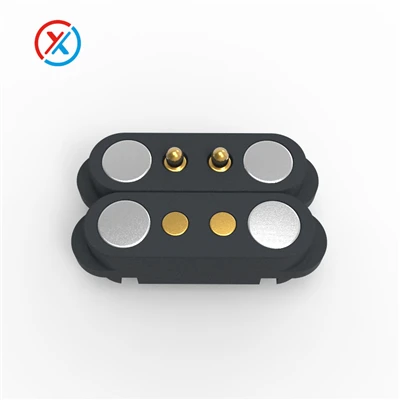
If you've ever worked on a consumer electronics assembly, medical device prototyping, or industrial automation project, you know how small design choices can make or break a product's reliability. I've spent the last eight years as a 4 pin pogo pin supplier, working directly with engineers and production teams to troubleshoot connection issues that range from intermittent power loss in wearables to signal failure in sensor arrays. One question comes up more than any other: "How do I pick the right 4 pin pogo for my specific application?" It's not a one-size-fits-all decision-your choice will depend on environmental conditions, electrical needs, mechanical fit, and long-term durability, and skipping that step can lead to costly reworks, product recalls, or customer complaints.
First, let's start with the basics: a 4 pin pogo pin is a spring-loaded connector that uses four electrical contacts to transfer power, data, or both between two mating components. Unlike traditional soldered connections, pogo pins allow for repeatable mating, which makes them ideal for devices that need to be assembled, disassembled, or docked frequently. But not all 4 pin pogo pins are created equal, and their design variations directly impact performance. For example, a 4 pin pogo intended for a high-vibration industrial robot has very different requirements than one used in a slim fitness tracker. To narrow down your options, start by mapping your application's core needs against key technical specifications.
Electrical requirements are the foundation of any connector selection, so this should be your first check. The four pins in a 4 pin pogo are often split into power and signal channels, but the ratio isn't universal-some designs use three power pins and one ground, while others split pins for differential data transfer. You'll need to confirm two key electrical metrics: current carrying capacity and impedance. For power-heavy applications like portable chargers or medical diagnostic devices, you'll need pins with a larger diameter (typically 1.5mm or more) that can handle 2A to 5A without overheating. For low-power signal use like Bluetooth or IoT sensor communication, 0.8mm to 1.2mm diameter pins work fine, as they handle lower currents and fit in smaller form factors. Impedance is another critical factor for data applications-if you're transferring high-frequency signals (like 10MHz or higher), you'll need a 4 pin pogo with controlled impedance matching, usually around 50 ohms, to prevent signal loss. A common mistake I see engineers make is selecting a pogo that works for power but has poor impedance control for data, leading to dropped connections in wireless devices. If you're looking for a connector that combines magnetic alignment with reliable electrical performance for 4 pin setups, you can learn more about the specifications that support these needs by visiting our page dedicated to Magnetic Connector Electrical. That resource breaks down how our magnetic connectors are engineered to maintain consistent electrical contact even in tough environments.


Next, environmental conditions will dictate which pogo pin's materials and build quality are necessary. This is where many first-time designers underestimate their needs. If your device is used outdoors or in industrial settings, it will be exposed to dust, moisture, temperature extremes, and vibration-all of which can degrade a connector's performance over time. For temperature, pogo pins are typically made from beryllium copper (BeCu) or phosphor bronze, with plating that resists corrosion. BeCu is more durable and can handle temperatures from -40°C to 125°C, making it the go-to for industrial automotive or outdoor equipment. Phosphor bronze is a lower-cost option, suitable for indoor consumer electronics that operate between 0°C and 70°C. Plating is equally important: gold plating offers excellent corrosion resistance and low contact resistance, but it's more expensive; nickel or tin plating works for low-cost, indoor applications where corrosion isn't a major risk. For moisture or dust protection, many of our customers opt for magnetic 4 pin connectors, which create a tight seal when mated, preventing contaminants from entering the connection point. Our Magnetic 4 Pin Connector page has detailed information on how magnetic alignment enhances environmental sealing, reducing the risk of connection failure in high-humidity or dusty settings.
Mechanical fit and mating characteristics are another make-or-break factor, especially for small devices like wearables or hearables. Pogo pins come in different lengths, and the "stroke" (the amount the spring compresses when mated) must be calibrated to your device's housing. Too little stroke, and the pin won't make solid contact; too much, and it will push against internal components, causing damage or premature spring wear. For slim devices with limited internal space, I often recommend our miniature 4 pin pogo pins, which have a compact profile that fits into 5mm thick enclosures. Mating force is another mechanical consideration: magnetic connectors have a distinct advantage here, as they use magnets to pull the two components together, eliminating the need for manual alignment and ensuring consistent contact force every time. If your application requires frequent docking-like a wireless earbud case or a portable power bank-magnetic pogo pins reduce wear on both the connector and the device housing, since the magnets distribute force evenly across the four pins. Our Magnetic Pin Connector page explains how we design the magnetic and pin components to withstand thousands of mating cycles without losing performance, which is key for high-wear consumer products. One thing to watch out for: if your device will be exposed to strong external magnets, a standard magnetic connector could accidentally disengage, so for those applications, a non-magnetic pogo pin with higher spring force might be a better choice.
Durability and long-term performance are often overlooked until a product goes into mass production. Pogo pins are rated for the number of mating cycles they can handle before their spring loses tension, and this rating varies widely. For consumer electronics like smart watches, which may be docked hundreds of times a year, a rating of 5,000 to 10,000 cycles is sufficient. For industrial equipment that is mated and unmated daily for 10+ years, you'll need a connector rated for 50,000 cycles or more, which means investing in higher-quality materials and precision manufacturing. I've seen cases where a design team saved 10 cents per unit by using a lower-grade pogo pin, only to have the product fail after 6 months due to spring fatigue, leading to a $100,000+ recall cost. That's why it's critical to align your pogo's cycle rating with your product's intended lifespan. If you're looking for a connector that balances high cycle durability with magnetic alignment, our Magnetic Pogo Pin Connector page highlights the testing we conduct to ensure our products meet rigorous cycle and performance standards.
Another key consideration is compatibility with your device's housing and manufacturing process. Pogo pins need to be installed into a receptacle, and there are two main mounting styles: through-hole and surface-mount (SMT). Through-hole pins are soldered onto the PCB, making them more durable for high-vibration applications, but they require more space on the board. SMT pins are smaller and easier to assemble with automated pick-and-place equipment, which reduces manufacturing time for high-volume production runs. If you're designing a device for mass production, SMT mounting is almost always the more cost-effective choice, but you'll need to ensure your PCB footprint matches the pogo's dimensions. Many of our customers work with our engineering team to customize the pin's pitch (the distance between the four pins) to fit their specific PCB layout, which is a major benefit of working directly with a supplier rather than using off-the-shelf components.
Let's walk through a real-world example to make this practical. Last year, a team working on a portable medical glucose monitor reached out to us. They needed a 4 pin pogo to connect the monitor's main unit to a test strip module, and their requirements were: 2A power per pin, resistance to bodily fluids, 10,000 mating cycles, and a slim profile for a 3mm thick test strip. We recommended our gold-plated BeCu 4 pin pogo with a magnetic mating system, which was perfect because the magnetic alignment eliminated the need for precise manual docking (critical for users with shaky hands) and the gold plating resisted corrosion from sweat. The pins were sized for their power needs, and the 10,000 cycle rating matched the monitor's intended 5-year lifespan. That product went into mass production last quarter, and we've had zero complaints about connection reliability. If you're in the medical device space or working on a similar application, our MagneticConnector 4 Pin page has additional details on how our connectors comply with medical industry standards for biocompatibility and durability.
Before finalizing your selection, it's wise to test the pogo pin in your actual application conditions. Even if a pogo meets all the technical specifications on paper, it might perform poorly when mated with your specific PCB, housing, or in your operating environment. Most suppliers (including us) offer sample kits with different pogo types so you can test performance, mating force, and electrical continuity. I always advise our customers to test for common failure points: intermittent connections under vibration, current leakage after exposure to moisture, and spring tension after repeated mating. This testing stage can save you from costly design changes later on.
At the end of the day, selecting the right 4 pin pogo comes down to balancing your technical needs with your budget and long-term performance goals. Skipping the step of aligning your application's requirements with the connector's specifications can lead to avoidable issues, from minor inconveniences to major product failures. If you're still unsure which 4 pin pogo is right for your project, our team of engineers is available to help you evaluate your needs, review your design, and recommend the best solution for your specific application.
References:
- "Pogo Pin Connector Design and Application Guidelines", International Connector Technology Association, 2022.
- "Magnetic Connector Performance in Harsh Environments", Journal of Electronic Components, 2021, Vol. 45, No. 3, pp. 112-119.
- "Cycle Life Testing for Spring-Loaded Connectors", Industrial Electronics Magazine, 2020, Vol. 14, No. 2, pp. 47-53.