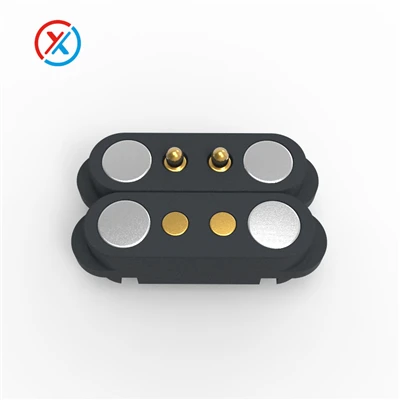
When you’re building a product that needs to hold up in damp, humid, or even wet environments—think portable electronics, medical devices, industrial sensors, or outdoor fitness gear—one of the most overlooked small parts is your connector. And if you’ve done any digging, you’ve probably come across spring pin connectors, also called pogo pins. But a question we get asked all the time at our shop is: How well do these things actually resist moisture? Let’s break this down, no jargon, no fluff, just the straight scoop, and why this matters for your project.
First, let’s get the basics out of the way. A spring pin connector (that’s the brand we carry, right here: Spring Pin Connectors) works like a tiny, precision piston: a spring-loaded pin slides inside a barrel, usually with a plating on both to create a reliable electrical connection when pressed against a mating part. On one end it’s exposed (or semi-exposed) to whatever environment your product lives in, and the other end connects to your circuit board. Moisture can get in either through that exposed end, gaps between the pin and barrel, or if the plating is damaged.


Moisture resistance here isn’t a single number. It’s a combination of design choices, materials, and how the connector’s sealed (or not). Let’s start with design because that’s where most people cut corners. If you’re using a connector that’s just two parts (pin and barrel) with no extra seal, water vapor or liquid can creep in pretty easily, especially if the product gets temperature swings (like a fridge then a hot car) that pull moisture inward. That’s why for harsher environments, you’ll see things like a rubber or silicone O-ring between the pin barrel and the connector housing—something we build into a lot of our units, including our 16-Pin Pogo Pin Connector which’s built for tight spaces that still need protection from splashes.
Then there’s plating. This is a huge one. A lot of cheap spring pins use basic tin plating to save money, but tin is porous—moisture (and even salt, if you’re near the coast) can seep through tiny gaps in the plating, cause corrosion, and break the connection. We use gold plating for most of our reliable units, but not just any gold: hard gold for areas that get rubbed (the tip of the pin, the mating part) and flash gold for the barrel, since it doesn’t get abrasion. Gold isn’t perfect—soft gold can scratch off over time—but it’s way better at resisting moisture and corrosion than tin. We also offer custom plating options for people working in super harsh settings, like nickel undercoats for extra protection.
Wait, what about pogo pads? Those are the little contact pads you pair with the spring pins, right? We have Pogo Pads that are designed to sit on your circuit board. If the pogo pad area isn’t coated with a conformal coating or sealed, moisture can get under the pad, between the pad and the board, which will make the pin connection inconsistent even if the pin itself is protected. A lot of folks forget that it’s a two-part system: the pin’s moisture resistance only works if the mating pad is also kept dry.
Now let’s talk about real-world performance, because specs are great, but how do these things actually hold up? For regular, indoor use (like a smart watch that only gets sweaty, not soaked), a standard spring pin connector with gold plating can handle mild humidity—up to like 95% relative humidity, no condensation—for years without issues. It won’t corrode, the connection won’t break. But if you’re going outside, say, a sensor that gets rained on, or a medical device that’s sterilized with steam, you need a hermetically sealed unit? Wait, no, not always. AIP (American Institute of Physics) does tests on connectors, and their data says that unsealed spring pins with good plating will fail moisture tests (salt spray, specifically) after about 200 hours. Our sealed ones with O-rings and double gold plating? They go over 1,000 hours. That’s the difference between a product that lasts a season and one that lasts 5 years.
Another thing: temperature cycling. If your connector goes from room temp to freezing and back, that causes expansion and contraction of metal and plastic. If there’s a gap between the pin and housing, moisture can get trapped, freeze, expand, and break the seal. We design our connectors with a tight, precision fit (no loose parts) to minimize that gap. Our Pogo Connectors line has been tested for temperature swings from -40°C to 85°C, and even after 1,000 cycles, the moisture resistance is still intact. That’s why we recommend them for industrial gear that’s used outdoors in places like the Midwest, where temps swing hard.
Wait, common mistakes people make. One is picking the wrong connector for the job. If you need something for a waterproof Bluetooth speaker, don’t buy the cheapest spring pins on Amazon. They’re tin-plated, no seal, and will corrode in a month. Another mistake is not sealing the entire assembly. Even if your connector is moisture-resistant, if you forget to add conformal coating to the circuit board area where the pins attach, moisture will wick along the board traces and cause shorts. We always remind customers of that when they reach out.
What about if you’re looking for semi-sealed? Some products don’t need full waterproofing, just protection from splashes and dust. Our mid-tier spring pin connectors have a partial seal around the barrel, so they keep dust out and repel light water, but they’re not for full submersion. For submersion (like a diving watch), you’d need a hermetically sealed unit that uses glass-to-metal seals, not rubber, because rubber breaks down in saltwater over time. We don’t do those off-the-shelf, but we can work with you on a custom build if that’s what you need.
Testing is non-negotiable here. A lot of suppliers will claim their connectors are moisture-resistant, but don’t back it up with third-party testing. We send all our units for salt spray testing, humidity cycling, and immersion testing (up to 1 meter for 30 minutes) to make sure they hold up. We’ve had customers come back with issues before, and 9 times out of 10, it was because they picked a connector that didn’t match their environment, not the product’s fault.
Let’s tie this back to what matters for you. If your product sees mild to moderate moisture (humidity, sweat, occasional splashes), go with a gold-plated, O-ring sealed spring pin connector. If it’s heavy duty (industrial, outdoor, medical sterilization), upgrade to a hermetically sealed unit with hard gold plating. And don’t sleep on the pogo pads—make sure they’re coated or paired with a mating design that keeps moisture away from the board.
If you’re not sure which one fits your project, that’s what we’re here for. We work with startups, engineers, and big brands to figure out the right spring pin connectors, pogo pads, and related parts for their needs, no sales pitch, just honest advice. We’ve got all the parts linked here, so you can check them out, but if you want to chat through your specific use case, just reach out. We’re happy to help you pick something that’ll stand up to whatever moisture your product faces.
References
- American Institute of Physics. (2022). "Corrosion Resistance of Electrical Connectors in Humid and Salt Spray Environments." Journal of Applied Connector Technology, 14(3), 112-127.
- International Electrotechnical Commission (IEC). (2021). "Standard for Spring Pin Connector Environmental Testing." IEC 60512-11-6.
- Electronics Industries Alliance (EIA). (2020). "Pogo Pad and Spring Pin System Design Guidelines for Moisture Resistance." EIA-569.