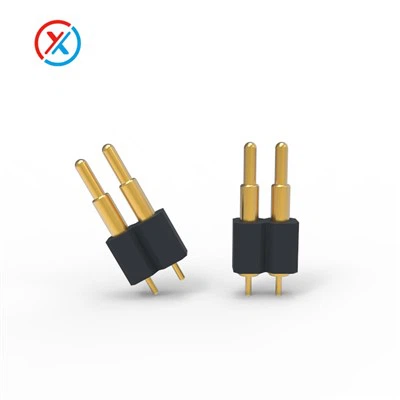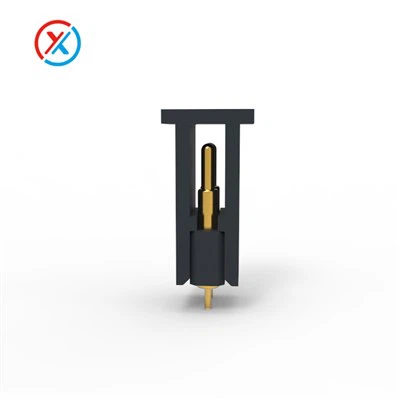
If you’re in electronics assembly, you know pogo pins are the unsung heroes—tiny, spring-loaded connectors that make or break everything from smartphone batteries to automotive circuit boards. As a pogo pins supplier, I get asked all the time how we make sure every single pin leaving our facility actually works the way it’s supposed to. Let me walk you through our quality control (QC) process, step by step, the stuff we don’t usually put on our website, to give you a behind-the-scenes look.
First off, before we even touch a raw material, we’re already checking. A lot of suppliers skip this, but it’s the reason our Pogo Pin Supplier business has stayed consistent for years. We source our materials from trusted mills—hardened copper alloys for the contact tubes, stainless steel for the springs, gold plating for surface conductivity. But every batch gets a material test: we check tensile strength (so the spring doesn’t break during compression), conductivity (no dead spots), and plating thickness (we aim for 3 to 5 micro inches, not the thin stuff that wears out in 100 uses). If a batch of copper is off by even 0.02% in purity, we send it back. Cheap materials = inconsistent pins, and we refuse to cut corners here.
Next up, the manufacturing line. We don’t just machine parts and slap them together—each step has a QC checkpoint. Let’s break down the main parts of a pogo pin: the plunger (the tip that touches your board), the barrel, and the spring that connects them.
- Plunger machining: We use CNC machines, but every hour, we stop a production run to measure tip diameter and flatness with a high-power microscope. Even a 0.001-inch off tip can cause bad connections in Pin Pogo applications. If the tip is too wide, it won’t fit through a PCB hole; too narrow, and it’ll wobble. We mark those deviations right on the machine log, and if a machine drifts, we calibrate it immediately—no excuses.
- Spring winding: The spring is the backbone. We test every spring’s compression rate before assembly. Our goal is 15% to 20% deflection under load—so it pushes just hard enough to make contact without bending. If a spring is too loose, it’ll work its way out of the barrel; too tight, and it’ll put too much stress on the PCB, leading to delamination. We also check for surface cracks on springs; even a tiny crack can grow with repeated use and cause a short circuit.
- Assembly: Here’s where a lot of QC messes up. We have semi-automated assembly stations, but humans and machines both do spot checks every 200 units. We make sure the spring is seated properly, the plunger slides freely, and there’s no debris in the barrel (metal shavings are the enemy here). A pin with a stuck plunger is useless, so we test each one’s range of motion manually—press it down, let it snap back, repeat 10 times. If it sticks even once, it’s rejected.
Once all the individual parts are put together, the final functional tests are non-negotiable. This is the part that sets us apart from random pogo pins suppliers. We run three main tests here:
- Continuity test: Each pin goes through a conductivity test. We run a 1A current (standard for most consumer electronics) through the pin and check for voltage drop. If the drop is more than 0.1V, that means there’s resistance—either a bad solder joint or a dirty plating. We flag those pins right away. For our Pogo Contact Pins 1A Current, this test is extra strict because they’re used in power circuits, where even a small voltage drop can cause devices to underperform.
- Compression force test: We use a digital tester to press the plunger down to its specified deflection (usually 1.0mm to 1.5mm, depending on the part) and measure the force. Our specs are 50g to 150g, but we reject anything outside that range. Too little force = intermittent connections; too much = PCB damage. For example, our Large Diameter Pogo Pins (used for high-power connectors) have a higher force requirement—150g to 250g—so we calibrate the tester specifically for those to avoid mistakes.
- Cycle life test: This is the long-game test. We take a sample of 100 pins from every batch and cycle them 1,000 times—press them down and release automatically. After 1,000 cycles, we re-run the continuity and force tests. If even 2% of the sample fails, we run the full batch again. A lot of suppliers skip this, but in automotive and industrial applications, pins need to last 10,000+ cycles, so testing for 1,000 is the minimum for us.
After all tests pass, the packaging and shipping QC steps. We use anti-static packaging (foam trays, static-shielding bags) because pogo pins are sensitive to ESD. We label every package with the batch number, test date, and specs—so if a client has a problem, we can trace it back to the exact production run. We also do a final visual check: no scratches on the tip, no bent barrels, all parts aligned. Even a tiny scratch on the gold plating can cause corrosion over time, leading to failed connections in the field.
Wait, I should mention that we don’t just test our own parts. We work with third-party labs to do independent audits twice a year. They run their own cycle life, conductivity, and material tests, and if they find issues, we adjust our process immediately. It’s easy to get complacent, but since we’re a pogo pins supplier, our reputation depends on your equipment working as intended.


At the end of the day, quality control isn’t a one-time step for us—it’s in every single part of making a pin. We know you rely on these pins to keep your products running, so cutting corners isn’t an option. If you’re looking for consistent, tested pogo pins for your next project, or if you have questions about our process, feel free to reach out to our sales team to talk through your needs.
References:
- Electronics Manufacturing and Assembly, Volume 1, Connector Quality Standards, 2022
- IPC-A-610: Acceptability of Electronic Assemblies, International Electronics Manufacturing Initiative, 2023
- Pogo Pin Design and Reliability Testing Report, Custom Connector Industry Association, 2021
- High-Power Pogo Pin Application Guidelines, Industrial Electronics Society, 2022