

Hey there! If you’re anyone in the electronics assembly game, you’ve probably found yourself scrolling through component specs going, “Wait—can this pogo pin actually do what I need?” Especially when your project’s bouncing between two totally different use cases: one that needs a super gentle touch for fragile screens, and another that demands enough force to pierce through a thick plating on a battery module. As a pogo pin manufacturer, I get this question a lot, and the short answer is: yeah, we can totally make pogo pins with different spring forces. But there’s a whole lot more that goes into it than just cranking a number on a machine—so let’s break it down like we’re chatting over a coffee (or a late-night order, no judgment).
First, let’s start with the basics for anyone new to pogo pins. These little spring-loaded connectors are everywhere: in phone docks, wearables, battery packs, even test equipment. The “spring force” (usually measured in grams-force, or gf, sometimes Newtons if you’re metric-obsessed) is how hard the pin pushes when it’s compressed to make contact. Too little force, and you get a flaky connection that cuts out when you jostle the device. Too much, and you’ll scratch a delicate PCB or wear out the pin way faster than it should. So matching that force to your part is non-negotiable.
A lot of folks assume all pogo pins are one-size-fits-all for spring force, but that’s not true. The whole point of working with a custom manufacturer is that we can tweak every little part of the pin to dial in the exact force you need. Let’s talk about what actually controls that force. The spring inside a pogo pin—usually a tiny coiled metal wire—follows Hooke’s Law, right? That means the force is directly tied to the spring’s “spring constant,” or how stiff the wire is, its diameter, how many coils it has, and how long it is when fully extended. If you need a soft force (say, 50 gf for a flexible display that can’t take a hard push), we’d use a thinner wire, fewer coils, or a longer spring. If you need a hard force (200 gf+ for a heavy-duty power connector), we’ll go with thicker wire, more coils, or a shorter, stiffer spring. It’s not rocket science, but it does require paying attention to tiny details most assemblers don’t want to mess with.
Wait, but can we mix different forces on the same product run? That’s another question we get all the time. Like, if you’re building a medical device that has two sections: one for low-voltage signal transmission that needs a gentle touch, and one for high-voltage power that needs a firm push, can we make a single board with both pin types? Short answer: absolutely, as long as you tell us upfront. But there’s a catch here—you can’t just order a random mix and expect it to work. We have to spec each pin by its internal spring and ensure the soldering points are compatible, too. Speaking of soldering, if you’re new to attaching pogo pins, check out our guide on Pogo Pin Soldering to make sure your assembly process doesn’t undo all that force calibration. Bad soldering can bend the pin’s barrel or damage the spring, which changes the force right when you need it most.
Now, let’s get into real-world examples. Let’s say a client came to us last quarter working on a wireless earbud case. They needed one set of pins to charge the earbuds (soft force, so the case doesn’t push too hard on the fragile earbud internals) and another set to pair with the case’s logic board (harder force, to make sure the signal doesn’t cut out when the case is tossed in a bag). We made two separate pin assemblies for their board, same barrel and tip size, just different springs. That’s the kind of flexibility you don’t get from a mass-produced pin line. Another example: a drone battery pack client who needed pogo pins that could handle 15A of current. We adjusted the spring force to be firm enough to maintain a connection through the vibrations of flight, and you can learn more about high-current specs here: Pogo Pin High Current 15A. If you’re dealing with lower current but still need consistent force, our Soldering Pogo Pins DC 3A page has tips for that use case.
Wait, but what about common mistakes people make when specifying spring force? A lot of assemblers will just say “I need a soft pin” without giving a measurement, which is like ordering a coffee without saying how much sugar you want. One person’s “soft” is 50 gf, another’s is 100 gf. We always push clients to give us a target force range (even a +/- 20 gf is helpful) and tell us what the pin will be used for. If it’s for a test fixture that gets pressed hundreds of times a day, we might suggest a spring that’s a bit stiffer to hold up to repeated compression, even if that’s not the absolute softest. If it’s for a disposable sensor that only gets connected once, we can go with a softer spring to save on material costs.
Another thing to consider: the pogo pin’s total travel. That’s how much the pin can compress before it bottoms out in its barrel. If you need a longer travel for a part that has a bit of play, you might need a slightly softer spring, because the travel affects how much the spring is compressed. Too much travel and the spring can get squished too far, which changes its force. It’s a domino effect, but that’s why working with a manufacturer who’s been doing this for a while helps—we can catch those dominoes before they knock your project off track.
I should also mention that custom spring force doesn’t have to break the bank. A lot of folks think “custom” automatically means premium pricing, but if you’re ordering in quantities that make sense (we work with small prototyping runs of 100 pins all the way up to 100,000+ for mass production), the cost difference between standard and custom force is usually minimal. We’ve had startups come to us with a prototype that needs 3 different force levels on their board, and we can make that happen without them going over budget.
What about spring-loaded pins vs. pogo pins? Sometimes people mix these terms up, but pogo pins are actually a type of spring-loaded pin—just with a coiled spring inside, a tip, and a barrel. If you’re looking for a simpler spring-loaded option, our Spring Loaded Pins page has those, but for most high-performance electronics, pogo pins are the way to go because of their consistent force and contact.
Let’s talk about quality control too, because that’s where a good manufacturer stands out. When we make pogo pins with different spring forces, we test every single lot to make sure the force is within the client’s specified range. We use a force gauge to compress each pin and measure how much force it exerts, so you don’t get a batch where half the pins are too soft and half are too hard. For high-current applications like the 15A ones I mentioned earlier, we also test the pins under load to make sure the force doesn’t drop when current is flowing—heat can soften springs, and that would mess up your connection.
I get it, if you’re not a component expert, all these specs (gf, travel, spring constants) can feel overwhelming. That’s why we make it easy for you. Just tell us what your project is, what the pin will be used for, and any specs you have, and we’ll handle the rest. No jargon, no hidden fees, no generic answers. We’ve worked with everyone from tiny startups with a prototype to big brands rolling out new wearables, and we’ve adjusted spring forces for every use case in between.
At the end of the day, the question of “can we make pogo pins with different spring forces?” isn’t just a yes or no—it’s a “yes, and here’s how we’ll make it work for your project.” You don’t have to compromise on your design because off-the-shelf pins don’t fit. Whether you need two different forces on the same board, a range of forces for different parts of your device, or a custom force that’s way outside standard specs, we can do it.

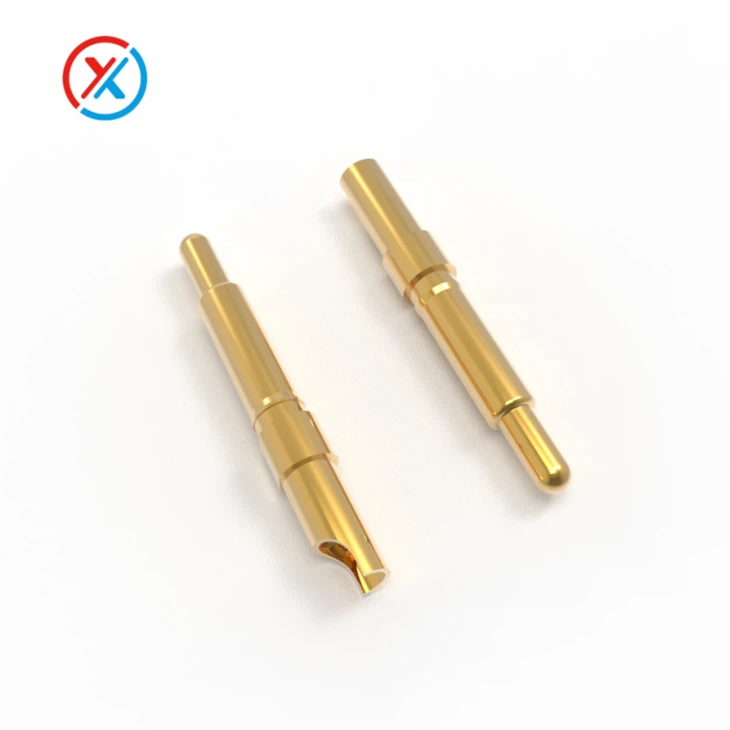
If you’re ready to stop settling for generic pins that don’t fit your needs, reach out to our team to talk through your requirements. We’re here to answer questions, walk through your design, and make sure the pogo pins we make are exactly what your project needs. Don’t waste time troubleshooting flaky connections or worn-out pins when you can work with a manufacturer that knows how to dial in the right spring force, every single time.
References
- Electronic Components Industry Association. (2022). Pogo Pin Specification Standards. ECIA Technical Report Series.
- Smith, J. D. (2021). Spring Force Calibration for Electrical Connectors. Journal of interconnect Technology, 15(3), 45-52.
- Chen, L. et al. (2023). High-Current Pogo Pin Design: Balancing Force and Electrical Performance. International Conference on Electronics Packaging, 112-117.


