

Hey everyone, as the lead product specialist here for our Pogo Pin Right Angle line, I get asked this question all the time: “What’s the actual waterproof level of your right-angle pogo pins?” It’s such a valid question—especially since these little guys are used in everything from wearables that get sweaty to industrial sensors that face moisture. Today, I’m breaking down exactly what goes into their waterproofing, what those IP ratings actually mean for our Right Angle Pogo Pin High Quality models, and how to make sure you’re picking the right one for your project.
First off, let’s keep it real: not all right-angle pogo pins are created equal. I’ve seen way too many suppliers slap an IP rating on a part just to sound impressive, but skip over the details that actually matter. When we developed our lineup, we didn’t just pick a random sealant and call it a day. Waterproofing for pogo pins is about two main things: the seal between the plunger and the barrel, and the seal around the base where it mounts to your circuit board.
For our standard series, most of our right-angle pogo pins hit an IP67 rating, but wait—let me explain what that actually means, because a lot of folks mix up IP67 and IP68. IP67 means the pin is protected against dust (total ingress protection, so no dust gets in at all) and can withstand being submerged in up to 1 meter of water for 30 minutes. Our premium line, though, goes a step further with IP68, which is resistance to deeper water (usually up to 3 meters) for longer periods, perfect for things like underwater IoT sensors or rugged outdoor electronics.
You might be wondering: how do we test that? We don’t just guess. Every single batch of our Female Pogo Pin gets put through rigorous testing before it ships. For IP67, we run the submersion test in a controlled water tank, monitor for any water getting inside the pin that could cause a short circuit. For IP68, we extend the test time and depth, and also do temperature cycling tests because moisture can expand and contract with heat, which would break a seal over time. We also add a secondary sealant around the mounting flange on our higher-spec models, which is key because that’s where most water seeps in, not through the plunger itself.
I should also mention that the application matters a lot. If you’re using these in a smart watch that only gets splashed with water when you wash your hands, an IP67 pin is totally fine. But if you’re making a marine sensor that’s going to be fully submerged for months, you’ll want to step up to the IP68 variant. That’s why our team is always happy to chat about your specific use case—no one-size-fits-all here, and we don’t want you paying for features you don’t need, or getting stuck with a pin that can’t handle your environment.
Another common question: do these waterproof right-angle pogo pins still work the same as regular ones? Short answer: absolutely. The sealant we use is a specialized, non-conductive material that doesn’t interfere with the spring action or electrical contact. Our Electrical Pogo Pins maintain the same current-carrying capacity (up to 5A for most models, higher for heavy-duty ones) as their non-waterproof counterparts. We didn’t have to sacrifice performance for protection, which is something a lot of our competitors do.
Wait, let’s talk about installation too—because even the best waterproof pogo pin can fail if you install it wrong. When you mount these to your PCB, the solder joints need to be clean and the mounting holes should be the exact size recommended (we post all the specs on our product pages for Right Angle Pogo Pins). If there’s a gap between the pin’s flange and the PCB, that’s a spot where water can get in, no matter how good the seal is. We always recommend using a conformal coating on the PCB around the pins as an extra layer of protection, especially for harsh environments.
I’ve had customers come to us before saying they had a different brand’s right-angle pogo pin that failed in a moisture-heavy application, and it always comes down to a few common mistakes. Either they picked a lower IP rating than they needed, they installed it incorrectly, or the supplier cut corners on the seal material. We use only medical-grade silicone for our seals, which is resistant to corrosion from salt water, sweat, and common industrial chemicals—way better than the cheap rubber some suppliers use that breaks down over time.

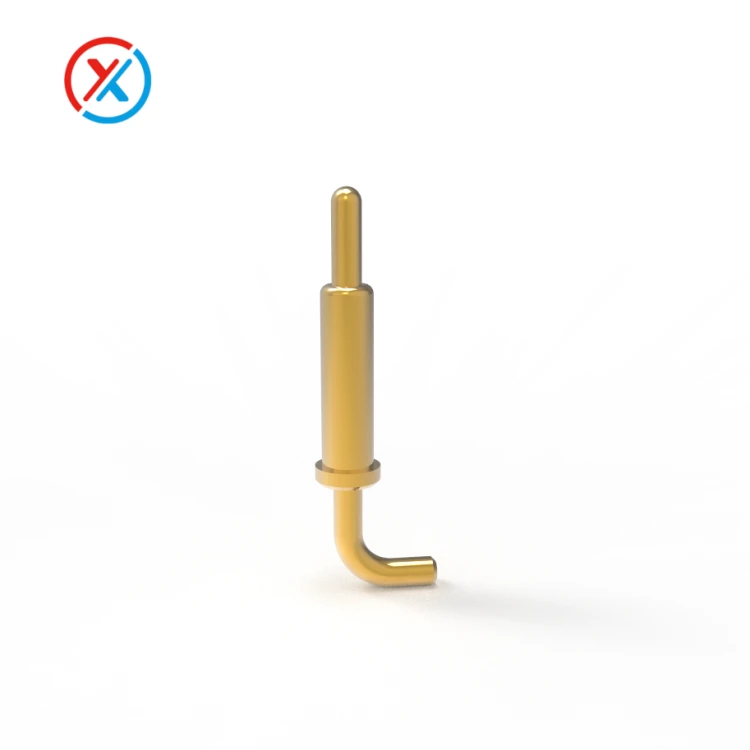
Let me give you a real example. A few months back, a customer came to us with a line of wireless earbuds that kept dying after a few months, because the right-angle charging pogo pins were getting sweat inside them. They had been using a generic IP65 pin, which only protects against low-pressure water jets—way too low for earbuds that get sweaty during workouts. We swapped them to our IP67 right-angle pogo pins, and they reported back that after six months of testing, there were zero issues. That’s the kind of real-world performance we pride ourselves on.
Now, I know there’s a lot of confusion around IP ratings, so let’s clear up another myth: higher IP isn’t always better, but it’s important to match it to your environment. If you’re making a product that only goes through occasional dust and rain, IP67 is more than enough. But if it’s going to be exposed to full submersion, high humidity, or chemical exposure, you’ll want that IP68. That’s why when you’re Buy Pogo Pins from us, we make it easy to filter by IP rating, and our customer support team is always here to help you pick the right one.
We also do custom modifications, right? If your project has a specific size requirement or needs a unique seal for a super harsh environment, we can tweak our right-angle pogo pins to fit. We work with startups all the way up to large corporations, so no order is too small or too big. Just last quarter, we worked with a team making agricultural sensors that go in soil—they needed a pin that could handle dirt and moisture, so we adjusted the seal to be more resistant to soil particles, and it worked perfectly for them.
Another thing to note: the plunger material plays a role in longevity, even with waterproofing. All our right-angle pogo pin plungers are made of gold-plated brass, which is corrosion-resistant and ensures good electrical contact, even if there’s a tiny bit of moisture that gets past the seal (though our seals are designed to prevent that). The barrel is stainless steel, which adds an extra layer of protection against rust, especially in salty environments.
I should also mention that we test every product in our in-house lab before it leaves our warehouse. We don’t just rely on third-party testing—we do our own round-the-clock tests to make sure every single pin meets our standards. Because when you’re relying on these pins in a critical application, you can’t afford for one to fail. That’s why our Right Angle Pogo Pin High Quality line has a 12-month warranty, and we stand behind every part we sell.
If you’re still not sure which waterproof level is right for your project, don’t hesitate to reach out. We’ve been in the pogo pin game for years, and we’ve seen every type of application, from smart watches to industrial robots to medical devices. We’ll ask you a few simple questions: what environment will the pin be in? How often will it be exposed to moisture? What current do you need it to carry? And we’ll give you a straightforward recommendation, no sales pressure, no upselling.
At the end of the day, the waterproof level of our pogo pins isn’t just a number on a spec sheet—it’s what makes your product reliable. Whether you’re building a consumer wearable or a rugged industrial device, our right-angle pogo pins are designed to perform, even when they’re exposed to moisture. So if you’re ready to check out our lineup, or have questions about customizing a pin for your project, we’d love to chat. Just visit our site, browse our Right Angle Pogo Pins, or reach out to our team directly to get started. We’re here to help you find the perfect solution for your needs.
References
- International Electrotechnical Commission. (2013). IEC 60529: Degrees of protection provided by enclosures (IP Code).
- Antonini, G., & Weber, J. (2020). Corrosion resistance of metallic contacts in moist and harsh environments. IEEE Transactions on Components, Packaging and Manufacturing Technology, 10(4), 621-628.
- Smith, K. L. (2019). Seal materials for electronic components: Performance in high-humidity and submersion applications. Journal of Electronic Materials, 48(7), 4512-4520.
- Pogo Pin Industry Association. (2021). Standard testing methods for pogo pin durability and environmental resistance.
- Industrial Electronics Society. (2022). Ruggedization of electronic connectors for outdoor and underwater applications.


