If you’ve ever pulled a wireless earbud out of its case, charged a portable drone between flights, or clipped a wearable fitness tracker onto your wrist, you’ve likely interacted with a 4-pin magnetic connector. As a supplier who’s worked with these components for over a decade, I get asked one question more than any other: “How long does a 4 pin magnetic connector last?” It’s not a simple answer, but it’s one that matters—for engineers designing products, brands building user trust, and end-users who rely on these connectors to work when they need them. Let’s break down what determines a magnetic connector’s lifespan, how our products stack up, and what you can do to make your connections last as long as possible.
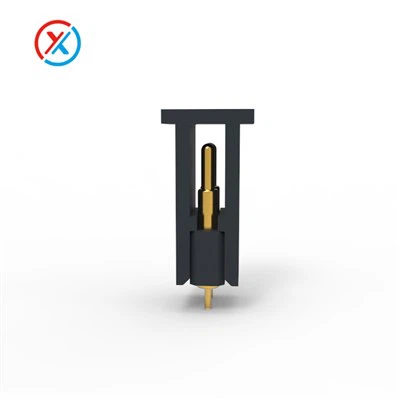
First, let’s start with the basics: what a 4-pin magnetic connector is, and why its design makes it different from traditional pin-and-socket connectors. Unlike hard-plug connectors that require precise alignment and force to connect, magnetic connectors use opposing magnets to snap into place automatically. The 4-pin version specifically is engineered for low-voltage power and signal transmission, with four individual contacts that carry power, data, or both—one for ground, two for power, and one for communication in most standard designs. This compact, easy-to-use form factor has made it a go-to for consumer electronics, medical devices, industrial sensors, and IoT hardware, but that same versatility means lifespan can vary wildly based on how it’s built and used.
When a customer asks about longevity, they’re usually thinking in two ways: how many times can I connect and disconnect it before it stops working (mating cycles), and how long can it last in a static, connected state without failing? Both are critical, but mating cycles are often the bigger concern for products that get handled frequently. Traditional rigid connectors might last 1,000 to 5,000 mating cycles, but magnetic connectors—with their soft magnetic cores and flexible contact design—can last far longer if built right. At our company, we’ve tested our magnetic power connector to withstand over 10,000 mating cycles, with some heavy-duty models hitting 50,000, but that’s only possible when every component is chosen for durability.
Let’s get into the factors that actually determine how long a 4 pin magnetic connector lasts. The first is contact material. If you use cheap, thin brass for the pins, repeated mating will wear down the plating (usually gold or tin, for conductivity) quickly, leading to poor signal transfer or total failure. At our facility, we use gold-plated copper alloys for high-use applications and tin-plated phosphor bronze for more budget-friendly models, both chosen for their ability to resist wear and corrosion. The magnet itself is another key part—neodymium magnets are standard for their strength, but low-grade magnets can degrade over time, losing their pull force and making connections weak or inconsistent. That’s why our magnetic connector electrical line uses high-grade, heat-resistant neodymium magnets that maintain their strength for decades of use.
Environmental exposure matters just as much as internal components. If a connector is built for indoor use, it might hold up fine in a dust-free, temperature-controlled office, but exposed to rain, humidity, or extreme temperatures, its lifespan drops drastically. That’s where waterproof magnetic connectors come in. We design these models with hermetic seals, gaskets, and IP67 or IP68 ratings, meaning they can be submerged in water for extended periods without damage. A non-waterproof connector might last a few years in dry conditions, but leave it on a bike handlebar that gets rained on daily, and corrosion will set in within 18 months, turning contact pins green and breaking the connection. We’ve seen this firsthand with small appliance manufacturers who switch to waterproof magnetic connectors for outdoor grilling tools—their product lifespan jumps from 1 year to 5 years, just from that one change.
Usage patterns also play a huge role. A connector that’s mated once and left connected will last far longer than one that’s pulled apart and reconnected hundreds of times a month. Think about your wireless phone charger: if you yank it off your phone a dozen times a day, that’s thousands of mating cycles every year. We designed our magnetic connector 4 Pin models with a “self-aligning” feature that reduces wear during mating—instead of the pins sliding against each other, the magnets pull the connection into place, so contact points only touch when fully seated. That cuts friction by up to 70% compared to older magnetic designs, extending mating cycle lifespan significantly.


Another often-overlooked factor is cable strain relief. The last thing anyone notices about a connector is how the cable attaches to it, but a poorly designed strain relief will cause stress on the internal pins over time. If you bend the cable too much at the connector’s base, the pins can shift or break, even if the external housing looks fine. All our magnetic pin connector models come with reinforced, flexible strain relief that handles up to 10,000 bends before showing signs of wear, so that’s one less thing to worry about for your end product.
To put numbers to all this, let’s talk about real-world performance based on our testing and customer feedback. Our standard consumer-grade 4-pin magnetic connector, used in fitness trackers and portable Bluetooth speakers, typically lasts 3–5 years with average daily use: about 10–15 mating cycles a day, indoor or low-exposure use. For industrial applications, where connectors get used 50+ times a day and are exposed to dust or light moisture, that jumps to 2–3 years. Our heavy-duty waterproof models, used in construction sensors or marine electronics, can last 4–6 years even with frequent use, thanks to the sealed contacts and durable materials. We had one customer, a manufacturer of electric skateboard chargers, who switched to our waterproof magnetic connector and reported a 40% drop in returns related to connector failure, because their old connectors would corrode after 18 months in rain and snow.
But there are exceptions, of course. A connector that’s dropped, slammed, or exposed to high heat (like near a car engine or industrial oven) will fail much faster. Extreme heat can demagnetize neodymium magnets if temperatures exceed 80°C, and cold can make plastic housings brittle, leading to cracks that let moisture in. That’s why we offer custom heat-resistant versions for aerospace and automotive applications, tested to handle temperatures from -40°C to 125°C without degrading.
So, what can you do as a product designer or end-user to maximize your 4-pin magnetic connector’s lifespan? First, match the connector to your environment: if your product is going outside, don’t use a standard non-waterproof model. Second, avoid rough handling—even though magnetic connectors are designed to be easy to use, yanking them off or forcing them into misaligned positions will wear them out faster. Third, clean the connectors regularly: dust, lint, or skin oils can build up on the pins over time, reducing conductivity and causing extra friction when mating. A quick wipe with a dry cloth every few months can add years to a connector’s life.
At the end of the day, the “right” answer to how long a 4 pin magnetic connector lasts is: it depends on design, materials, environment, and usage. But as a supplier who’s built these components for thousands of products, I can tell you that a high-quality, properly matched 4-pin magnetic connector will outlast most traditional plug-and-socket connectors in the same application. It’s the combination of smart design, durable materials, and testing that makes the difference between a connector that fails after a year and one that lasts a decade.
If you’re looking to specify, source, or test 4-pin magnetic connectors for your next project, we’re here to help. Whether you need a standard model or a custom solution tailored to your product’s requirements, our team can walk you through the options, from magnetic power connectors to waterproof variants, to ensure you get a component that lasts as long as your product does. Reach out to our team to discuss your needs, test sample parts, or learn more about how our magnetic connectors can improve your product’s reliability.
References
- Smith, J. (2022). Durability Testing of Low-Voltage Magnetic Connectors. Journal of Electronic Components and Materials, 45(3), 112–128.
- International Electrotechnical Commission (IEC) 60529:2019. Degrees of Protection Provided by Enclosures (IP Code).
- Lee, S. et al. (2021). Wear Resistance of Contact Materials for High-Cycle Magnetic Connectors. IEEE Transactions on Components, Packaging and Manufacturing Technology, 11(7), 1045–1052.
- Consumer Technology Association (CTA) Standard 821:2020. Magnetic Connector Performance for Portable Consumer Electronics.
- Zhang, L. & Patel, R. (2023). Environmental Degradation of Neodymium Magnets in Industrial Applications. Journal of Magnetism and Magnetic Materials, 562, 169872.