

The manufacturing process of a magnetic connector is a highly precise engineering project involving multiple technical processes. From design to production, every step of a magnetic connector requires professional knowledge and rigorous quality control and testing. Today, we'll share the process of making a magnetic Pogo pin connector.
The Core Structure of a Magnetic Connector
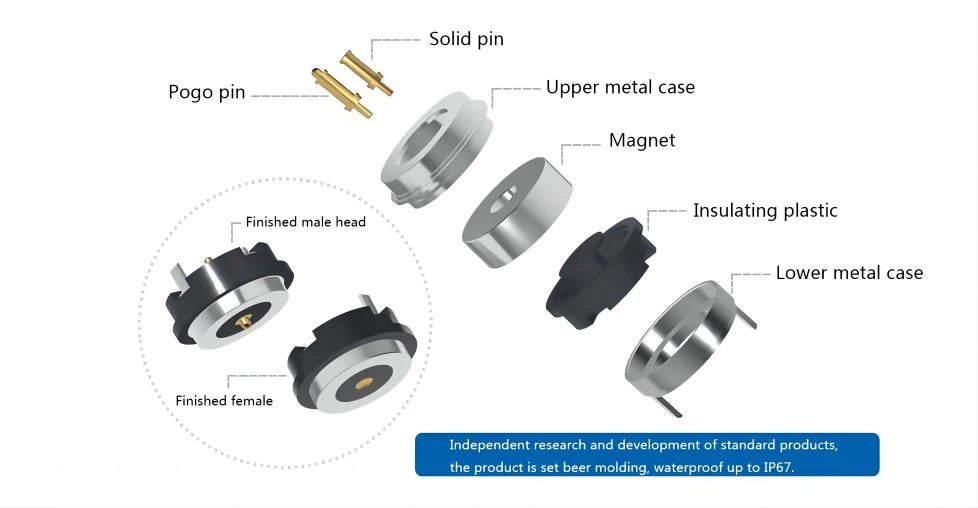
To make a magnetic connector, you need to understand its structure. A magnetic connector is a high-efficiency Pogo pin connector that uses magnetic attraction for connection. It typically consists of three main parts: a Pogo pin or solid pin, a magnet, and insulating plastic. First, the Pogo pin, as the core component of the magnetic connector, provides reliable electrical contact. Magnetic connectors are divided into male and female connectors, and the use of Pogo pins differs between the two. Male connectors typically use Pogo pins with a spring structure, while female connectors use solid pin without a spring structure. Next, we'll introduce the three main components of a magnetic connector.
Pogo Pin: This is the core electrical contact part of the magnetic connector, typically made of conductive metal with a gold-plated surface for corrosion and oxidation resistance. Its design determines the connector's stability and durability.A typical pogo pin consists of three main parts,the pin tip, the pin tube, and the spring. However, pogo pins requiring high current carrying capacity may incorporate insulating beads or machined parts to reduce impedance and ensure stable electrical performance.
Magnet: Usually made of neodymium iron boron magnets, with a multi-layer composite electroplating process of nickel-copper-nickel to ensure the connector can firmly attract and mate.
Shell/Insulating Plastic: Protects internal components and provides structural support, typically made of high-temperature resistant and corrosion-resistant insulating materials.
Design and Engineering Verification
Making a magnetic connector first requires a professional design phase. This step includes calculations and verifications of various aspects such as magnetic strength, spring pressure, current carrying capacity, and durability. Engineers typically use CAD software for detailed 3D design and conduct simulation tests to verify the design's reliability.
Magnetic Strength: The magnetic attraction force must be designed appropriately based on the application equipment. It needs to be strong enough to attract the connector, but not so strong as to cause difficulty in insertion and removal.
Electrical Capacity: Depending on the application scenario of the magnetic connector, the designer needs to select suitable materials to ensure the connector can withstand the required current and voltage without overheating or short circuits.
Production and Assembly
After the design and material procurement are completed, the next step is the actual production stage. This includes the following steps:
Step 1: Pogo Pin Assembly
Assemble the spring, pin, and pin tube into a pogo pin. During assembly, pay attention to using the correct positive force to rivet the pin to avoid deformation of the pin tube, which could lead to poor contact. The spring's function is to ensure that the pin maintains a certain pressure at different insertion depths, maintaining stable electrical contact.
Step 2: Pogo Pin Connector Assembly
Assemble the pogo pin or female pin (solid pin) with insulating plastic. Then, use a riveting machine to rivet the pogo pin or machined pin (female pin) to the insulating plastic to successfully manufacture the pogo pin connector.
Step 3: Magnet Insertion: The magnet is inserted into the designed position on the connector. This step requires extreme precision, as the strength and position of the magnet directly determine the connector's attraction and stability.
Step 4: Housing Molding and Assembly: Finally, all internal components are embedded into the housing. The housing not only provides protection but also ensures that the components do not interfere with each other during operation.
Testing and Quality Inspection
After the magnetic Pogo pin connector is manufactured, it undergoes rigorous testing and quality inspection to ensure it meets electrical safety and performance requirements. Tests typically include:
Electrical Performance Testing: Checking the conductivity of the magnetic connector, including contact resistance and transmission stability.
Mechanical Performance Testing: Testing the connector's mating and extraction cycles, spring compression strength, etc., to ensure it is not easily worn during long-term use.
Magnetic Testing: Ensuring the magnet's attraction force is appropriate.
Environmental Resistance Testing: Salt spray testing, etc., to test the connector's operational stability in extreme environments such as high temperature, low temperature, and high humidity.
Summary
Manufacturing magnetic connectors is a highly meticulous process, requiring strict control at every stage from design, material preparation, production to testing. Through precise design and high-quality manufacturing processes, the electrical performance, magnetic safety, and mechanical stability of the connectors are ensured.


