


Material development can involve changing an alloy grade, refining its processing condition, adjusting a coating system, or improving compatibility between mating surfaces. The value of a change comes from its measurable effect on the finished connector.
A useful development project starts with a specific problem. Rising resistance, insufficient spring force, surface wear, corrosion, and difficult machining require different investigations. Selecting a material before identifying the limiting factor can add cost without improving performance.
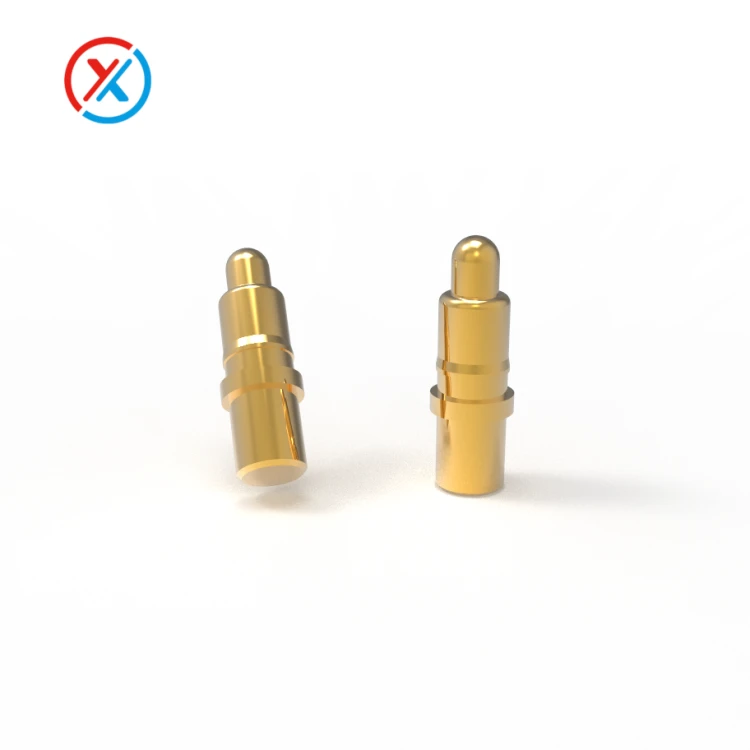
The components inside a pogo pin also perform different jobs. The plunger and barrel need suitable electrical and mechanical properties, while the spring must provide force through the required travel. The insulating carrier establishes spacing and supports the contacts within the assembly.
| Component | Material priorities | Manufacturing considerations |
|---|---|---|
| Plunger | Conductivity, strength, wear behavior, and compatibility with the mating surface | Machinability, surface finish, dimensional control, and plating |
| Barrel | Conductive path, mechanical support, and a suitable internal contact surface | Bore quality, wall thickness, retaining features, and internal coating coverage |
| Spring | Elastic behavior, fatigue performance, and force retention | Wire condition, forming, heat treatment where applicable, and dimensional consistency |
| Contact finish | Stable electrical contact, corrosion resistance, and wear allowance | Adhesion, porosity, thickness distribution, and finished dimensions |
| Insulating carrier | Electrical insulation, dimensional stability, and environmental compatibility | Molding, assembly, heat exposure, and mounting tolerances |
Copper alloys offer several options for conductive components, but their properties vary by composition and condition. Strength, conductivity, corrosion behavior, and machining performance should be compared using the relevant material specifications.
An alloy selected for greater strength may have lower conductivity. A material that performs well mechanically may also require a different machining or plating process. These tradeoffs become more significant as component dimensions decrease.
The available conductive cross-section matters alongside material conductivity. A change in alloy cannot necessarily compensate for a restricted current path or an unstable internal contact interface. Electrical and thermal evaluation should therefore use the complete pin and its intended mounting arrangement.
Spring materials require a separate assessment. Stainless spring wire and high-carbon spring wire are possible choices, depending on the required force, geometry, temperature, and exposure.
The spring's force-versus-travel behavior must suit the assembled connector. Repeated compression, extended time under load, and temperature can affect performance. A material designation alone does not establish cycle life or long-term force retention.
Miniaturization also makes manufacturing consistency important. Small changes in bore size, plunger diameter, straightness, or coating thickness can alter clearance and friction.
Material development should therefore include the production process. A candidate alloy needs to be formed or machined into the required geometry without unacceptable burrs, distortion, or surface damage. Finished parts must retain the dimensions needed for smooth movement and stable contact.
Surface treatment provides another way to adjust performance. A coating system can protect the substrate, manage the electrical interface, and influence wear. Nickel beneath a gold contact finish is one possible arrangement, with each layer serving a different purpose.
The relevant specification includes the substrate, layer sequence, thickness, coverage, adhesion, and surface condition. The mating pad finish should be considered at the same time.
Internal surfaces deserve attention as well. The plunger-to-barrel interface may carry current and experience sliding. A coating intended to reduce friction must also meet the electrical requirements at that location.
A new coating or composite material needs evidence from the finished contact assembly. A material property measured on a laboratory sample does not establish connector performance under compression, current, contamination, and repeated movement.
Specialized alloys, nanocomposites, and functional coatings can be treated as development candidates where they address a defined requirement. Their evaluation should examine repeatability, compatibility with the substrate, process control, and the ability to inspect the finished product.
Claims such as self-repair, improved fatigue life, or enhanced high-speed transmission require their own evidence. One favorable property cannot establish all three.
High-frequency performance particularly depends on the complete interface. Contact geometry, signal return paths, dielectric materials, and PCB transitions influence the channel. Material conductivity is one factor within that design.
Environmental objectives also need clear definitions. Restricted-substance compliance, recyclability, manufacturing waste, and carbon emissions describe different aspects of a product.
Using a recyclable metal does not establish how readily a complete connector can be recovered. Coatings, adhesives, plastics, and the assembly method affect separation and processing. Likewise, a material declaration does not demonstrate a reduction in production emissions.
Practical improvements may include reducing machining scrap, controlling plating consumption, extending service life, or making worn components replaceable where the equipment design allows. Any claimed reduction should use an identified baseline and supporting measurements.
For custom projects, XINTENG can work from customer drawings to coordinate material selection with contact geometry, working compression, carriers, mounting features, and terminations. Non-standard parts can be developed around the device requirements, with samples or small batches used to evaluate the proposed configuration.
A structured comparison helps determine whether a material change is worthwhile:
Establish the current failure mechanism or performance limitation.
Define the property the candidate material is intended to improve.
Record changes in geometry, processing, coating, or assembly.
Measure electrical and mechanical performance under representative conditions.
Check performance after the required cycling or environmental exposure.
Confirm manufacturing consistency and inspection requirements.
The approved specification should identify the material grade and condition, coating requirements, critical dimensions, and acceptance limits. Supplier records and change control then help keep production parts aligned with the evaluated design.
1. What is the best material for a pogo pin?
There is no single best material for every component. The plunger, barrel, spring, and carrier have different requirements. Selection should follow the electrical load, mechanical behavior, environment, and manufacturing process.
2. Can an advanced coating guarantee longer life or faster data transmission?
No. Durability requires testing under defined mechanical and environmental conditions. Data performance requires evaluation of the complete signal path, including geometry, grounding, and surrounding connections.
3. Does using recyclable material make a connector sustainable?
Recyclability is one consideration. Service life, repairability, material consumption, production waste, and practical recovery also matter. Environmental claims should identify what was measured and compared.
4. What information is needed for drawing-based material development?
Provide drawings, electrical requirements, working compression, operating temperature, exposure conditions, and expected service life. Existing failure samples or test results can help identify which material or process changes deserve evaluation.


