


For handwriting and drawing, pressure-sensitive input allows a compatible application to respond to changes in how firmly the user presses. Depending on the application, that information may influence line width, opacity, or another drawing parameter.
The result depends on more than pairing the pen with a tablet. The stylus, device, operating system, and application must support the required interaction. Bluetooth connectivity alone does not guarantee pressure-sensitive input in every application.
The magnetic tip arrangement described for Pogo Connect serves a mechanical purpose. It allows the tip to be removed and reattached while providing a defined seating position. Ten One Design presented this feature as a basis for separately replaceable tips.
A replaceable tip can be useful when the contact surface wears or when a product is designed to accommodate alternative tip configurations. The benefit depends on replacement-part availability and whether each tip preserves the required fit and sensing behavior.
The tip must remain securely seated during writing while allowing the intended removal action. Axial pressure, sideways movement, and handling all place demands on the joint.
Magnetic force is only one part of that relationship. Contact surfaces, locating features, clearances, and any mechanical stops determine whether the tip sits consistently. Stronger attraction cannot compensate for a poorly controlled seating position.
Tip alignment can also affect the feel of the pen. Movement within the joint may become noticeable during small strokes, even if the tip remains attached. Development should therefore assess both retention and the complete writing action.
Pressure sensing is a separate function. It requires a sensing mechanism and electronics that produce information suitable for the application. A magnetically retained tip does not, by itself, measure force.
The available description does not establish the exact internal sensing architecture. It would therefore be inappropriate to infer a particular sensor, pressure-level count, or performance specification from the magnetic tip alone.
| Feature | Its role | What it does not establish by itself |
|---|---|---|
| Magnetic tip retention | Holds a removable tip in its intended position | Pressure measurement or electrical conduction |
| Pressure sensing | Captures changes in applied force | Support in every device or application |
| Bluetooth communication | Provides a supported wireless communication path | Universal compatibility or a guaranteed writing experience |
| Replaceable tip | Allows a defined component to be exchanged | Compatibility with unrelated replacement tips |
The name also needs clarification for connector designers. Pogo Connect is a stylus product name; "pogo pin" describes a spring-loaded electrical contact. Similar wording is not evidence that the stylus contains a pogo pin connector.
A magnetic joint can perform a purely mechanical function. In other products, magnets may retain an interface while separate contacts carry power or signals. The actual construction must be established before describing it as a magnetic electrical connector.
For an independent stylus project, these distinctions help define the development scope. A replaceable writing tip needs suitable geometry, material, surface condition, retention, and compatibility with the sensing arrangement. A charging interface introduces additional electrical and thermal requirements.
If pogo pins are proposed for a charging dock or detachable accessory, their working compression, mating pads, current capacity, and retention need their own specification. Performance of the writing tip does not establish performance of the charging connection.
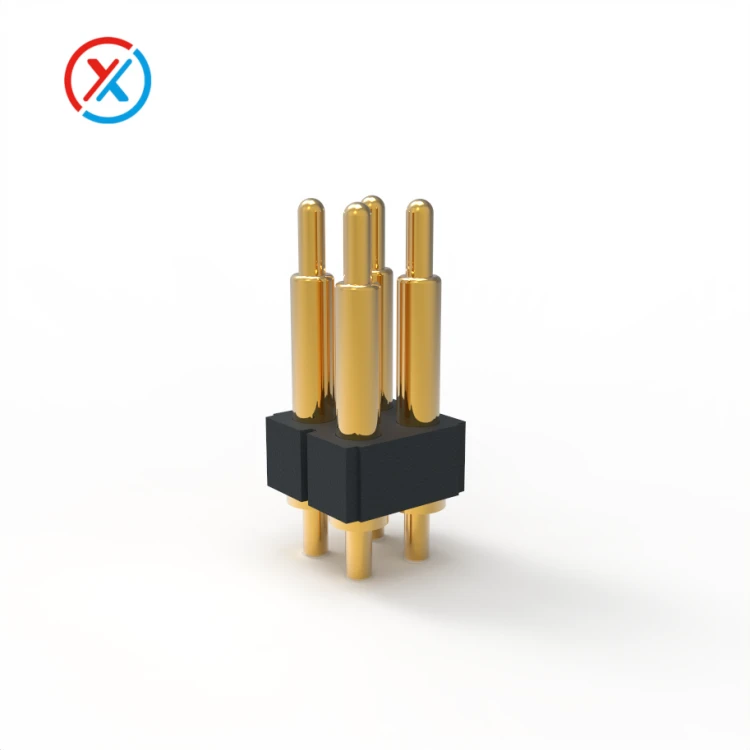
XINTENG can support drawing-based development of magnetic connector components and precision contact assemblies for independent OEM projects. Depending on the requirement, this can include machined parts, insulating carriers, magnetic housings, and device-side mating components. This customization capability is separate from any claim of involvement in the original Pogo Connect product.
Samples or small-batch assemblies can help assess fit, attachment and removal behavior, alignment, and wear. Where the assembly includes electrical contacts, evaluation should also cover resistance, temperature under load, and reliable engagement.
For a complete stylus, writing performance needs evaluation with the intended device and application configuration. Tip replacement should preserve the required mechanical behavior and sensing response.
The original Bluetooth 4.0 description is historical product information. It should not be treated as a current compatibility list or evidence that the pen supports every present-day iPad or application.
1. Is Pogo Connect a pogo pin connector?
Pogo Connect is the name of a Ten One Design stylus. The supplied description does not establish that it uses spring-loaded pogo pin contacts internally.
2. Does a magnetic tip create pressure sensitivity?
No. Magnetic retention holds the tip in position. Pressure sensitivity requires a sensing mechanism, electronics, and compatible software behavior.
3. Does Bluetooth pairing guarantee pressure-sensitive drawing?
No. The stylus, tablet, operating system, and application must support the required functions. Pairing alone is insufficient.
4. Can magnetic components be customized for a new stylus project?
Yes, component development can begin from drawings and defined requirements. Specify the installation space, tip or connector geometry, retention behavior, materials, expected replacement cycles, and any electrical functions.


