


Their spring-loaded plungers compress against mating pads, providing contact force within a defined working range. This can help accommodate small variations in the distance between assembled parts while supporting a detachable interface.
The choice between pogo pins and stamped spring contacts depends on the available space, mating direction, required travel, and electrical load. Both technologies can suit miniature products. A pogo pin may fit a narrow contact area, while a stamped contact may suit a different height or mounting constraint.
Comparing the complete assemblies is more useful than comparing individual contacts. A pogo pin needs room for its barrel, spring, working travel, mounting features, and mating surface. A stamped contact needs space for its attachment and deflection. The surrounding housing and retention features also occupy space.
For a smartwatch charging interface, one practical arrangement places fixed pads on the watch and spring-loaded pins in the charger. The watch can then present an accessible contact surface, while the charger contains the moving components.
This arrangement can simplify inspection and sealing around the device-side contacts. It does not automatically make either half waterproof, and the exposed pads still need suitable materials and protection against corrosion.
Smart glasses introduce different packaging constraints. A charging interface near a temple or frame section must fit within a narrow enclosure without interfering with hinges, wiring, or the product's fit. Connector placement and cable direction can be as important as contact diameter.
A custom contact layout can help resolve these constraints. At XINTENG, development can start from customer drawings to coordinate pin spacing, working height, insulating carriers, mounting features, and device-side mating parts. Magnetic housings and cable terminations can be included where the charging arrangement requires them.
The useful starting point is the assembled geometry. Free pin height alone does not establish whether a contact will work correctly in the device. The drawing needs to define the installed distance and resulting compression across the relevant tolerances.
Too little compression can leave insufficient contact force. Too much can increase stress or damage the mechanism. Housing stops should establish the final mating position before the pins reach their mechanical limit.
Guides control sideways movement and angular alignment. The spring mechanism primarily accommodates movement along the compression axis, so the pins should not be used to locate a loosely supported device or carry its weight.
For magnetic charging, the magnets assist alignment and retention. Their arrangement must work with the combined force of the compressed contacts and any seals. Stronger attraction does not correct misplaced pads or an incorrect installed height.
The intended release action also matters. A small wearable charger should remain connected during normal charging without transferring excessive cable loads into the device. Pull direction, cable stiffness, connector shape, and mounting all influence that balance.
Electrical requirements determine how many contacts are needed and how they should be arranged. A dedicated charging interface may need only supply and return connections. Identification, control, or communication functions may require additional contacts and supporting electronics.
A compact pogo pin interface does not automatically support fast charging or data transfer. The complete electrical path and connected devices must support the intended functions.
For charging, evaluate resistance, voltage drop, and temperature rise through the contacts, mating pads, terminations, and conductors. Reducing contact size can affect the available conductive cross-section and heat dissipation, so miniaturization needs to be assessed alongside the load.
Wearable environments place particular demands on exposed surfaces. Moisture, skin oils, salt residues, dust, and repeated cleaning can affect contact performance. A finish that performs well in a clean indoor test may behave differently after contamination and wear.
Copper-alloy plungers and barrels with suitable contact plating are possible choices, while the spring material is selected for its mechanical requirements. Gold plating can help maintain a stable contact surface, but thickness, adhesion, porosity, and the underlying layers all influence its effectiveness.
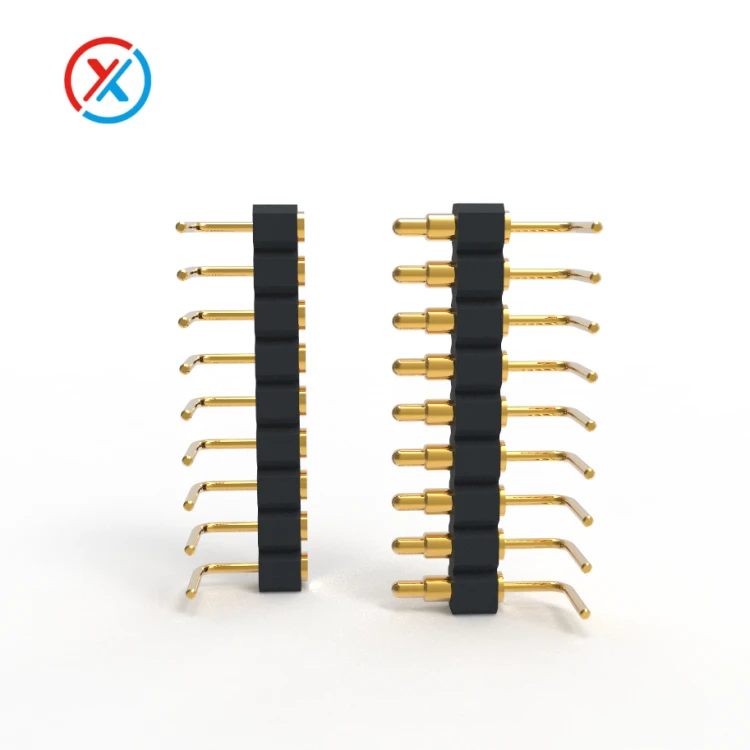
The mating pads need compatible finishes and sufficient usable contact area. Wear or contamination on the device side can affect charging even when the pogo pins remain mechanically functional.
Sealing should address the complete enclosure interface. Protection while the charger is attached may differ from protection while the wearable is being used. Potting, gaskets, or other sealing features must also remain clear of the moving mechanism and electrical contact surfaces.
A practical development brief includes:
Device drawings and available installation space.
Contact positions, mating direction, and working compression.
Charging voltage, continuous current, and any communication requirements.
Retention and release requirements.
Expected moisture, contamination, and cleaning exposure.
Connection cycles, assembly method, and inspection criteria.
Samples or small-batch assemblies can then be evaluated with representative device housings and mating parts. Fit checks should confirm that all contacts engage correctly without rocking, excessive force, or interference.
Durability testing should reproduce the intended mating action and working travel. Electrical resistance, contact force, surface condition, and reliable plunger return should be checked after cycling and relevant environmental exposure.
The approved configuration should identify the dimensions, materials, finishes, and assembly controls that determine performance. This gives the device manufacturer a defined interface to inspect and maintain as the product moves into production.
1. Are pogo pins always smaller than stamped spring contacts?
No. Both can be miniaturized. Compare the complete installed arrangements, including height, lateral space, working travel, mounting, and structural support.
2. Are pogo pin charging contacts waterproof?
Water protection depends on the assembly's sealing design. Fixed device-side pads may simplify sealing, but connected and disconnected conditions still need appropriate verification.
3. Can a small wearable pogo pin connector support fast charging?
It may, provided the complete conductive path meets the electrical and thermal requirements and the charging electronics support the intended mode. Contact size or magnetic attachment alone does not establish compatibility.
4. Can XINTENG customize a connector for a watch or smart-glasses enclosure?
Customization can be developed from device drawings, electrical requirements, and mating geometry. Sample evaluation helps confirm fit, engagement, retention, and performance before production approval.


