


The designation does not mean that every batch contains exactly 62% copper. The actual composition and permitted impurities should follow the applicable material specification and be confirmed through supplier documentation.
H62 can be considered for machined conductive parts, formed components, and structural fittings. In pogo pin connectors, it may be suitable for plungers, barrels, or related contact components when its electrical and mechanical properties meet the application requirements.
Its suitability depends on the finished part. A small signal contact, a thin-walled barrel, and a high-current charging contact place different demands on the material.
| Property | General characteristic | Relevance to connector parts |
|---|---|---|
| Electrical conductivity | Lower than pure copper | Conductive dimensions and interface resistance require evaluation |
| Strength and hardness | Depend on material condition and processing | Influence dimensional stability, deformation, and wear |
| Formability | Can support forming operations under suitable conditions | Temper, geometry, and process determine feasibility |
| Machinability | Can be machined, but is not equivalent to every free-cutting brass | Chip control, burrs, tool condition, and surface finish matter |
| Corrosion resistance | Suitable for some environments, but not immune to corrosion | Exposure, surface condition, and protective finishes need review |
Electrical conductivity is one of the first considerations for pogo pin applications. Compared with pure copper, H62 introduces greater bulk resistance for an otherwise equivalent conductive path.
That difference does not automatically make it unsuitable. The finished component's length, cross-section, internal contact arrangement, and termination all influence resistance. The external mating interface adds another contribution.
For a charging connector, the complete supply and return paths should be evaluated under load. Voltage drop and temperature provide practical evidence of whether the proposed material and geometry are suitable.
A current rating cannot be assigned from the H62 designation alone. Where the available space limits the conductive cross-section, other copper alloys may need comparison against the same electrical and mechanical targets.
H62's strength and hardness also depend on its supplied condition. Cold working and other processing can change how the material behaves during machining, forming, and service.
A material description that states only "H62 brass" may therefore be incomplete for a precision part. The specified condition should suit the manufacturing route and required mechanical properties.
This is particularly relevant to thin walls, small shoulders, retaining features, and areas affected by assembly deformation. A material that machines acceptably may still need a different condition for a subsequent forming operation.
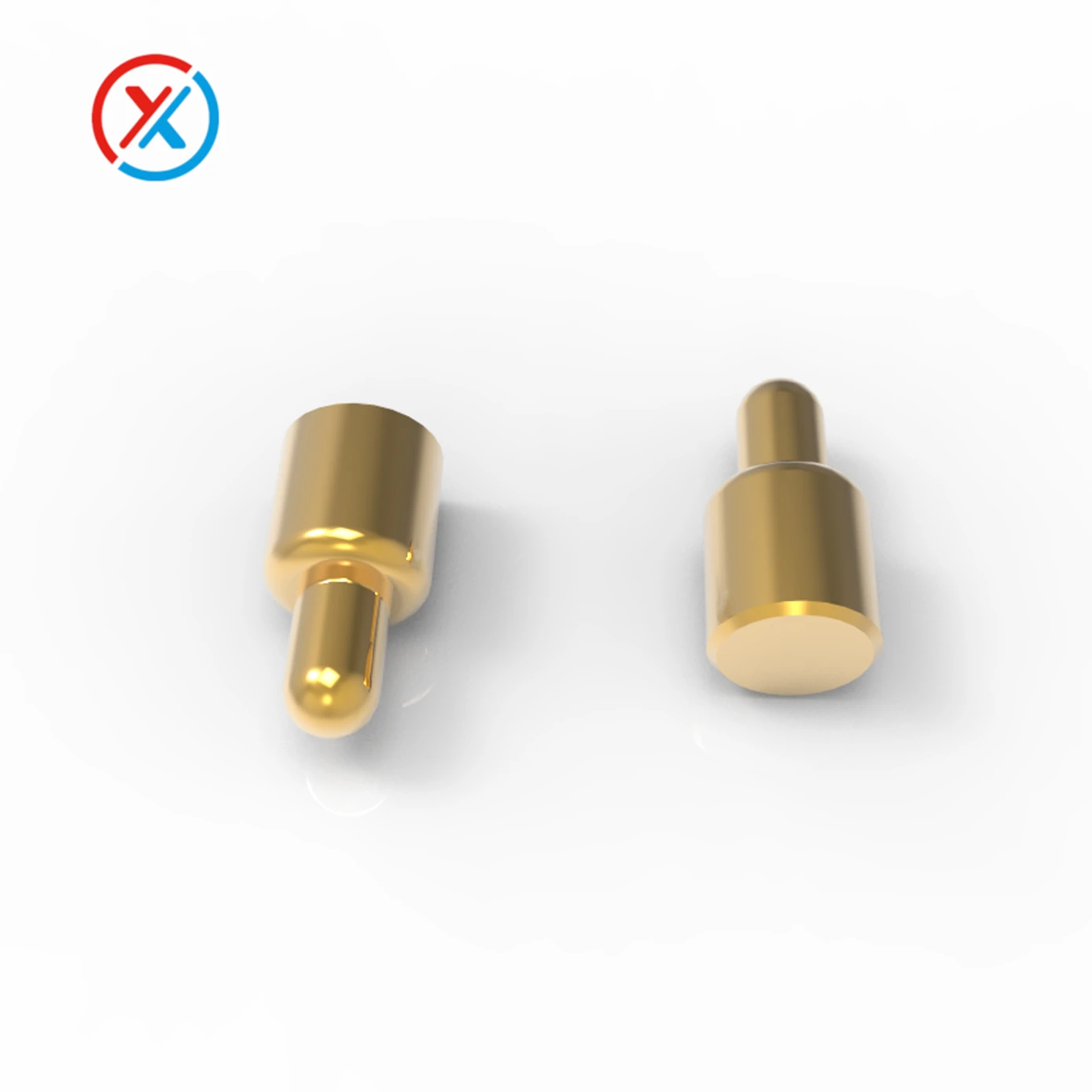
Machinability should be assessed separately from formability. H62 can be turned and drilled, but that does not establish the chip-breaking behaviour or production efficiency associated with a dedicated free-cutting brass.
For miniature connector components, chip control and burr formation can affect more than manufacturing speed. A burr near a barrel opening or an uneven internal surface may interfere with plunger movement.
Tool selection, cutting conditions, material consistency, and cleaning all contribute to the result. Dimensional accuracy and surface finish should be specified on the features that control fit and function.
XINTENG supports drawing-based customization of pogo pin contacts, connector housings, insulating carriers, and supporting components. For an H62 contact project, the material choice can be reviewed alongside the finished dimensions, mating arrangement, coating requirements, and intended electrical load.
Prototype or small-batch evaluation can help establish whether the selected construction meets the requirements before the production specification is finalized.
Corrosion resistance requires similar attention. H62 can perform satisfactorily in suitable environments, but moisture, salt, retained contamination, and certain chemicals can affect brass.
The component's shape influences exposure. A clean surface that dries readily may behave differently from a crevice that retains contaminated liquid. Contact movement and coating wear can also change which materials become exposed during service.
For an outdoor or wearable interface, material selection should be considered together with surface protection, sealing, cleaning access, and environmental testing. The base alloy alone does not establish corrosion performance for the assembled connector.
H62 can receive finishes such as nickel and gold where the process and application are suitable. These coatings may provide a functional contact surface, corrosion protection, or a specified appearance.
The coating system still needs defined requirements. Surface preparation, coverage, adhesion, thickness, and the mating material affect performance. A gold-coloured surface is not sufficient evidence of contact durability.
Plating does not eliminate resistance within the H62 body. Its main electrical benefit is associated with the contact surface, while the substrate and conductive geometry continue to influence bulk resistance.
Coatings also change dimensions. External diameters increase and internal clearances can decrease. For a plunger-and-barrel assembly, the drawing should make clear whether dimensional limits apply before or after plating.
H62 should not automatically be selected for the internal spring simply because it is used for the plunger or barrel. The spring has separate requirements for elastic force, fatigue behaviour, and resistance to relaxation. Its contribution to the current path also depends on the connector design.
For procurement and production, the material requirement should identify:
The grade and applicable material specification.
The required supplied condition and stock form.
Relevant mechanical-property requirements.
Finished dimensions, tolerances, and surface condition.
Plating or other finishing requirements.
Electrical and environmental acceptance criteria.
Supplier material records help confirm that the delivered stock matches the specification. They also support review when a source, composition, or processing condition changes.
Final validation should use representative components and mating parts. For pogo pins, relevant checks may include compression and return, contact force, resistance, temperature under load, and performance after the required cycling or environmental exposure.
The approved material and finishing route should remain linked to the drawing revision. That connection is important when comparing batches or evaluating a proposed substitution.
1. Is H62 brass the same as pure copper?
No. H62 is a copper–zinc alloy with approximately 62% nominal copper content. Its conductivity, strength, processing behaviour, and corrosion response differ from those of pure copper.
2. Is H62 suitable for high-current pogo pins?
It may be suitable in a particular design, but the grade alone cannot establish the rating. Conductive dimensions, contact resistance, terminations, working compression, and cooling must be evaluated together.
3. Does gold plating make H62 as conductive as pure copper?
No. Gold plating can improve the contact surface in a suitable construction, but it does not remove the resistance of the H62 substrate. The complete conductive path still determines voltage drop and heating.
4. Can H62 connector parts be manufactured from customer drawings?
Yes. Drawings can define the component geometry, tolerances, material condition, and finish. Electrical load, mating details, and environmental requirements help establish sample evaluation and production acceptance criteria.


