


The design is relatively compact, but reliable charging depends on more than simply placing two Pogo Pins at the bottom of the toothbrush. Contact position, spring compression, magnetic alignment, sealing, surface treatment and the surrounding mechanical structure all need to work together.
How magnetic Pogo Pin charging works in an electric toothbrush
A Pogo Pin is a spring-loaded electrical contact. Its internal structure normally includes a plunger, spring and barrel. When the plunger is pressed against the mating contact, the spring compresses and maintains contact pressure.
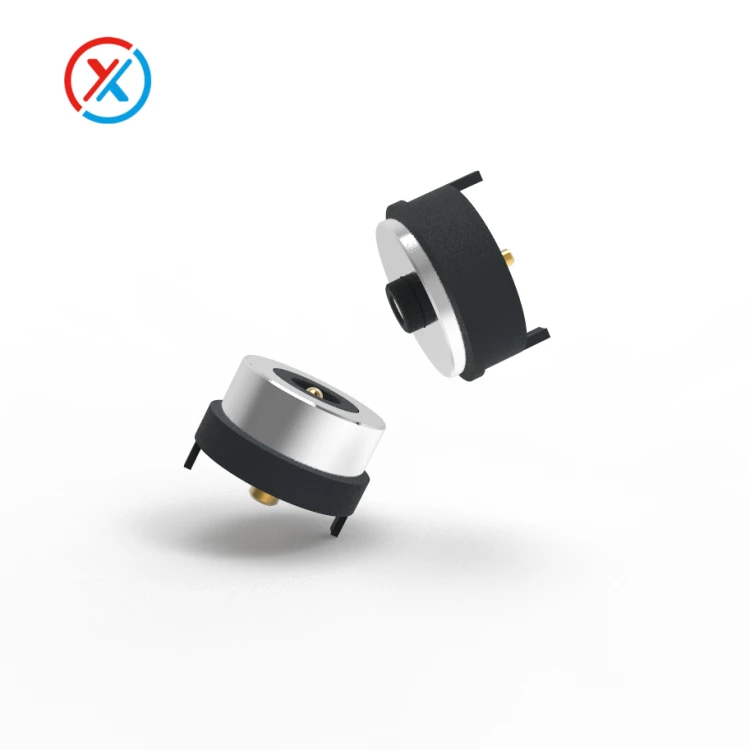
In an electric toothbrush, the charging contacts can be arranged on the bottom of the handle, with a corresponding contact assembly in the charging cable or charging base. Magnets provide the initial attraction and help guide the two sides into the intended position. Once they are aligned, the Pogo Pin is compressed to establish the electrical path.
For basic charging, a two-contact configuration is commonly sufficient for positive and negative power connections. Depending on the product architecture, two to four contacts can be arranged according to the available space and electrical requirements.
The important point is that the magnet provides positioning and retention, while the Pogo Pin provides the spring-loaded electrical contact. The two functions need to be considered together during mechanical design.
The bottom interface needs accurate mechanical positioning
The bottom of an electric toothbrush usually has limited available space. The contact arrangement therefore needs to fit within the housing while leaving enough room for the battery, PCB and other internal components.
The position of each Pogo Pin should be defined relative to the mechanical reference surfaces of the toothbrush and charger. If the contact positions are inaccurate, the magnetic force may pull the two sides together without bringing every contact into the correct working position.
Spring compression also needs to be controlled. Too little compression can reduce contact pressure and cause unstable charging. Excessive compression increases the mechanical load on the contact and may shorten its service life.
The housing should also prevent excessive sideways movement during docking. A spring contact is designed to move along its intended direction. If the toothbrush is repeatedly forced sideways against the contacts, the plunger and contact surface can wear unevenly.
For a multi-contact design, the surrounding plastic structure is just as important as the Pogo Pins themselves. The finished dimensions need to keep the contacts at the correct height so that the intended compression is achieved when the toothbrush is fully docked.
Why magnetic Pogo Pins suit toothbrush charging
A magnetic Pogo Pin interface can provide direct electrical contact without requiring the user to insert a plug into a conventional receptacle. This is useful for a toothbrush because the device is routinely exposed to water and needs a compact charging structure.
Compared with a Type-C or USB charging port, a contact based interface can avoid the need for a conventional open socket in the device housing. The enclosure can therefore be designed around a smaller contact area and an appropriate sealing structure.
The difference from wireless charging is also practical. Magnetic Pogo Pins transfer power through direct metal contact, while wireless charging relies on inductive coupling between coils. For a compact toothbrush, direct contact can provide a straightforward charging path without placing a charging coil inside the handle.
The actual charging performance still depends on the complete electrical system. Contact resistance, current requirements, power supply and battery charging circuitry all need to be considered during product development.
Waterproofing depends on the complete interface
The charging contacts are exposed at the connection surface, so waterproofing cannot be determined by the Pogo Pin alone.
The contact carrier, plastic housing, sealing structure and connection between the charging interface and toothbrush enclosure all affect water resistance. The design should also consider the condition when the charger is connected and when it is removed.
This is particularly important for electric toothbrushes because the bottom area can encounter splashed water, condensation, toothpaste residue and frequent wiping. A recessed contact arrangement can help protect the contacts from accidental contact and contamination, while the surrounding structure can be designed to control the path through which water could reach the internal electronics.
An IP rating should therefore be associated with the tested assembly rather than simply the individual Pogo Pin.
Contact materials and surface treatment affect charging stability
The contact surfaces are exposed to repeated mating and environmental contamination. Surface treatment therefore has a direct effect on long-term electrical performance.
Gold plating is commonly used on Pogo Pin contact surfaces because it provides a conductive surface with good resistance to oxidation. The plating system and thickness should be selected according to the expected mating frequency and operating environment.
The mechanical condition of the contact is equally important. A damaged or contaminated plating layer can increase contact resistance even when the spring mechanism itself is still working normally.
For an electric toothbrush, the contact area should be designed so that it can be inspected and cleaned when necessary. Regular removal of residue helps prevent contamination from interfering with electrical contact.
Charging base and magnetic charging cable use different mechanical layouts
There are two common ways to apply magnetic Pogo Pin charging to an electric toothbrush.
A charging base places the Pogo Pin assembly in a fixed docking position. The toothbrush is placed onto the base, and the contacts engage as the handle reaches its charging position. This approach can keep the charger stable on a countertop and provide a defined docking location.
A magnetic charging cable uses a smaller connector head that attaches directly to the contact area on the toothbrush. The cable can be detached and stored separately, which can be useful for portable products.
The electrical principle is similar, but the mechanical requirements are different. A base needs to control the toothbrush position and support its weight. A cable needs suitable magnetic holding force and strain relief so that normal cable movement does not repeatedly disturb the contact.
Contact cleaning should be part of the product design
Pogo Pin contacts can maintain pressure against the mating surface, but the spring mechanism does not make the interface immune to contamination.
Toothpaste residue, moisture and dirt can accumulate around an exposed charging contact. If a film develops between the conductive surfaces, contact resistance can increase and charging may become intermittent.
The contact area should therefore be easy to inspect and clean. A dry cotton swab can be used to remove surface contamination when appropriate. The contact should also be checked if charging becomes unstable or requires unusual positioning.
The mechanical design should avoid deep recesses that are difficult to clean while still providing enough protection around the electrical contacts.
Custom Pogo Pin interfaces require more than a different pin layout
Standard magnetic Pogo Pin products can be used when their dimensions, contact arrangement and electrical characteristics fit the toothbrush design. When the available space or housing geometry is different, the interface can be developed around the actual product drawing.
Customization may involve the contact position, connector dimensions, magnetic arrangement, mounting structure, contact height and housing geometry. The objective is to make the connector fit the finished product rather than forcing the product enclosure to accommodate an unsuitable standard part.
The mechanical components around the connector can also be manufactured according to customer drawings. For projects requiring dedicated non-standard components, drawing based precision machining can be used for individual parts or small batches. This capability also applies to specialized precision components used in packaging machinery, where mounting dimensions and interface positions often need to match an existing machine structure exactly.
What should be checked before selecting a magnetic Pogo Pin solution?
The first step is to define the actual charging requirements, including the required voltage, current and contact arrangement. The mechanical side should then be reviewed together with the electrical design.
Important points include:
Available installation space
Number and position of charging contacts
Required working compression
Magnetic alignment and holding force
Contact resistance
Contact plating
Waterproofing and sealing requirements
Expected mating frequency
Cleaning and maintenance conditions
Connection method, either charging base or magnetic cable
A connector that fits the product physically may still be unsuitable if the contact pressure, sealing structure or electrical rating does not match the finished assembly.
Frequently asked questions
How many Pogo Pins does an electric toothbrush usually need for charging?
A basic charging interface can use two contacts for positive and negative power. Depending on the product design, two to four contacts can be arranged according to the available space and electrical requirements.
Is magnetic Pogo Pin charging more suitable than USB for a waterproof electric toothbrush?
It can be suitable when the product requires an exposed contact interface with a sealed enclosure. Unlike a conventional USB receptacle, the magnetic contact arrangement does not require the same type of plug opening in the device housing. The actual waterproof performance still depends on the complete enclosure and sealing design.
Can Pogo Pin contacts be used repeatedly on an electric toothbrush?
Yes. Pogo Pin contacts are designed for repeated spring compression, and some designs can support tens of thousands of mating cycles. Actual service life depends on contact design, spring characteristics, surface treatment, working compression, contamination and the mating structure.
What should be customized when the standard magnetic Pogo Pin does not fit the toothbrush?
Customization can include the contact layout, connector dimensions, magnetic arrangement, contact height and mounting structure. When the surrounding mechanical parts also require special dimensions, they can be produced from customer drawings through precision machining, including individual and small batch non-standard components.


