


The decision becomes more demanding when the part forms an electrical contact. A stainless steel bracket, connector shell, spring, and current-carrying plunger perform different jobs. They should not share a surface-treatment requirement simply because they use the same material.
Stainless steel obtains much of its corrosion resistance from a thin, chromium-rich passive film. This film protects the surface, but it can also influence electrical contact behaviour. The property that helps protect a structural part may be less desirable at a low-force electrical interface.
"Unplated" should also be distinguished from "untreated." A part supplied without a metallic coating may still require cleaning, deburring, passivation, polishing, or another specified finishing process.
| Component function | Can unplated stainless steel be considered? | Main points to evaluate |
|---|---|---|
| Bracket or structural support | Yes, where the grade and environment are suitable | Corrosion, strength, finish, and assembly condition |
| Protective connector shell | Yes, depending on its function | Exposure, appearance, sealing, and any electrical requirements |
| Internal spring | Yes, in an appropriate design | Force retention, fatigue, corrosion, and participation in the current path |
| Plunger or barrel carrying current | Requires electrical and mechanical evaluation | Resistance, temperature, contact force, wear, and internal movement |
| Grounding or shielding contact | Requires interface-specific evaluation | Continuity, surface films, pressure, and long-term stability |
Corrosion remains possible without plating. Chlorides, retained moisture, crevices, surface contamination, and unsuitable cleaning conditions can affect stainless steel. The severity depends on the grade and the assembled environment.
Machining and handling condition matter as well. Embedded contamination, burrs, rough areas, or residues may create local problems even when the nominal material grade is appropriate.
Post-machining cleaning and suitable passivation can help address contamination-related risks. They do not make every stainless steel grade suitable for every corrosive environment. Material selection and component geometry still need to match the exposure.
A housing joint that traps liquid may perform differently from an accessible surface that dries readily. Likewise, corrosion resistance established on an isolated part may not represent the same part installed against another material.
For electrical components, bulk conductivity and contact resistance need separate consideration. Stainless steel generally has lower conductivity than copper and many copper alloys. At the same dimensions, that can produce greater resistance along the conductive body.
The contact interface adds another contribution. Surface films, contamination, pressure, and mating geometry determine how current crosses from one component to another. A part can conduct adequately through its body while still forming an unstable connection at its surface.
These effects become important in pogo pin plungers, barrels, grounding contacts, and other interfaces that depend on repeated pressure contact. Evaluation should use the intended working compression and mating materials.
Low initial resistance alone does not establish long-term suitability. Measurements after relevant cycling, movement, or environmental exposure help determine whether the interface remains stable.
Adding gold or another conductive finish may improve surface-contact behaviour, but a thin coating does not transform the bulk conductivity of the stainless steel underneath. The substrate, conductive dimensions, internal contact arrangement, and terminations still influence voltage drop and heating.
The spring inside a pogo pin requires a different assessment. Its primary mechanical purpose is to provide force, while its role in conduction depends on the internal design.
If a stainless steel spring mainly supplies mechanical force, conductivity may be less important than fatigue behaviour, corrosion resistance, and force retention. If it carries a meaningful portion of the operating current, resistance and temperature must also be considered.
The complete current path should therefore be understood before deciding whether the spring needs a coating or a different material.
Wear is not determined by the presence or absence of plating alone. Stainless steel performance depends on grade, hardness, surface finish, loading, sliding motion, and the mating material.
Some sliding stainless steel combinations can experience adhesive wear or galling. Other interfaces may operate satisfactorily without a coating when their geometry, finish, and operating conditions are suitable.
In a pogo pin, plunger-to-barrel clearance, straightness, burr control, and surface roughness influence friction and return. A plated part with poor dimensions can still stick, while an unplated part cannot be judged suitable merely because it moves freely when new.
Where plating is selected, its thickness must be included in the finished dimensions. Coating changes can reduce internal clearance or alter mating fits. The drawing should identify whether dimensional limits apply before or after finishing.
Stainless steel also requires suitable preparation for coating adhesion. Specifying a plated finish without defining a compatible process and acceptance criteria leaves an important part of the requirement unresolved.
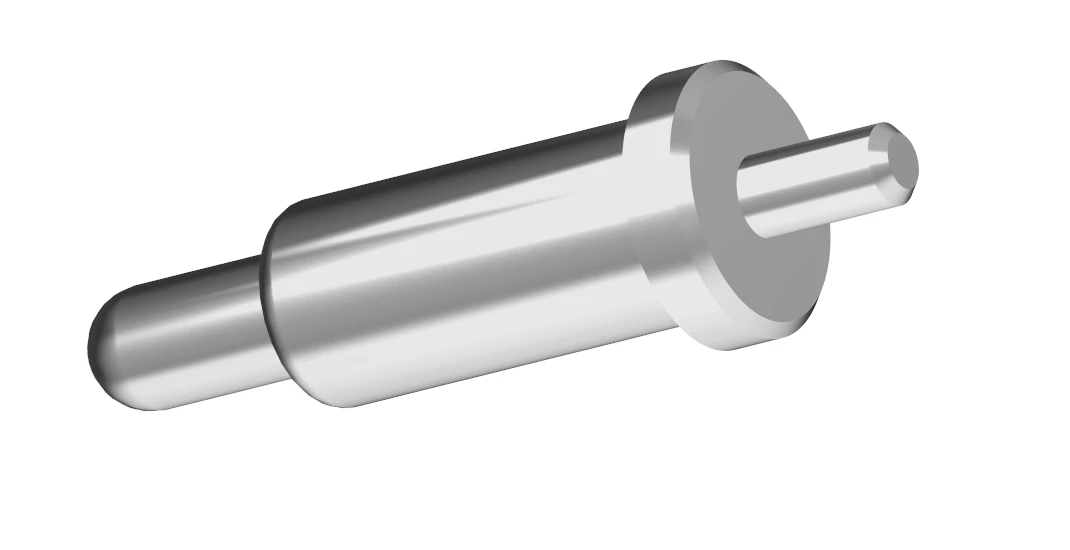
Appearance is another practical difference. Without plating, the visible finish comes from the material and mechanical or chemical finishing process. Machined, brushed, polished, and matte surfaces can produce different appearances without adding a metallic layer.
If appearance is important, specify the required surface condition rather than relying only on "stainless steel, no plating." Visible faces may need separate criteria from hidden or functional surfaces.
Removing electroplating usually eliminates one processing step, but the total cost still includes cleaning, finishing, inspection, and any required validation. A lower initial processing cost offers limited benefit if the selected construction creates unacceptable resistance, wear, or corrosion in service.
For custom connector projects, XINTENG supports drawing-based development of pogo pin contacts, housings, insulating carriers, and supporting components. The review can distinguish structural surfaces from electrical contact areas and identify where an unplated finish may be appropriate.
A useful specification includes the exact material grade and condition, finished dimensions, surface requirements, component function, mating materials, and expected exposure. Electrical parts also need defined resistance, load, and temperature criteria.
Representative samples should then be evaluated in the intended assembly. The approved material and finishing route should remain linked to the drawing revision so that subsequent changes receive an appropriate review.
1. Does stainless steel need electroplating to prevent rust?
Not always. A suitable grade and surface condition may provide adequate corrosion resistance without plating. Moisture, chlorides, contamination, and crevice conditions still need assessment for the intended environment.
2. Is passivation the same as electroplating?
No. Passivation is a surface-treatment process used to support stainless steel's corrosion resistance, including addressing surface contamination. Electroplating deposits a metallic coating. Their functions and effects on dimensions and electrical contact differ.
3. Can gold plating solve the conductivity limitations of stainless steel?
It can improve the contact surface in a suitable design, but it does not eliminate resistance within the stainless steel body. The complete conductive path and temperature under load still require evaluation.
4. Can a pogo pin's stainless steel spring remain unplated?
Yes, in a suitable design. The decision depends on its mechanical requirements, exposure, and contribution to the current path. Spring performance and complete-connector electrical behaviour should both meet the approved specification.


