


A useful specification identifies the expected exposure and defines acceptable performance afterward. Descriptions such as "gold plated," "waterproof," or "corrosion resistant" provide only part of the information needed to evaluate an interface.
The complete assembly matters. A connector may have well-protected electrical contacts while exposed magnets, steel mounting parts, or housing joints remain vulnerable. Corrosion can affect electrical continuity, plunger movement, magnetic retention, or the strength of the mounting arrangement.
For the contacts, protection begins with the substrate and surface preparation. A coating must adhere properly and cover the required areas. Pores, scratches, exposed edges, and wear can create paths through which moisture and contaminants reach the underlying material.
Gold over a nickel underlayer is one possible contact system. Gold helps maintain a chemically stable contact surface, while nickel provides an underlying barrier and mechanical support. Its effectiveness depends on the complete coating specification and manufacturing quality.
Thickness alone is insufficient. Coverage, porosity, adhesion, surface condition, and the mating material all influence the result. A thicker deposit cannot correct poor preparation or damage introduced during assembly.
The mating pads should be evaluated alongside the pogo pins. Their materials and finishes form the other half of the contact interface. An unsuitable mating surface can limit performance even when the spring-loaded contacts meet their own specification.
Magnetic components require separate consideration. Magnet protection, exposed metal surfaces, adhesives, and retention features should suit the environment. The housing needs to protect these parts while maintaining the dimensions that control alignment and contact compression.
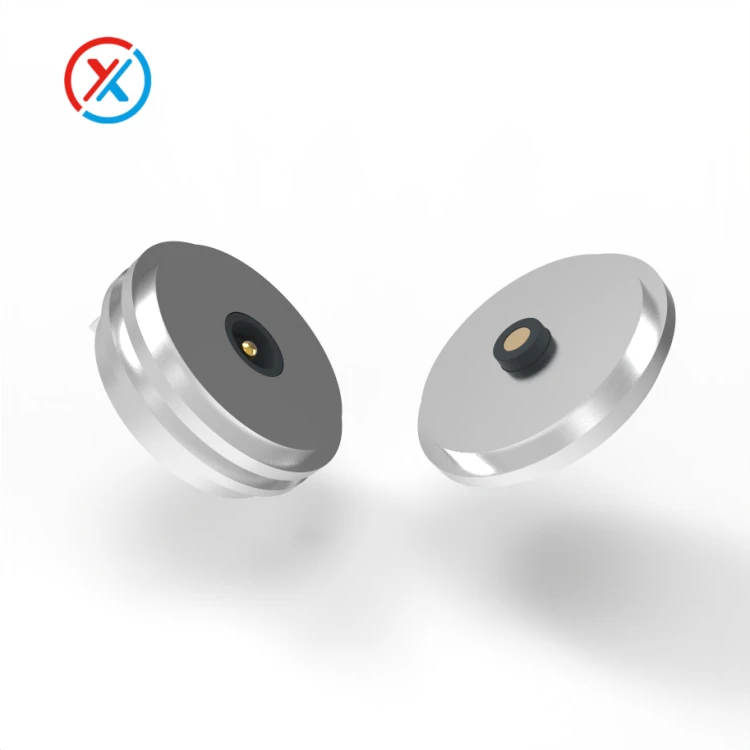
For custom projects, XINTENG can coordinate pogo pin contacts, magnetic housings, insulating carriers, mating parts, and cable assemblies from customer drawings. Material selection, contact finish, sealing features, and mounting geometry can then be reviewed as parts of one interface.
Finished dimensions remain important when coatings change. Plating affects clearances, and sealing features can add mating force. A corrosion-protection change should therefore be checked for its effect on plunger movement, contact pressure, alignment, and retention.
The intended environment determines which protection measures deserve attention. An indoor charging dock may primarily encounter handling contamination and occasional moisture. A wearable interface may face sweat, skin oils, and repeated cleaning. Coastal equipment may experience salt deposits combined with changing humidity.
These conditions can produce different failure mechanisms. Sweat testing is not interchangeable with salt spray, and neither independently establishes compatibility with cleaning chemicals.
Housing geometry also influences exposure. A recess may shield contacts from direct handling but retain liquid or debris. Accessible contact surfaces, controlled drainage where appropriate, and suitable seals can help manage contamination without obstructing normal contact movement.
Water protection and corrosion resistance should be specified separately. An ingress-protection rating addresses defined entry conditions; it does not establish how exposed materials respond to salt, sweat, or chemicals.
The assembly condition must also be clear. A connector may behave differently while mated, disconnected, or fitted with a cover. Protection at the rear mounting interface does not automatically establish protection at the exposed contact face.
Several verification methods can contribute to a corrosion evaluation:
| Verification method | What it assesses | Conditions and criteria to define |
|---|---|---|
| Neutral salt spray | Response to controlled salt-fog exposure | Method, duration, sample orientation, assembly condition, and acceptance limits |
| Damp heat | Performance under specified temperature and humidity | Exposure profile, condensation conditions where relevant, and recovery procedure |
| Artificial sweat exposure | Response to the selected perspiration solution | Solution, application method, exposure conditions, and evaluation areas |
| Contact resistance measurement | Electrical condition before and after exposure | Measurement points, contact compression, conditioning, and resistance limits |
ASTM B117 and ISO 9227 are commonly referenced for salt-spray-related testing. The selected procedure should be identified clearly, including the relevant method and edition. These references do not, by themselves, establish a universal passing duration or acceptance limit for magnetic connectors.
A required exposure period can be a development target. A verified performance claim needs results from representative samples assessed against agreed criteria.
Salt spray is useful for evaluating coatings and comparing defined constructions. Its duration cannot be converted directly into years of outdoor service. Actual exposure includes combinations of wetting, drying, temperature changes, contamination, handling, and wear that a single laboratory test may not reproduce.
Wear before corrosion exposure can also matter. A new coating may perform differently after repeated mating has affected its surface. Where the application requires it, qualification should examine the sequence of use and exposure rather than testing only unused parts.
Visual assessment should distinguish critical contact regions from other surfaces. The specification should identify unacceptable corrosion, coating lifting, exposed substrate, or other damage in those regions. Colour alone may not reliably identify the material or failure mechanism involved.
Electrical acceptance criteria should define both the maximum permitted resistance and the acceptable change where required. Measurements need consistent boundaries and contact compression so that before-and-after results can be compared.
Post-test rinsing, drying, recovery, and any cleaning must follow the agreed procedure because they can influence the observed condition and measured performance.
Mechanical checks may also be necessary. Corrosion products can interfere with plunger travel or retention, while damage around magnetic parts may affect the assembled interface. Relevant evaluation can include smooth compression, reliable return, mating force, and magnetic holding behaviour.
For a product specification or qualification plan, record:
The part number, revision, mating components, and tested configuration.
Substrate materials and the specified coating system.
Test method, exposure duration, and sample condition.
Whether samples are mated, disconnected, powered, or preconditioned by use.
Critical inspection areas and visual acceptance criteria.
Electrical and mechanical limits after exposure.
Post-exposure conditioning and measurement procedures.
Approved results should remain linked to the materials and processes used in the tested samples. Changes to the substrate, plating, seal, adhesive, or mating surface require review because they may affect the relevance of earlier validation.
1. Is gold plating enough to establish corrosion resistance?
No. Substrate preparation, coating coverage, porosity, adhesion, wear, and the mating surface all matter. The complete contact system should be evaluated under the intended exposure conditions.
2. Does a waterproof rating prove corrosion resistance?
No. Ingress protection and corrosion resistance address different characteristics. Exposed contacts and metal parts may still require separate evaluation for sweat, salt, cleaning agents, or other contaminants.
3. How many hours of salt spray should a magnetic connector pass?
There is no universal duration. The target should follow the application and customer requirements. A performance claim must identify the test method, duration, sample condition, and acceptance criteria.
4. What information is needed to develop a corrosion-resistant custom connector?
Provide the assembly drawings, electrical requirements, mating arrangement, expected moisture and contamination, cleaning conditions, and connection frequency. Required test methods and post-test limits help define material selection, protective features, and sample evaluation.


