

Rectangular connectors designed for temperatures above 250°C are specialized components. They are used where ordinary plastic connector housings would soften, deform, lose insulation performance, or become unreliable under continuous heat.
The important point is that a connector cannot be classified as high temperature simply because its metal contacts can tolerate heat. The housing, insulation, seals, contact system, cable insulation, and mounting structure all need to match the required temperature range. For applications above 250°C, connector selection is therefore closely tied to material selection and the actual operating conditions.
Several types of rectangular connector construction are commonly considered for these environments.
PEEK insulated rectangular connectors
PEEK is used in high temperature connector designs where a polymer insulation system is still preferred. It has good dimensional stability and electrical insulation properties at elevated temperatures, making it suitable for some instrumentation, vacuum, and industrial applications.
PEEK connectors can be designed in compact rectangular or Sub D style configurations with multiple contacts. The contact material and surface treatment are selected separately from the insulating body because electrical performance and temperature resistance are affected by both parts.
A PEEK connector can be a practical choice when the operating temperature is around the upper range of conventional engineering plastics but the application does not require a ceramic insulation system. The complete connector assembly still needs to be evaluated because the cable, strain relief, adhesive, and other surrounding components may have lower temperature limits.
Ceramic insulated rectangular connectors
Ceramic insulation is used when the temperature requirement moves beyond what conventional polymer housings can reliably handle.
Ceramic connector designs can use a metal shell combined with ceramic insulation around the contacts. The ceramic material maintains electrical isolation at high temperatures and is also suitable for environments where long term dimensional stability is important.
These connectors are often considered for high temperature instrumentation, furnace equipment, thermal testing systems, vacuum equipment, and other applications where the connector may remain close to a heat source.
Ceramic construction is more rigid than polymer construction, so the mechanical design needs to account for installation tolerance, thermal expansion, vibration, and mating alignment. The connector may perform well at high temperature while still being vulnerable to mechanical stress caused by repeated thermal cycling.
Metal shell high temperature rectangular connectors
Some high temperature rectangular connectors use a metal housing to protect the contact assembly and provide mechanical support. Stainless steel and aluminum alloy are examples of materials that can be used for connector shells, depending on the temperature, corrosion conditions, weight requirements, and mechanical environment.
A metal shell alone does not determine the connector's temperature rating. The internal insulation system remains important. High temperature designs may combine a metal housing with PEEK, ceramic, glass ceramic, or another suitable insulating material.
Metal housings are useful where the connector must also tolerate vibration, mechanical impact, or exposure to industrial environments. In applications with significant temperature changes, the differences in thermal expansion between the shell, insulator, contacts, and mounting structure should be considered during design.
Hermetic and feedthrough type rectangular interfaces
High temperature applications sometimes require the electrical connection to pass through a chamber wall or equipment enclosure while maintaining environmental separation. In these cases, a hermetic or feedthrough type connector can be more appropriate than a conventional rectangular plug.
These designs can combine a metal structure with ceramic or glass ceramic insulation around the electrical contacts. They are particularly relevant to vacuum equipment, high temperature test systems, instrumentation, and equipment where leakage or contamination must be controlled.
The connection requirements are more demanding because electrical insulation and mechanical sealing have to remain stable at the same time. Temperature cycling also needs to be considered, especially when the connector is mounted between areas with different temperatures.
High temperature connectors for sensors and instrumentation
Temperature measurement and instrumentation systems have their own connector requirements. A connector used with thermocouples or other sensors may need to maintain stable electrical characteristics while exposed to elevated temperatures.
The contact material must be compatible with the signal being measured. For thermocouple applications, the contact materials and connection method need to be selected according to the sensor system rather than treated as a general power connector.
For high temperature instrumentation, signal stability can be more important than current capacity. The connector design should therefore be evaluated together with the sensor, cable, insulation, and measurement equipment.
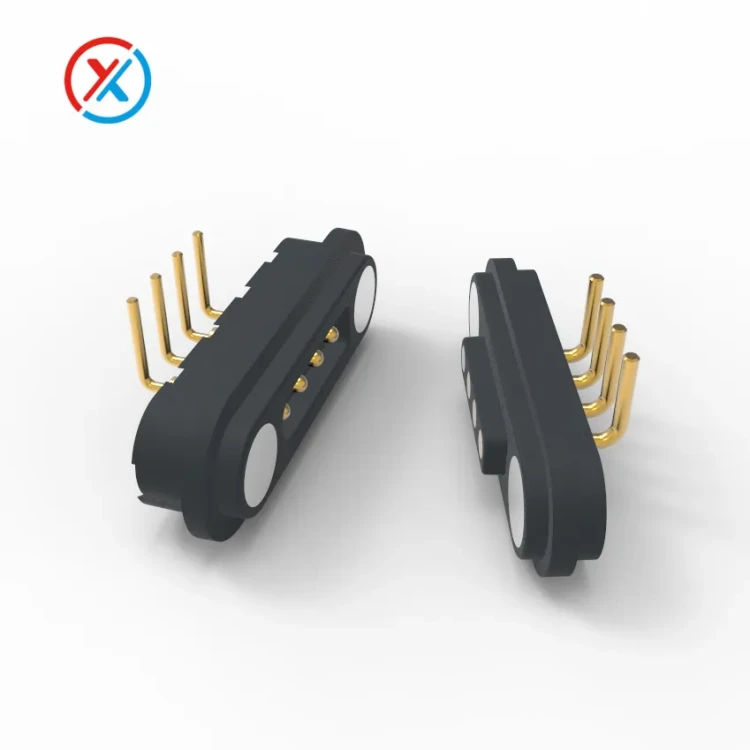
Why ordinary rectangular connectors are usually unsuitable above 250°C
Many standard rectangular connectors are designed around engineering plastics intended for normal industrial or electronic equipment. Increasing the ambient temperature beyond their specified range can change the dimensions and mechanical properties of the housing.
At temperatures above 250°C, several parts of the connector require separate consideration.
The insulating material must maintain electrical isolation.
The contact system must retain its mechanical properties and stable electrical contact.
The housing must maintain its shape and mounting dimensions.
The seal must remain effective if environmental protection is required.
The cable insulation must withstand the same temperature exposure.
Adhesives and secondary materials must also be checked because they can become the limiting component of the assembly.
This is why a connector advertised as "high temperature" should not be selected only from its headline temperature value. The actual temperature rating, duration of exposure, thermal cycling conditions, electrical load, and complete assembly configuration should be reviewed together.
How to select a rectangular connector for 250°C and above
Start with the actual temperature profile rather than using a single maximum temperature.
A connector exposed to 260°C for a few seconds is operating under a different condition from one that remains at 260°C continuously. The number of thermal cycles also matters because repeated expansion and contraction can affect contacts, insulation, seals, and mounting structures.
Electrical requirements come next. Define the working voltage, current, contact resistance requirements, number of contacts, and whether the connector carries power, low level signals, thermocouple signals, or other instrumentation signals.
The mechanical interface should then be checked. Connector dimensions, mounting holes, contact spacing, mating direction, retention method, and available installation space all need to match the equipment.
For equipment with a non standard installation structure, the connector itself may be standard while the surrounding mechanical parts are customized. We can manufacture dedicated connector mounting adapters, support plates, locating components, brackets, sleeves, and other precision parts from customer drawings. For packaging machinery and automation equipment, these parts can be produced according to 2D drawings or 3D models when the required geometry does not match an existing standard component. Single piece and small batch precision machining can also be arranged for specialized equipment projects.
The final selection should be based on the complete installed assembly, not the connector body alone. A high temperature connector can only perform as expected when the surrounding mechanical and electrical components are designed for the same working conditions.
Applications for 250°C and above rectangular connectors
High temperature rectangular connectors are used where electronic signals or power must remain connected close to heat sources.
Typical applications include high temperature testing equipment, industrial heating systems, vacuum instrumentation, thermal processing equipment, aerospace test systems, automotive test equipment, sensors, and specialized automation machinery.
In these environments, connector size and contact count are often only part of the design problem. The connector may need to fit into a restricted mechanical space while maintaining electrical insulation and reliable retention during temperature changes.
For this reason, high temperature connector projects often require a combination of standard connector selection and precision mechanical customization.
FAQ
What is the difference between a 250°C connector and an ordinary high temperature connector?
The main difference is the temperature range supported by the complete connector assembly. A connector suitable for 125°C or 150°C should not be assumed to remain reliable at 250°C. Above this range, the insulation material, housing, contacts, seals, and cable construction require specific evaluation.
Are ceramic connectors better than PEEK connectors for temperatures above 250°C?
Neither material is automatically better for every application. PEEK can be suitable for certain high temperature applications where polymer insulation is acceptable, while ceramic is generally considered when higher temperature capability or greater thermal stability is required. The choice depends on temperature, electrical requirements, mechanical conditions, and installation method.
Can a standard rectangular connector be modified for a 250°C application?
Sometimes the surrounding mounting structure can be customized while the connector remains a standard component. If the connector itself does not have a suitable temperature rating, simply changing the bracket or mounting method will not solve the problem. The complete connector design must be evaluated before modification.
What should be provided when developing a custom high temperature connector assembly?
The most useful information includes the required temperature range, exposure time, thermal cycling conditions, voltage, current, number of contacts, connector dimensions, mounting method, cable requirements, and available installation space. Customer drawings or 3D models can also be used to develop matching precision mounting parts and other non standard components.


